This is a two-part unit that will be guided by both technique and style, starting with practicing four basic watercolor techniques: 1) dry paint on dry paper; 2) dry paint on wet paper; 3) wet paint on dry paper, and 4) wet paint on wet paper. (For some students this will be review as we practice this in earlier grades as well.) In the second part of this unit students will explore Impressionist painting, particularly the work of Suzanne Valadon (to be posted next week).
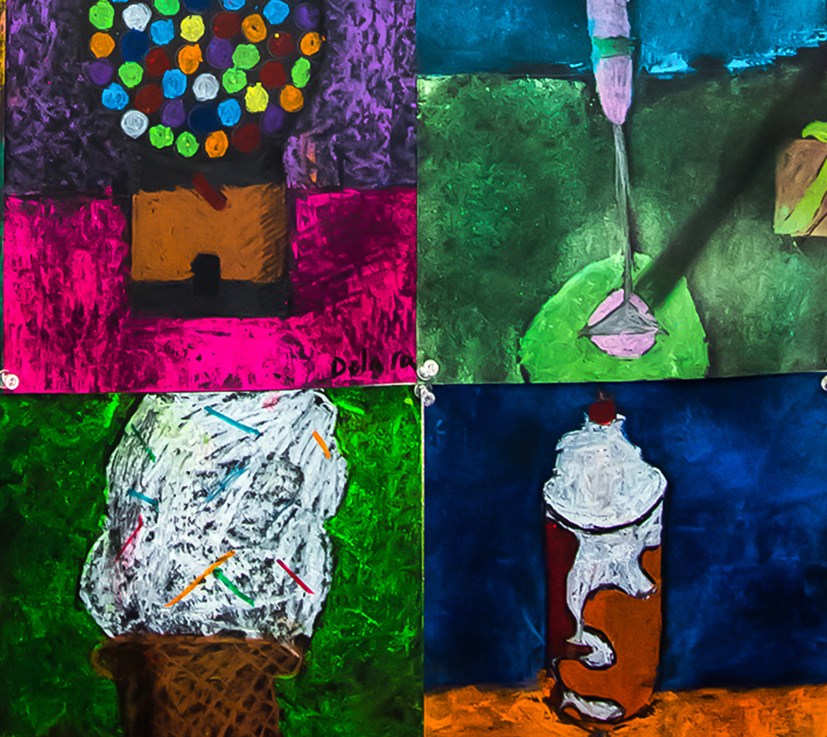
The class will observe and discuss the work of contemporary American painter Wayne Thiebaud, focusing especially on his dessert paintings. Using similar characteristics as seen on Thiebaud’s paintings, students will create their own dessert composition in oil and chalk pastels.
Activity statement –
According to the Jim Kempner Fine Art website, “Wayne Thiebaud (b. 1920) is an American painter best known for his still life paintings of edible treats and everyday objects in his singular illustrative style” (https://jimkempnerfineart.com/wayne-thiebaud.php ). His most popular subject matter includes cakes in colorful pastel hues, slices of pie, candies such as lollipops, cupcakes, and interestingly, the streets of San Francisco. His paintings generally include thick, bold applications of stylized color, highly defined shadows, and cartoon-like line. His approach to painting gives his desserts a tactile, textured feel. Students will consider using these same characteristics to create the composition of one sweet treat (or treats) of their own, while also considering the placement of the light source in their design, so as to properly express a form and cast shadow.
Students will learn a little about the history of marbled paper, and will observe the different kinds of designs known to the craft. In groups they will then make their own marbled paper
Students will explore Andy Goldsworthy’s ephemeral land art, then venture outside to come up with their own environmental sculptures.
Activity statement –
Andy Goldsworthy is known as an environmental or land artist. What this means is that he uses natural artifacts—branches, leaves, rocks, ice, etc.—to create his sculptures and installations. Goldsworthy’s art is also temporary. He never creates anything that won’t eventually be destroyed by waves, wind and natural processes. Goldsworthy invites the viewer to contemplate the ephemeral, transitory beauty of the natural world. His works involve the use of pattern, color and balance. Interestingly, all of the color in his work comes from the objects themselves, never from him painting any of it. So for example, if you look at the image that looks like a tree trunk ringed with glowing light or fire, he simply used fallen gold and orange leaves to give it that effect.
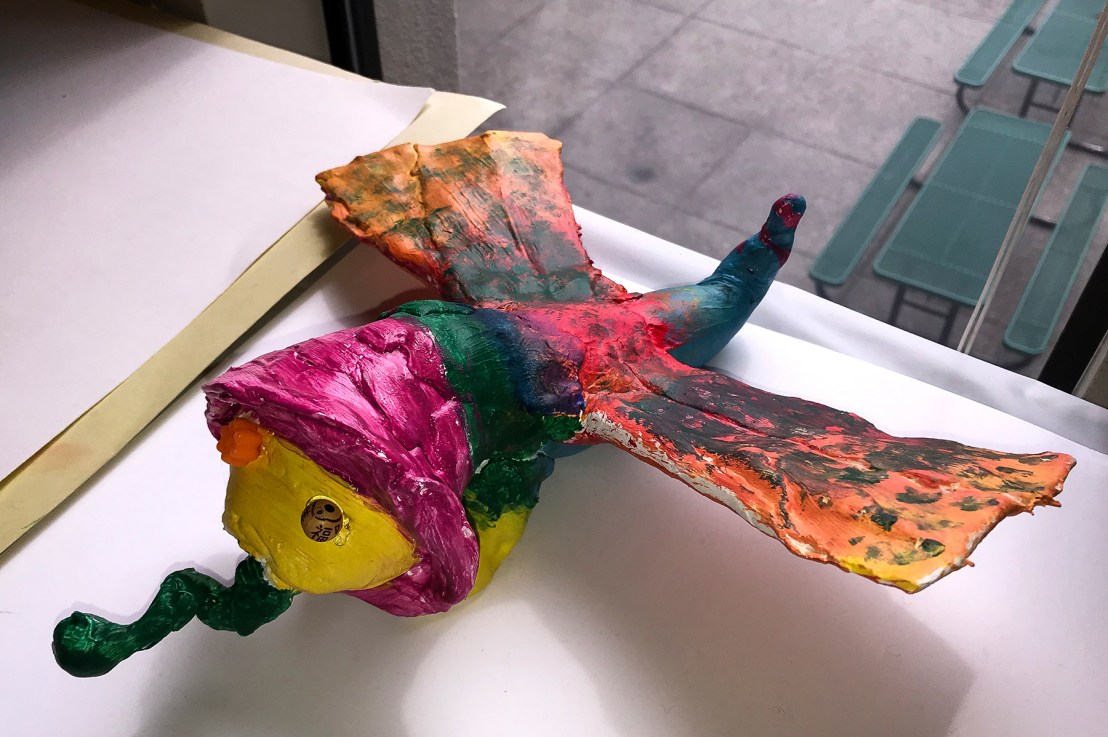
Students learned about Mexican artist Pedro Linares López and his fantastical, wild Alebrijes, imaginative and colorful papier-mâché creatures that Linares originated. Students created their own Alebrijes out of clay, paint and various objects.
Students will explore the monochromatic, rhythmic and balanced found-art assemblages of Louise Nevelson, and create their own assemblages both individually and in small groups.
Description of the Unit – Students will create yarn paintings in the style of the Huichol of México.
Activity statement – The Huichol are a culture native to western México (mostly in Jalisco and Nayarit) who have preserved many of their ancient arts and crafts practices. So esteemed are they to Mexico’s heritage that the Mexican government and UNESCO have made great effort to preserve the culture and its environment. While the Huichol first used materials found in nature to produce their art, they now Huichol use modern materials and dyes in their crafts. Among the many incredible crafts the Huichol produce is the yarn painting, an intricate, highly colorful tableau of symbols and images “painted” with bright yarn arranged in bold patterns.
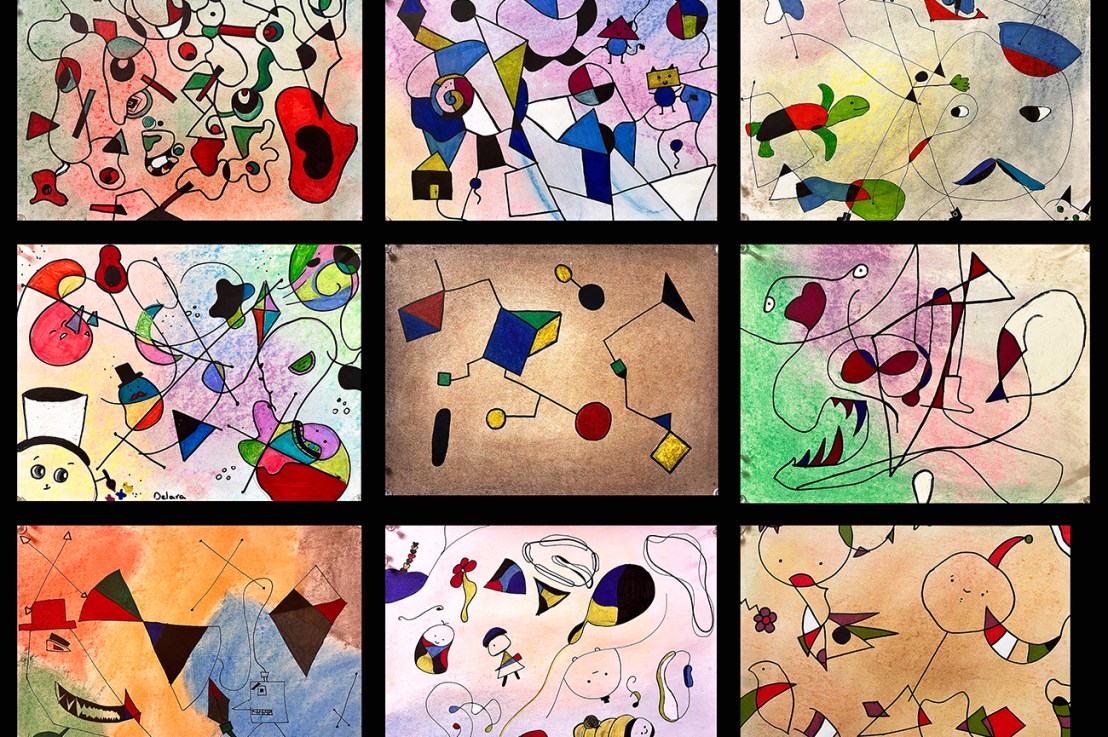
Students discovered the work of Joan Miró (1893-1983), a modern artist who blended thoughtful, “high art” concepts with spontaneous, playful designs that captured the imagination and challenged then-current notions of what constituted “good” art. A Miró tableau employed a muted, sparsely colored background with childlike doodles, geometric shapes and blocks of mostly primary color as foreground.
Guided by a similar sense of play, whimsy and surprise, students reproduced similarly styled, playful designs of their own.






 In the K-8 Art Studio with Anita Sagastegui