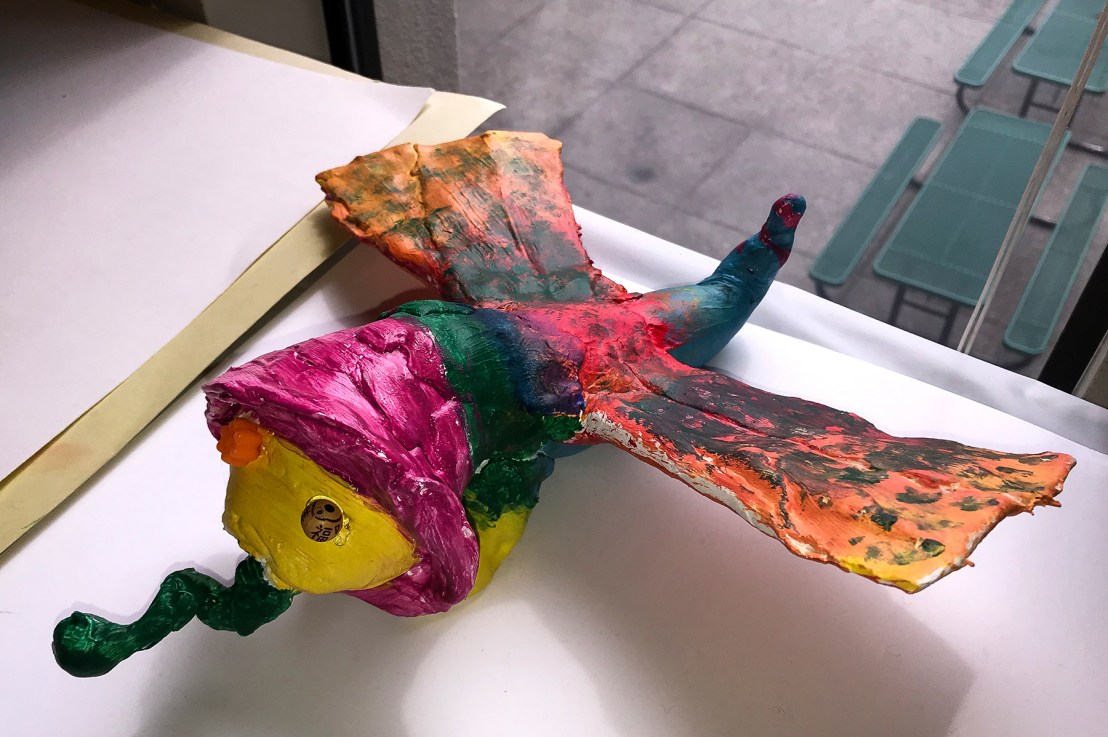
Students learned about Mexican artist Pedro Linares López and his fantastical, wild Alebrijes, imaginative and colorful papier-mâché creatures that Linares originated. Students created their own Alebrijes out of clay, paint and various objects.
Students will explore the monochromatic, rhythmic and balanced found-art assemblages of Louise Nevelson, and create their own assemblages both individually and in small groups.
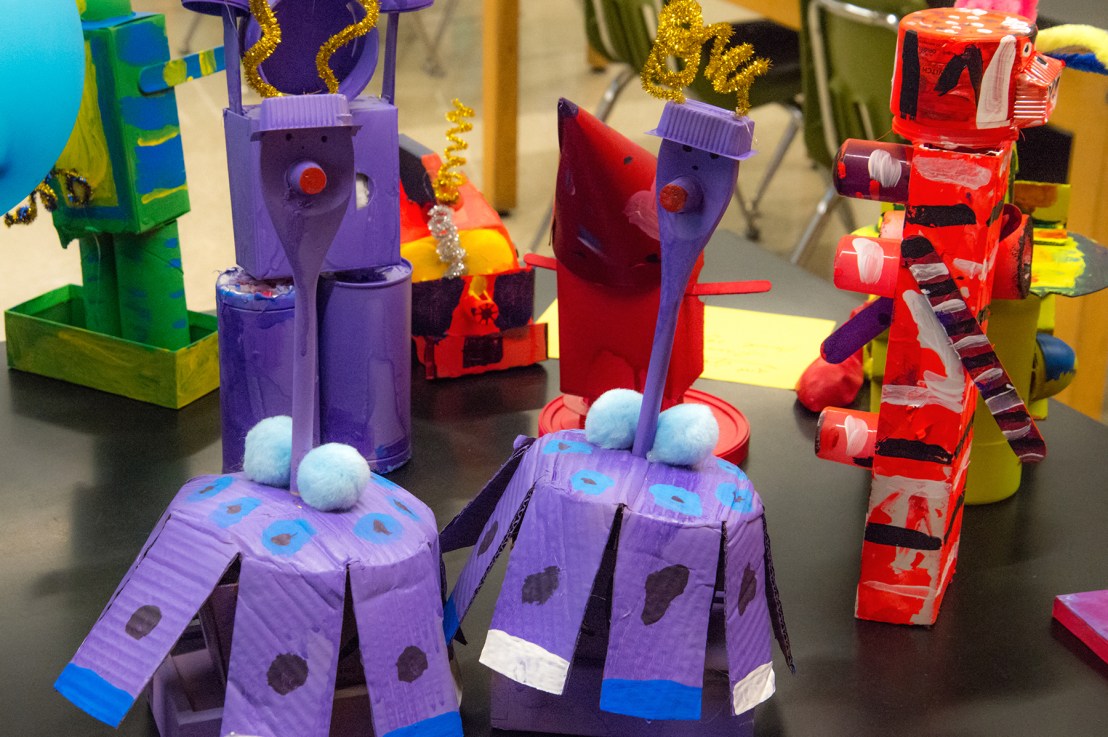
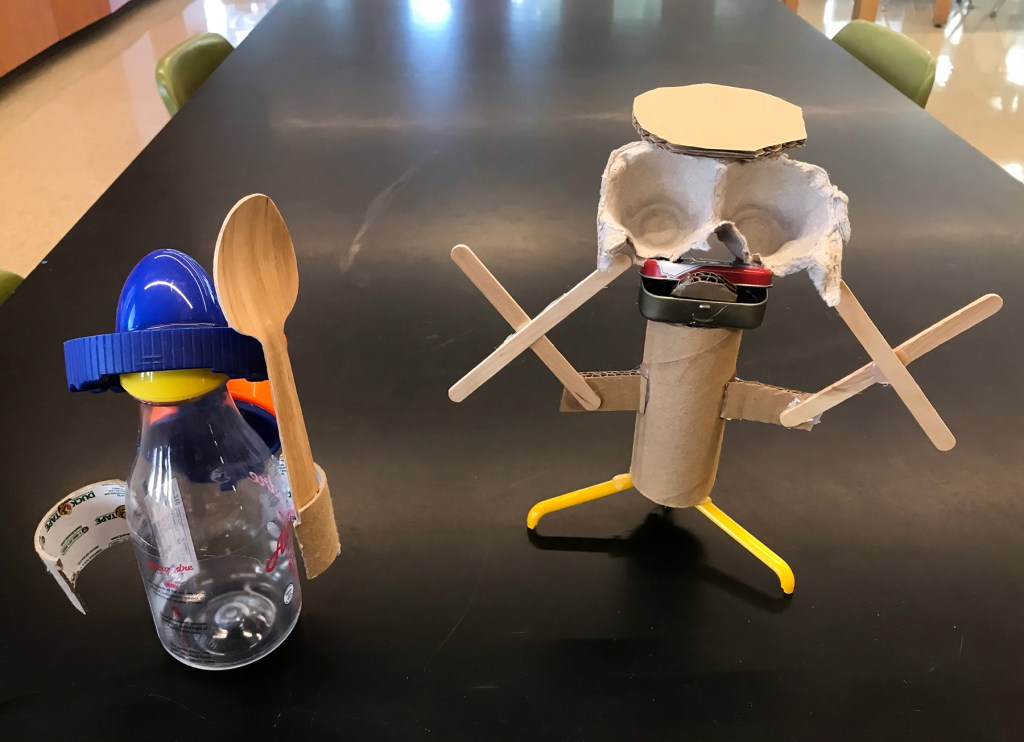
This unit supports the interdisciplinary 3rd grade unit of study on space and the universe which students are working on in science, history, music and writing as well as art. In art class students will construct alien creatures out of repurposed objects, and design planets in oil pastels for the backdrop in their music show. This post will focus on the found-object aliens.
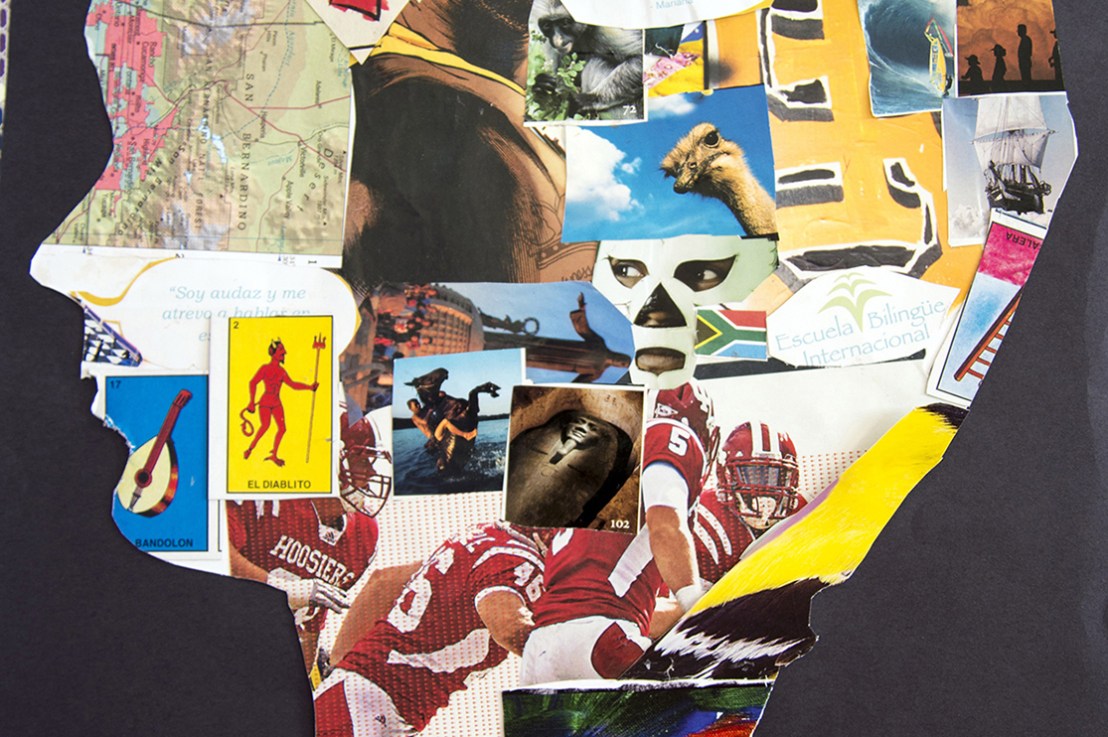
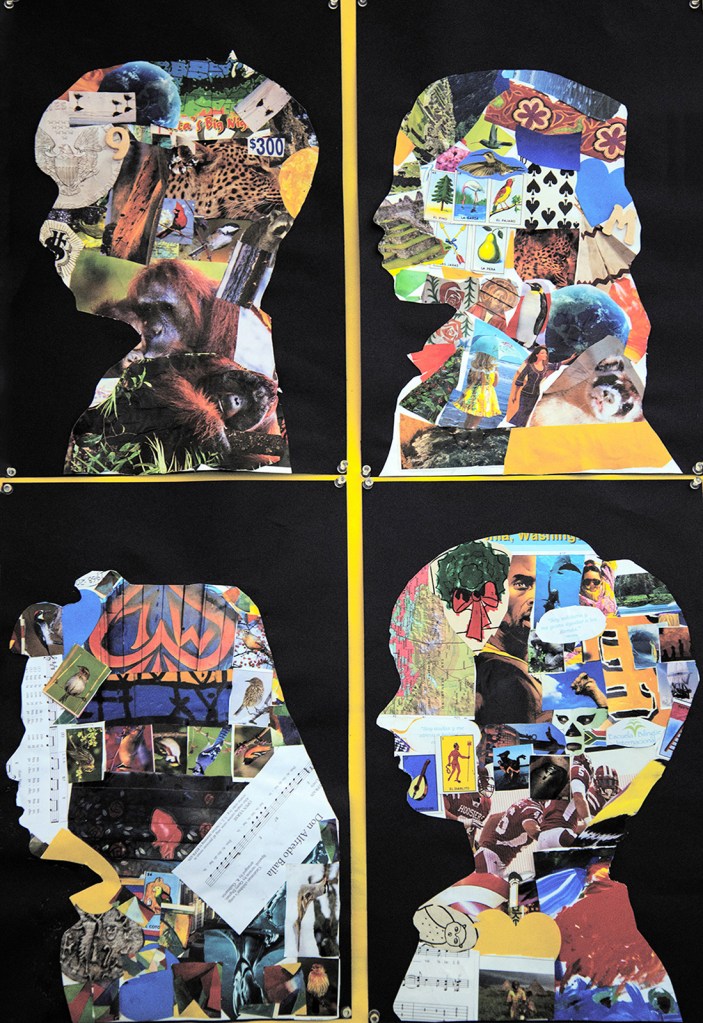
Students will explore the concept of symbolism in art, and how they can use symbols—images—to represent aspects of themselves. Using magazines, books and other random two-dimensional found objects (such as playing cards or ticket stubs), students will carefully arrange symbolic imagery into a collage within a silhouette of their own profile.
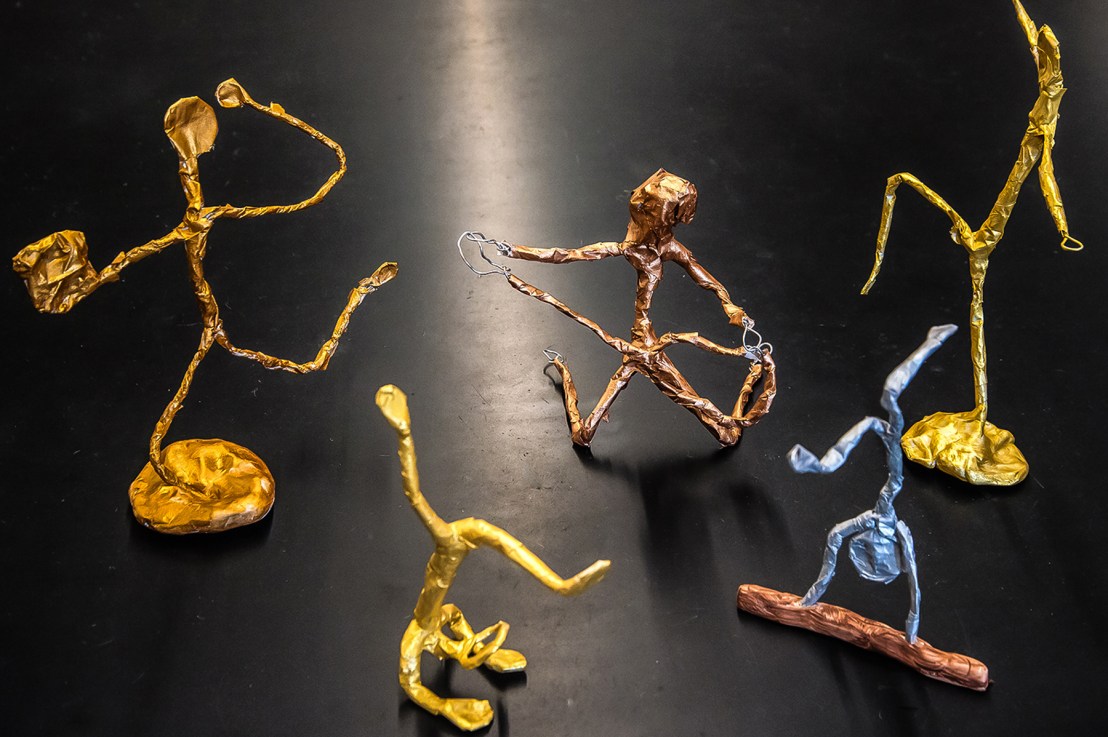
Observing the distorted gestural figure sculptures of Alberto Giacometti (1901-1966), as well as the elongated, rhythmic figure paintings by Ernie Barnes (1938-2009) that both emphasize and exaggerate long limbs, students will create similarly distorted, gestural sculptures primarily out of wire.
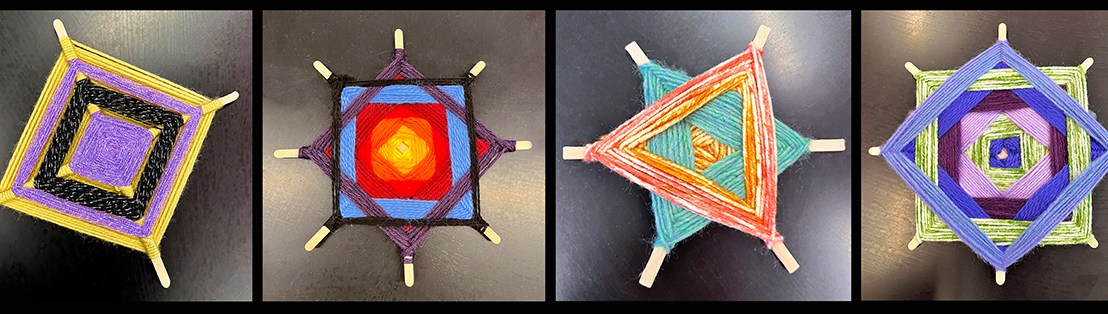
Students will learn about the Huichol tradition of weaving an “Ojo de Dios” and practice weaving one of their own, attempting more complicated patterns and techniques as they progress.
Activity statement –
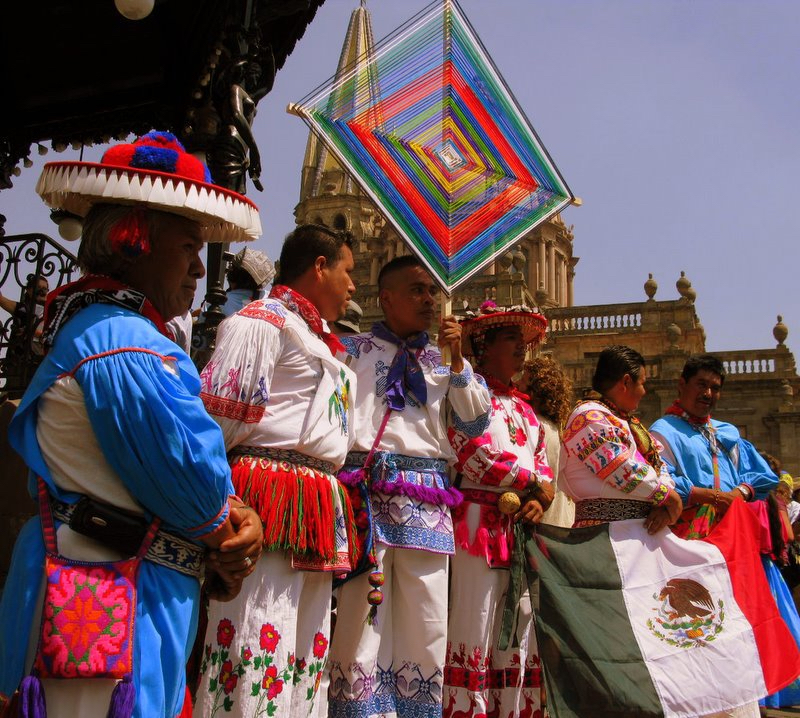
Upon the birth of a baby, Huichol (an indigenous Mexican group) parents weave a beautifully colored and elaborate “Ojo de Dios”, signifying health and protection throughout the child’s life. The child adds to this very Ojo de Dios with each new birthday starting at about age 5. Beginning with a simplified Huichol weaving style, students will create an Ojo de Dios, which will develop their hand-eye coordination and fine motor skills. With each new Ojo de Dios a student attempts, he/she will practice more complicated weaving techniques, create more elaborate color and shape designs, and improve their overall finished product.
I have a short video on making an Ojo de Dios here:
Description of the Unit – Students will create yarn paintings in the style of the Huichol of México.
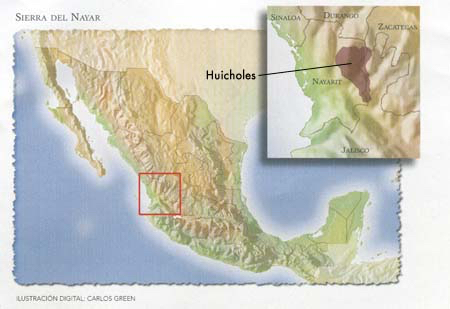
Activity statement – The Huichol are a culture native to western México (mostly in Jalisco and Nayarit) who have preserved many of their ancient arts and crafts practices. So esteemed are they to Mexico’s heritage that the Mexican government and UNESCO have made great effort to preserve the culture and its environment. While the Huichol first used materials found in nature to produce their art, they now Huichol use modern materials and dyes in their crafts. Among the many incredible crafts the Huichol produce is the yarn painting, an intricate, highly colorful tableau of symbols and images “painted” with bright yarn arranged in bold patterns.
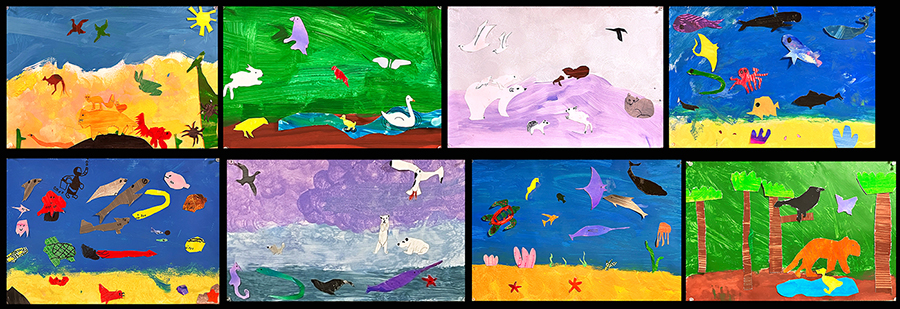
Integrated with a science unit on ecosystems, students will create an Eric Carle-inspired collage of an ecosystem.
Ocean ecosystem by kindergarten student: for this she used a dolphin stencil to help her
Activity statement –
In kindergarten science students explore an entire unit devoted to ecosystems. They learn about earth’s many ecosystems: climate, flora, fauna and so forth. Each student is assigned a specific ecosystem to research and present to the class. This collage will be one of the visual elements used in their reports.
To inspire the collage-making process, we will look at different Eric Carle books and notice his painted paper collages. Using his techniques as a guide, we will focus on color and texture as students first paint large pieces of paper in single colors and then add texture with the brushes, combs, forks, rollers and other tools provided. These pieces of paper will be used communally among the students for their collages, therefore no one piece belongs to one student.
Students will learn about a variety of mixed media collage artists and create their own mixed media collage from thoughtfully compiled items.
(FYI: I have a little video tutorial that I made for my students during the Covid-19 shelter-in-place period that takes this assignment one step further by making it a “secret” collage. Check it out to see what I mean:)
Activity statement –
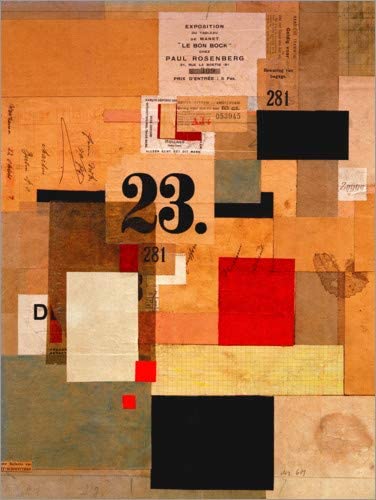
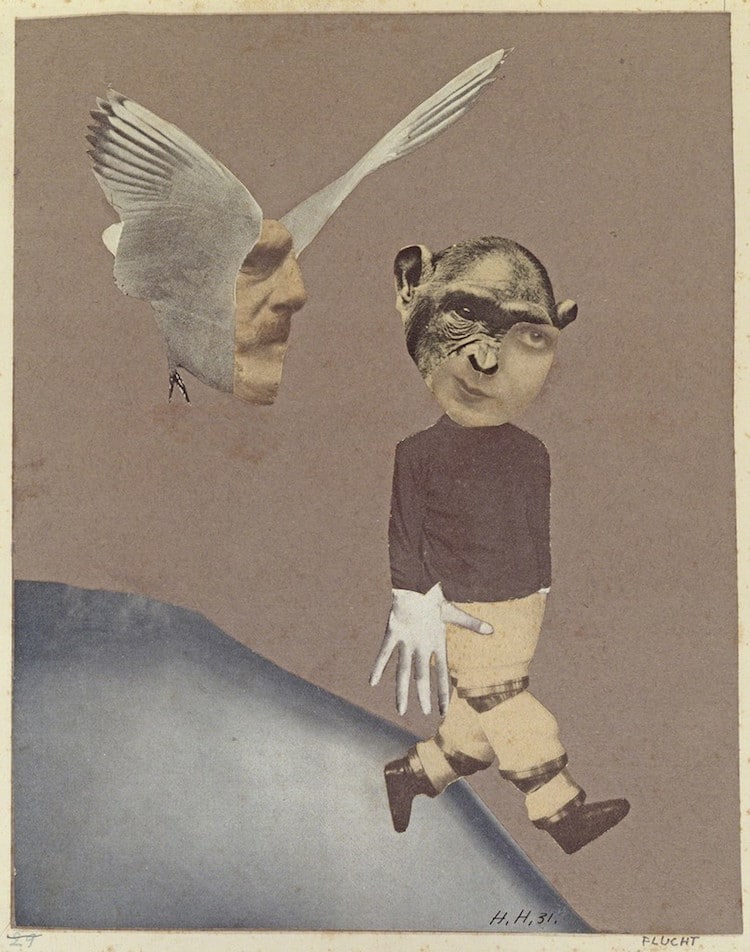
The term “collage” comes from the French word coller, or “to glue.” Originated by the Cubists, the collages were mixed media assemblages of newsprint, photographs, magazines and books, as well as wood, painted paper and sometimes even three-dimensional objects. For this lesson students will observe and discuss the work of three well-known collage artists, Hannah Hoch, Eileen Agar & Kurt Schwitters, and use their collages as inspiration for their own mixed media collage. However, students will be considering very personal objects and text to include in his or her own collage as each collage will also feature a stylized self-portrait photo.
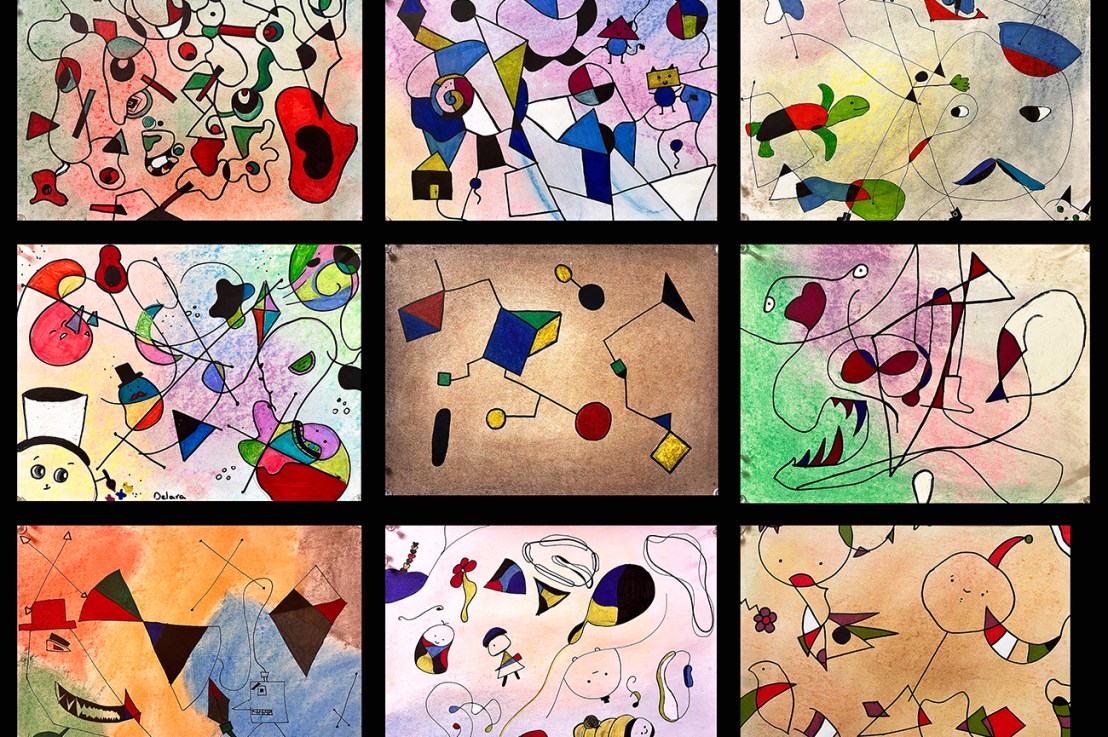
Students discovered the work of Joan Miró (1893-1983), a modern artist who blended thoughtful, “high art” concepts with spontaneous, playful designs that captured the imagination and challenged then-current notions of what constituted “good” art. A Miró tableau employed a muted, sparsely colored background with childlike doodles, geometric shapes and blocks of mostly primary color as foreground.
Guided by a similar sense of play, whimsy and surprise, students reproduced similarly styled, playful designs of their own.







 In the K-8 Art Studio with Anita Sagastegui