Students will explore the monochromatic, rhythmic and balanced found-art assemblages of Louise Nevelson, and create their own assemblages both individually and in small groups.
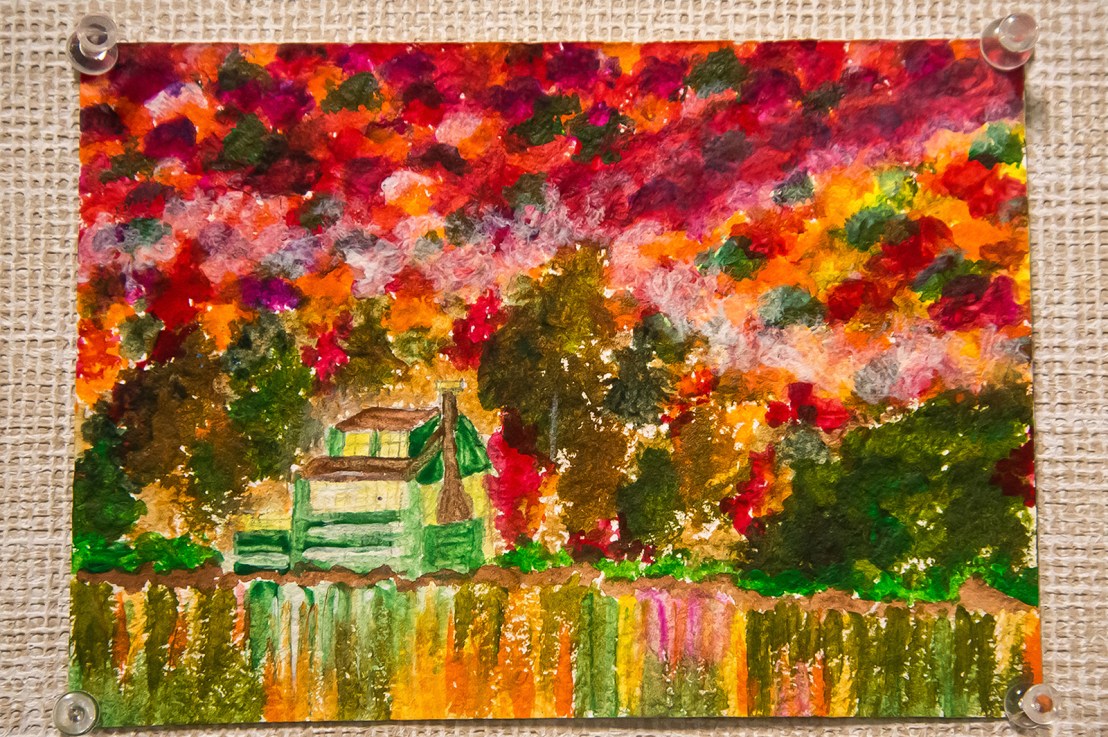
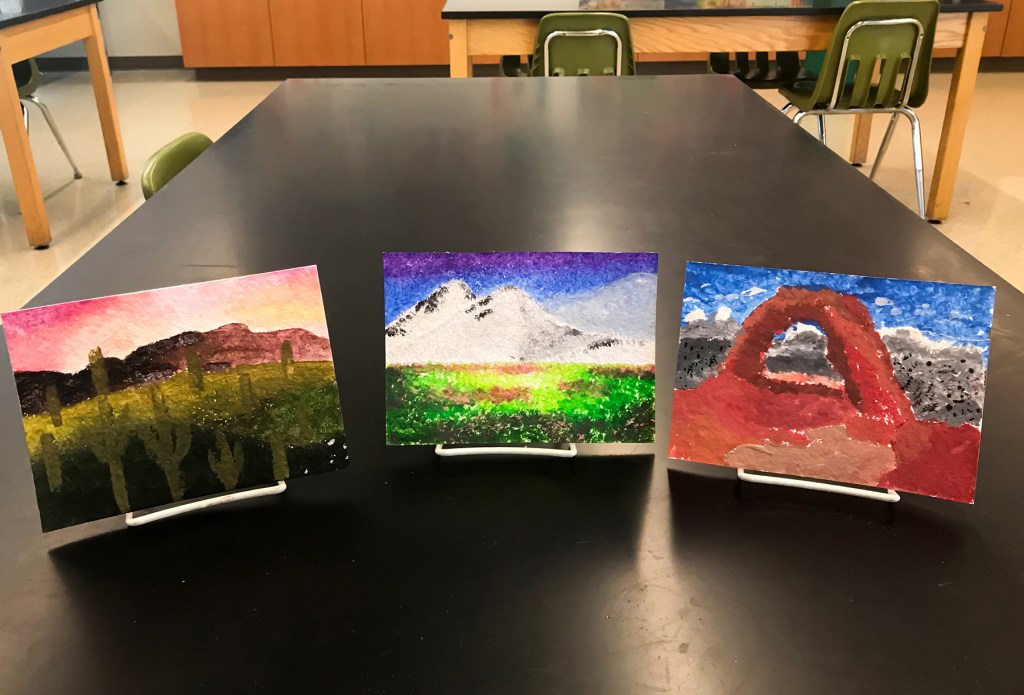
Students will practice a variety of painting techniques (including color mixing and brush effects) for acrylic painting, practicing these for various effects. Students will then choose a nature postcard to use as a reference for their own painting. Students will eventually create at least two different paintings in acrylic of two different nature scenes, trying to use the techniques learned to recreate specific textures and effects.
Students will explore the whimsical, yet ordered and divinely balanced kinetic sculptures of Alexander Calder, using his work as inspiration for their own kinetic sculpture.
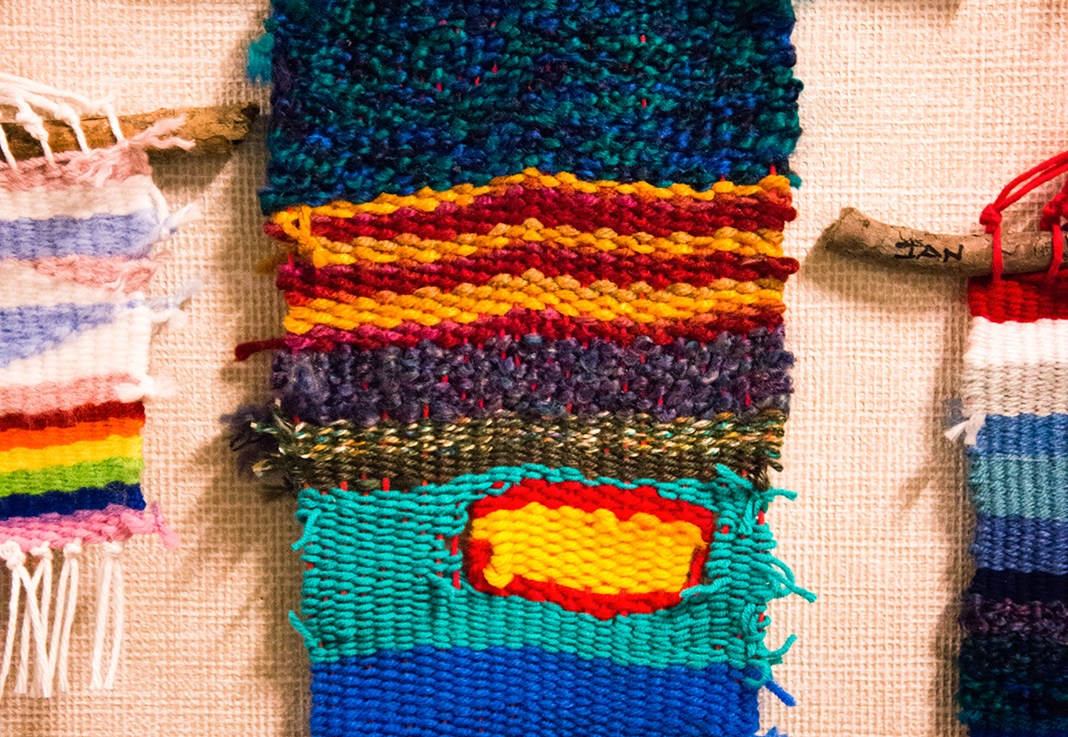
Students will practice simple loom weaving and create one small tapestry.
Activity statement –
In the California Visual Arts Standards, fourth grade students should experience using “fibers…to create a simple weaving,” (2.4, Creative Expression). Further, as students will be working on sewing samplers in fifth grade, they will benefit from this opportunity to develop their hand-eye coordination and fine motor skills. Finally, while practicing this simple weaving technique on a cardboard loom, students will reinforce their understanding of color and pattern via the design they choose to weave.
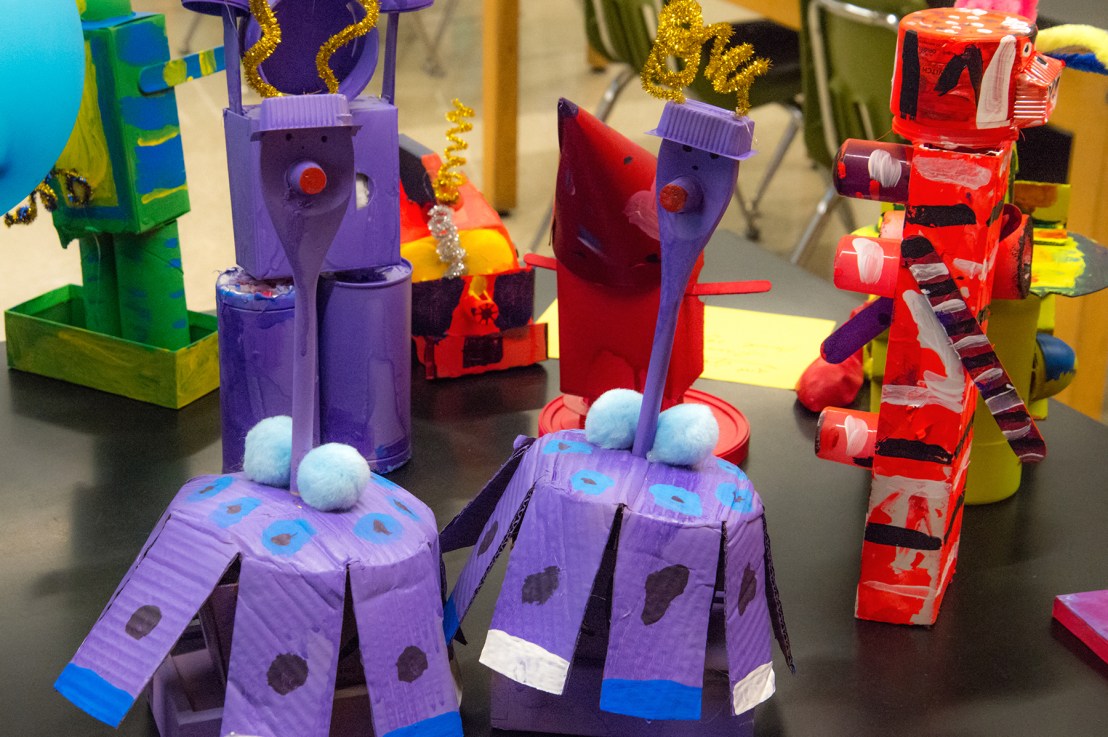
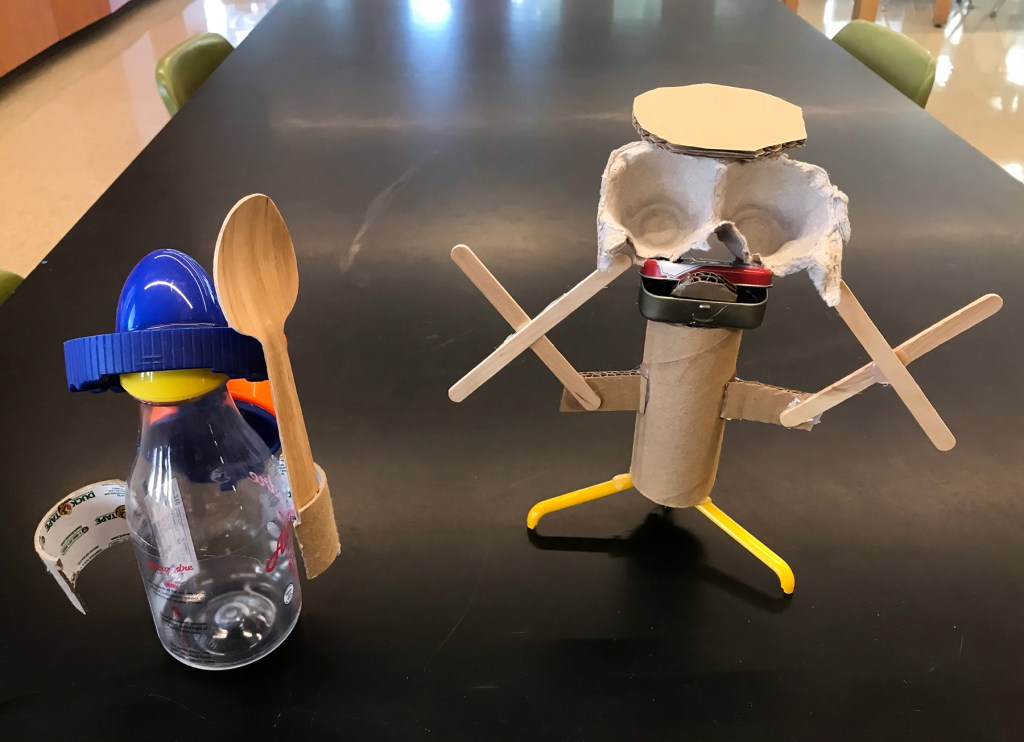
This unit supports the interdisciplinary 3rd grade unit of study on space and the universe which students are working on in science, history, music and writing as well as art. In art class students will construct alien creatures out of repurposed objects, and design planets in oil pastels for the backdrop in their music show. This post will focus on the found-object aliens.
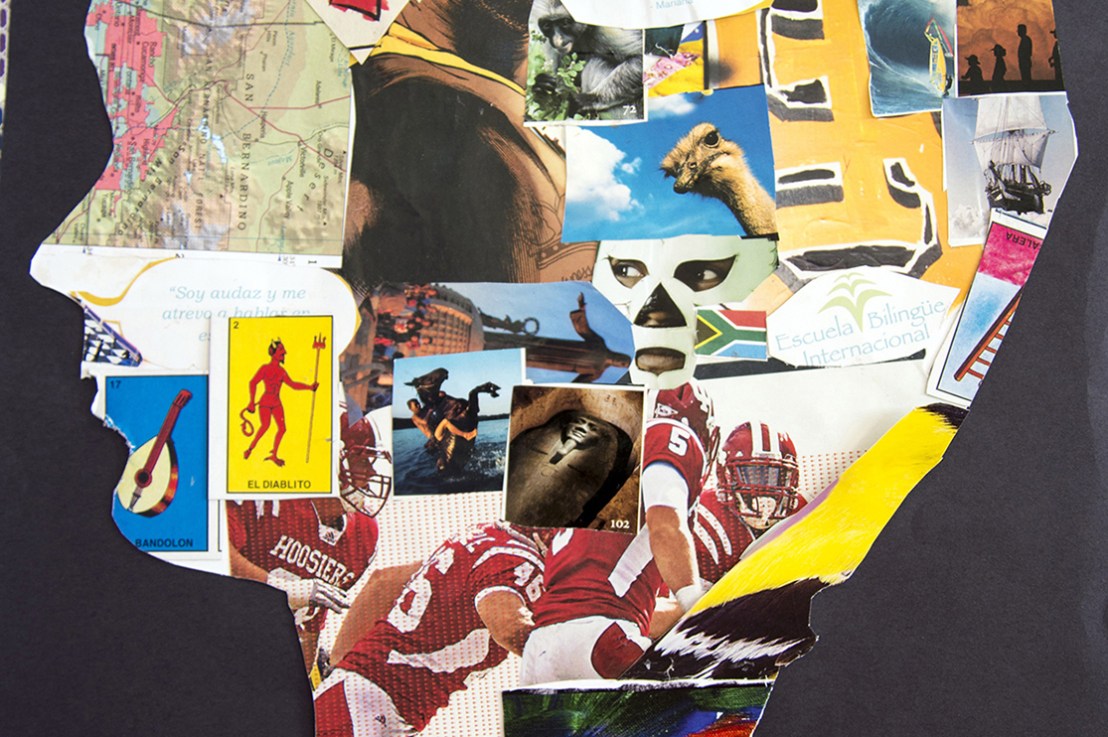
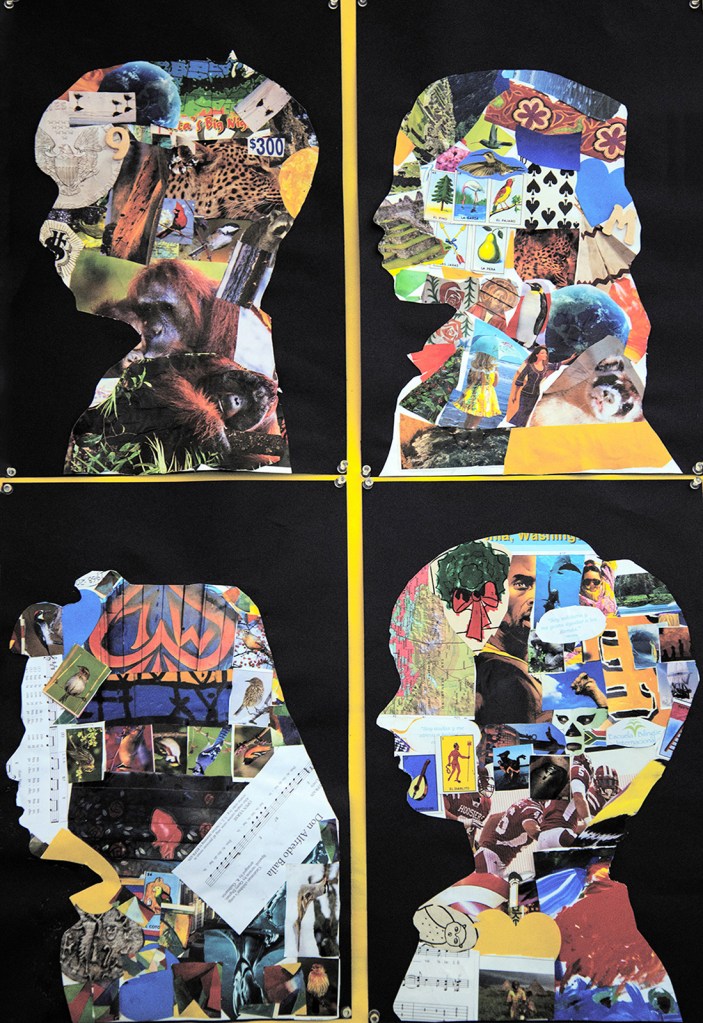
Students will explore the concept of symbolism in art, and how they can use symbols—images—to represent aspects of themselves. Using magazines, books and other random two-dimensional found objects (such as playing cards or ticket stubs), students will carefully arrange symbolic imagery into a collage within a silhouette of their own profile.
This unit merges a study of pointillism with the practice of symmetry, culminating in insect designs that use pointillism to create symmetrical sides to each insect.
Students will explore the work and approaches to painting innovated by Helen Frankenthaler, and use very simple soak-stain techniques to apply watercolor onto paper to create equally vibrant washes.
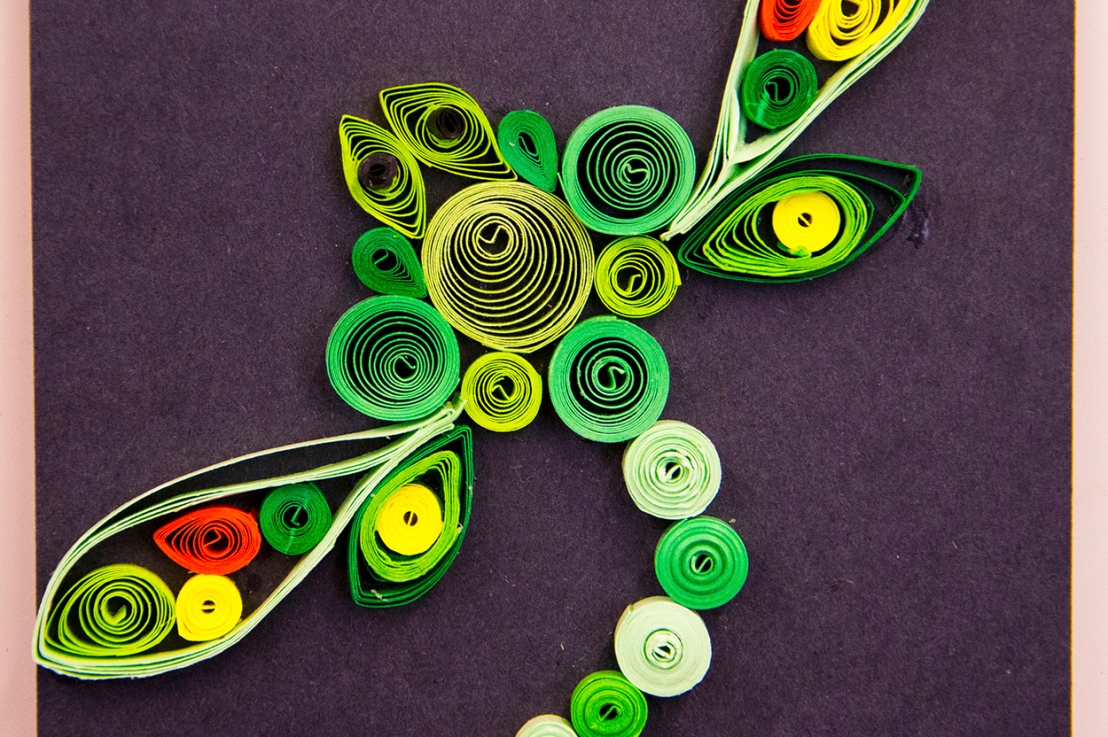
Students will develop their fine motor skills while exploring ways to get creative with the ancient art of paper quilling.
Activity statement –
Quilling is the art of manipulating and arranging small strips of paper into detailed designs. Depending on the desired shape and appearance, it can be rolled, looped, twisted, and curled. Glue is used to secure the paper strips into place. Like many forms of craft, paper quilling can trace its origins back hundreds of years to at least the 15th century (maybe earlier). It is believed to have been created by French and Italian nuns to decorate religious objects.
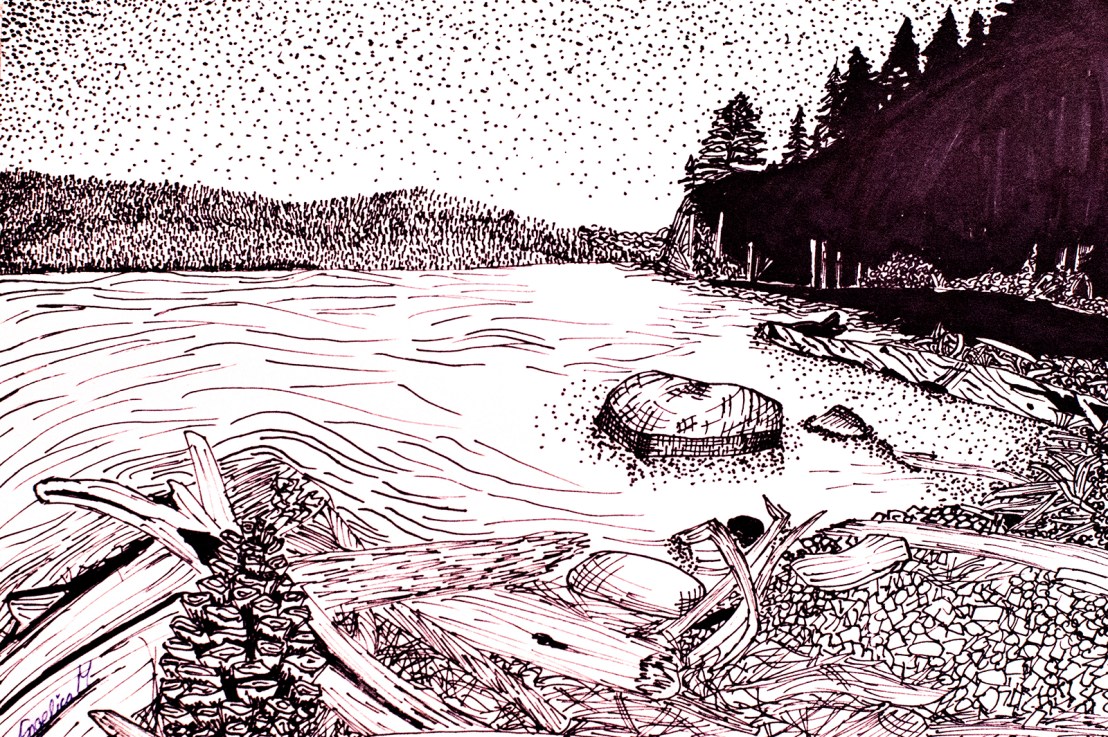
Students will first practice a variety of line drawing, or mark-making, techniques, and then use those techniques to render a landscape or still life in pen.
Activity statement –
Using photographs as a starting point, the objective of this lesson was for students to express changes in perspective, texture and value (light and dark) in a realistic drawing using a variety of lines, such as stippling, hatching, and cross-hatching, as well as varying the lines’ density. In this way they can transform a pen drawing into a realistic representation of a scene in nature. To help in this objective, students first created a mark-making chart expressing different types of lines, and discussed how the different types of lines could be used to represent texture, perspective and value.








 In the K-8 Art Studio with Anita Sagastegui