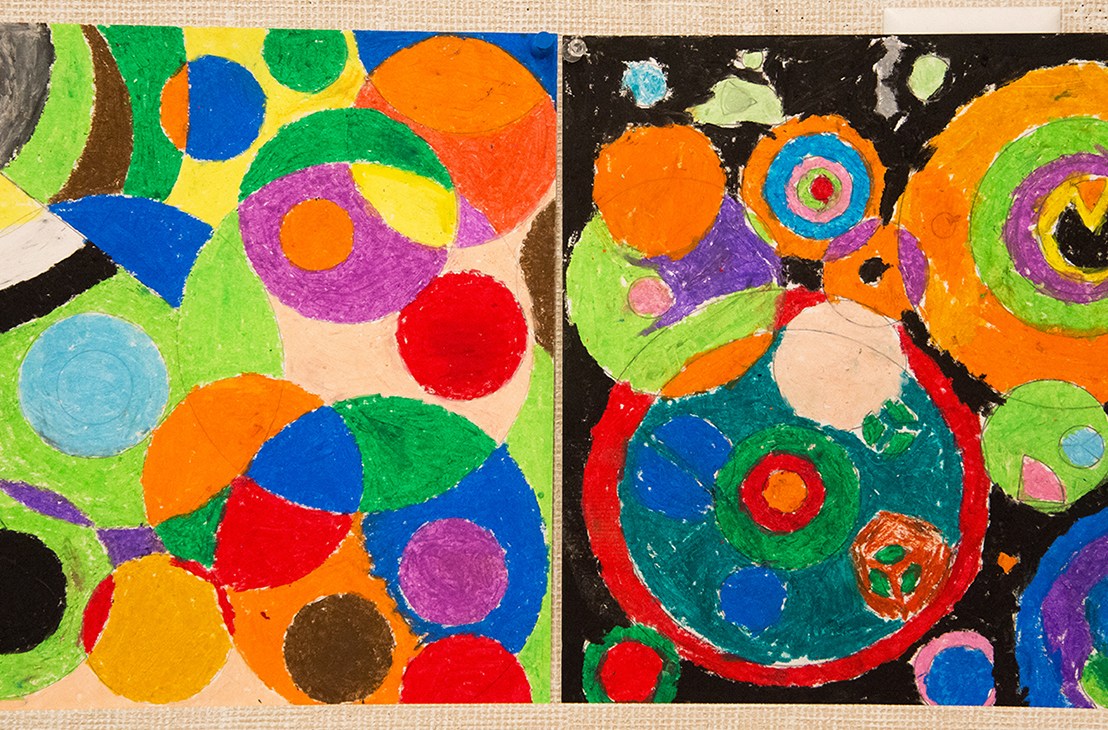
Description of the Unit – Students will discover Orphism through the work of Sonia and Robert Delaunay, creating their own Orphism-style design, focusing specifically on the dynamics of color.
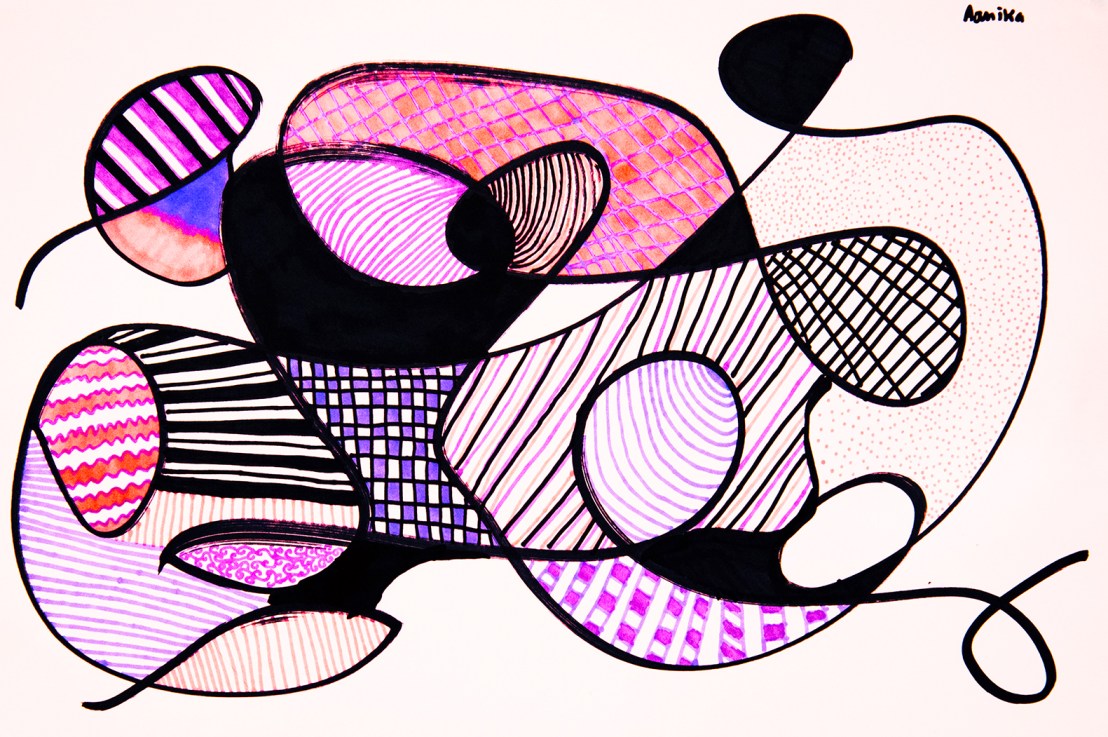
Description of the Unit – Emphasizing movement, balance and repetition with Jean Dubuffet’s Hourloupe
This unit revisits a second-grade unit which also focused on the Hourloupe to practice line and pattern; here we go further to practice the above-mentioned principles of design.
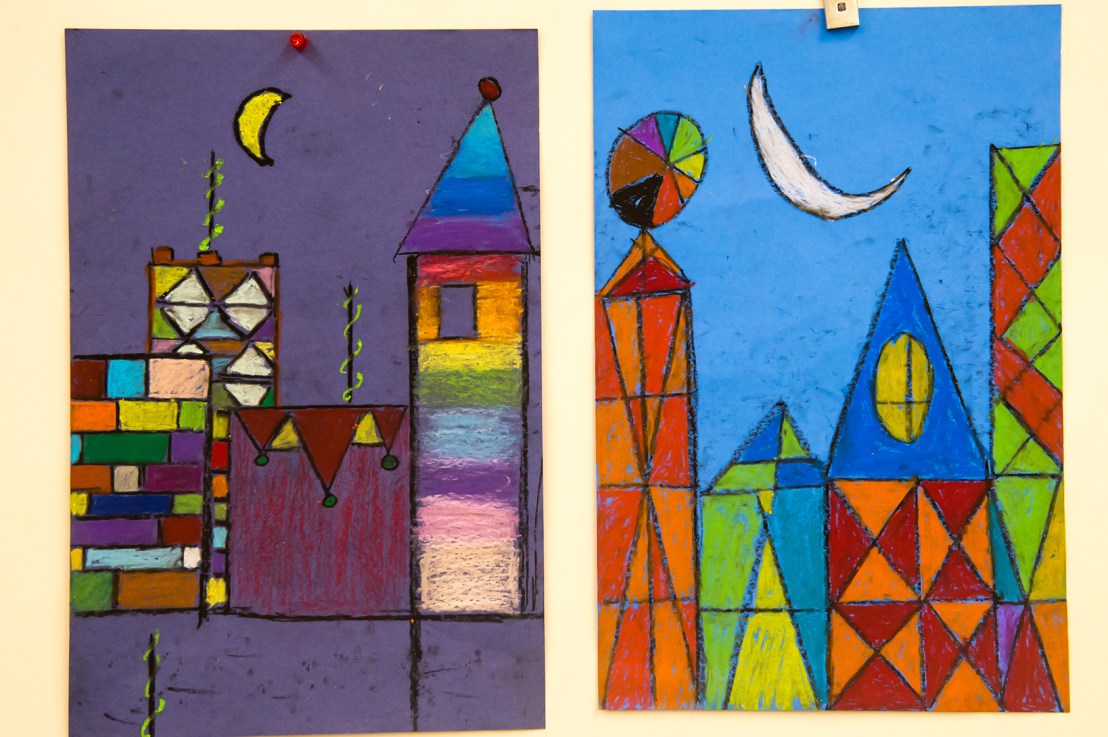
Students delve into a particular period of Paul Klee’s art, the “Magic Square” series. Students use their observations of Klee’s work to create their own cityscape in oil pastels, focusing primarily on geometric shapes and using one tone of color dotted with its complementary color.
An example of a 3rd grade student’s magic square city
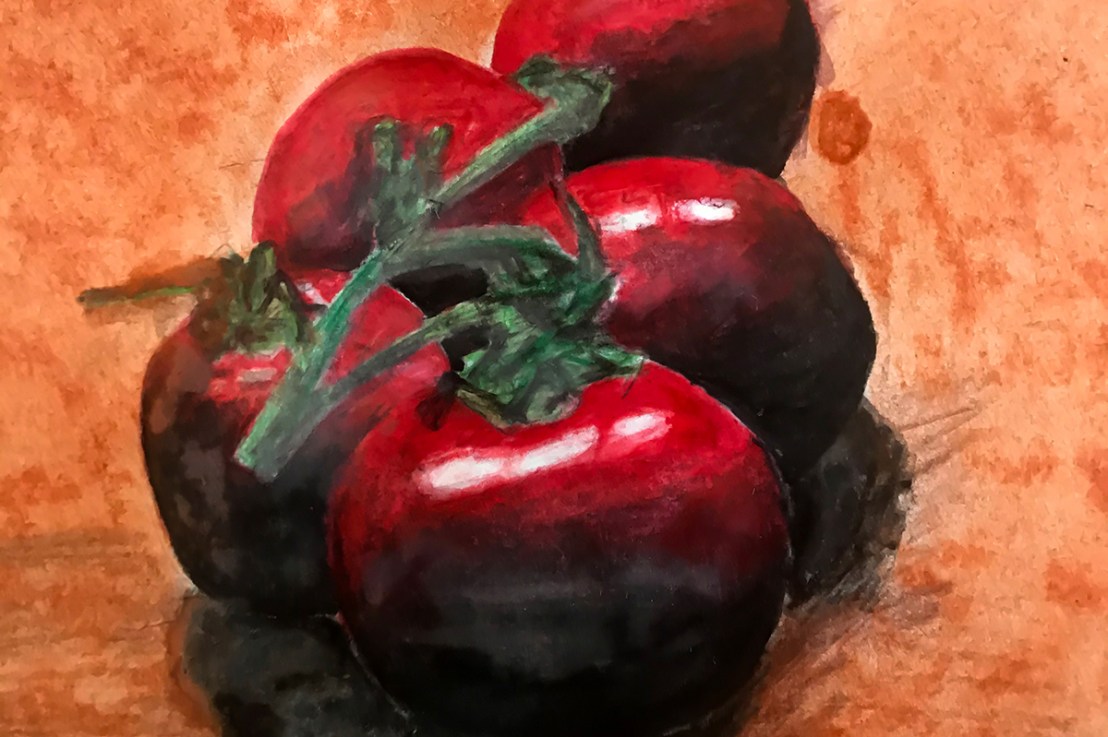
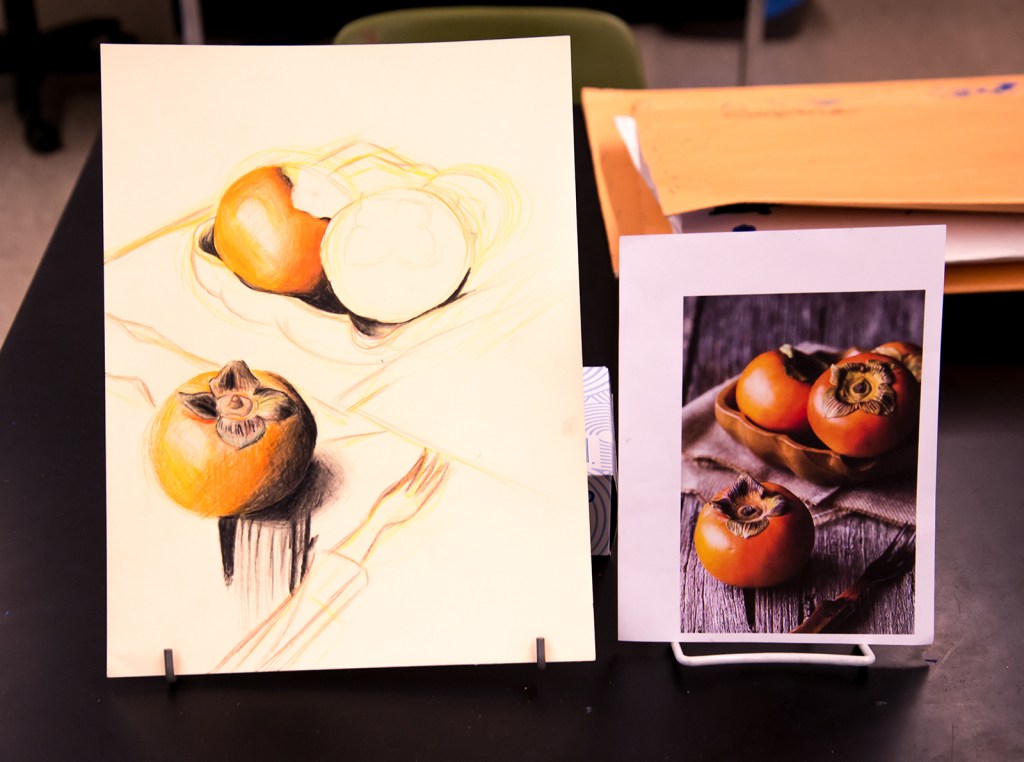
Students will learn and practice essential colored pencil techniques involving mark-making and shading to create a still life.
Activity statement –
Coloring with colored pencils can be a deeply rich and satisfying experience. Something about the feel of the medium as it is spread across paper, and then combined with other colors to slowly come to life, can be both thrilling and meditative. Given some basic techniques students can achieve highly rewarding results.
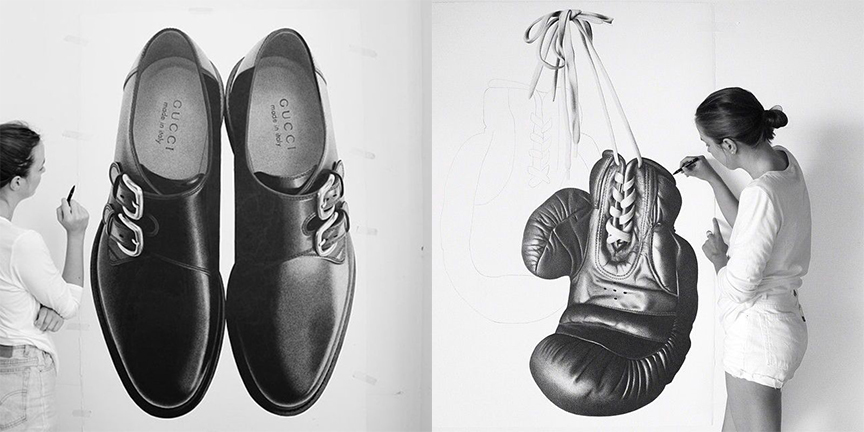
We begin by diving into the fascinating art of CJ Hendry. Hendry expresses having no formal art training and considers herself “not very creative.” Yet she’s a dedicated, innovative artist whose works are primarily hyper-realistic, large scale pencil drawings of (mostly) luxury objects that sometimes take 200 hours to complete. Working with pencil on paper her pieces are achieved through layers of what she refers to as scribbles. Watching her work (you can see some fun videos of her at work here: https://youtu.be/KB8vc9M4QWs and https://youtu.be/KixMpzhMS-o) students become awe-struck by the way her tireless pencil strokes become such lifelike, more-than-photographic representations of real-life objects. They wonder aloud how she does it, exclaiming that they would love to draw like Hendry. I tell them that this unit will give them a foundation for getting there.
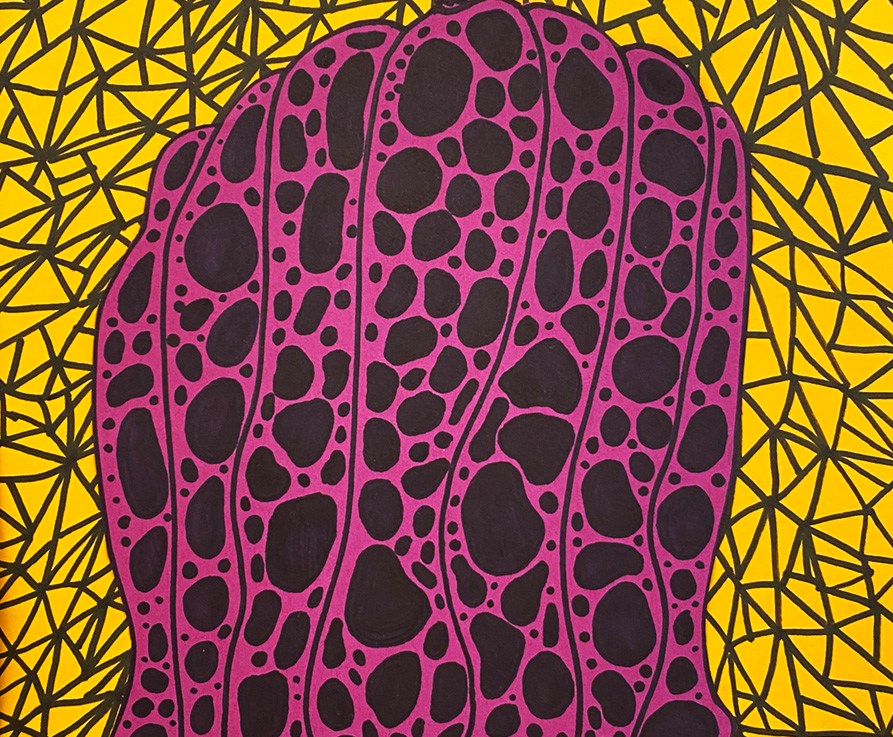
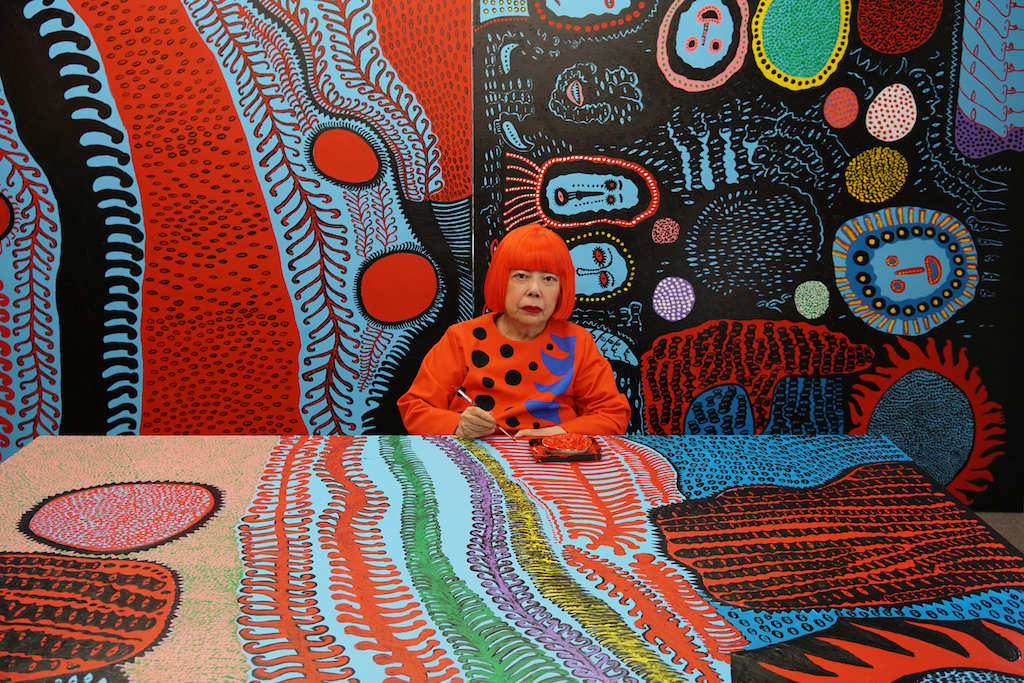
Yayoi Kusama is one of my favorite contemporary artists. Her irreverence, originality, rebelliousness and whimsy have won my heart, as have her personal struggles with mental illness. An artist whose work always surprises and delights, I love to bring her life story and work to my students.
Together we explore and discuss the work of this seminal Japanese artist, whose pioneering installations have enthralled visitors to her work over the last several decades. Using her iconic polka-dotted pumpkins as inspiration, students will emphasize the elements of line, color and shape, and well as principles of pattern, repetition and movement, in their own brightly colored pumpkins.
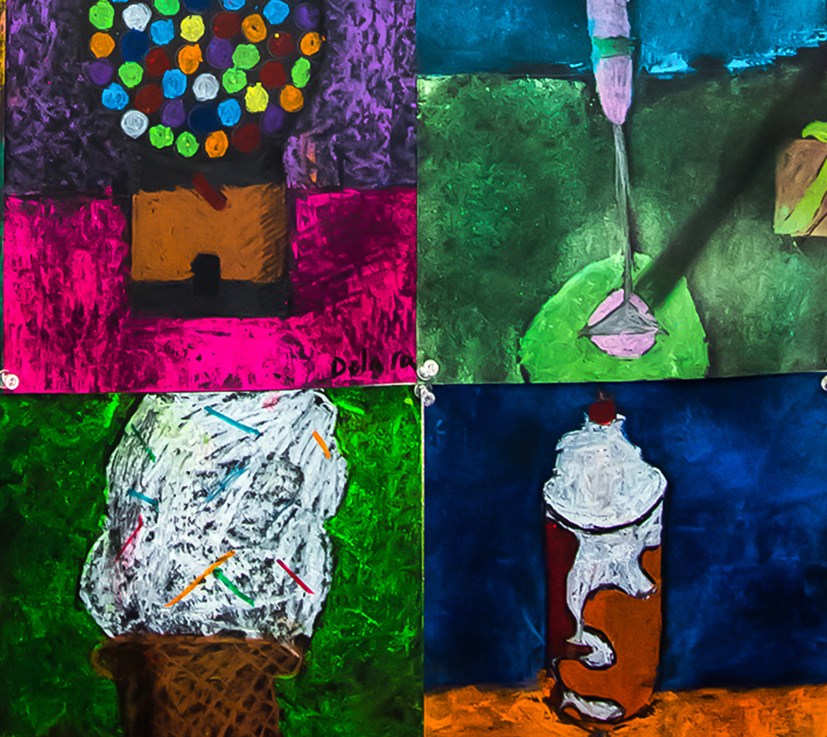
The class will observe and discuss the work of contemporary American painter Wayne Thiebaud, focusing especially on his dessert paintings. Using similar characteristics as seen on Thiebaud’s paintings, students will create their own dessert composition in oil and chalk pastels.
Activity statement –
According to the Jim Kempner Fine Art website, “Wayne Thiebaud (b. 1920) is an American painter best known for his still life paintings of edible treats and everyday objects in his singular illustrative style” (https://jimkempnerfineart.com/wayne-thiebaud.php ). His most popular subject matter includes cakes in colorful pastel hues, slices of pie, candies such as lollipops, cupcakes, and interestingly, the streets of San Francisco. His paintings generally include thick, bold applications of stylized color, highly defined shadows, and cartoon-like line. His approach to painting gives his desserts a tactile, textured feel. Students will consider using these same characteristics to create the composition of one sweet treat (or treats) of their own, while also considering the placement of the light source in their design, so as to properly express a form and cast shadow.
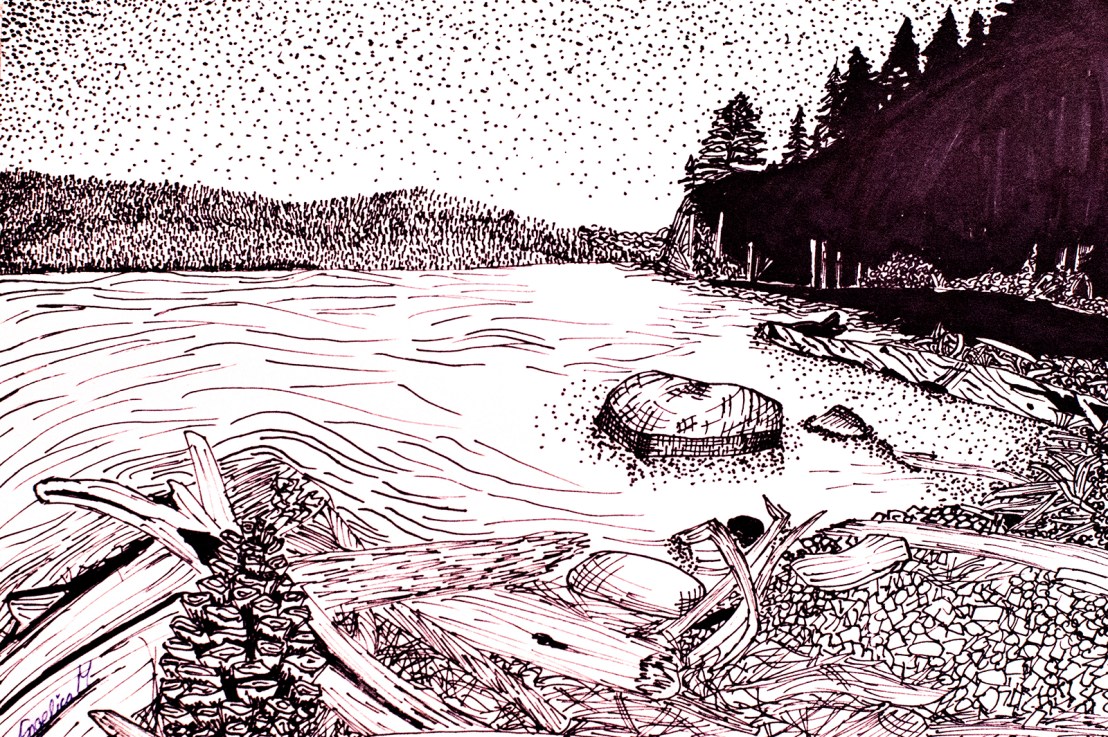
Students will first practice a variety of line drawing, or mark-making, techniques, and then use those techniques to render a landscape or still life in pen.
Activity statement –
Using photographs as a starting point, the objective of this lesson was for students to express changes in perspective, texture and value (light and dark) in a realistic drawing using a variety of lines, such as stippling, hatching, and cross-hatching, as well as varying the lines’ density. In this way they can transform a pen drawing into a realistic representation of a scene in nature. To help in this objective, students first created a mark-making chart expressing different types of lines, and discussed how the different types of lines could be used to represent texture, perspective and value.
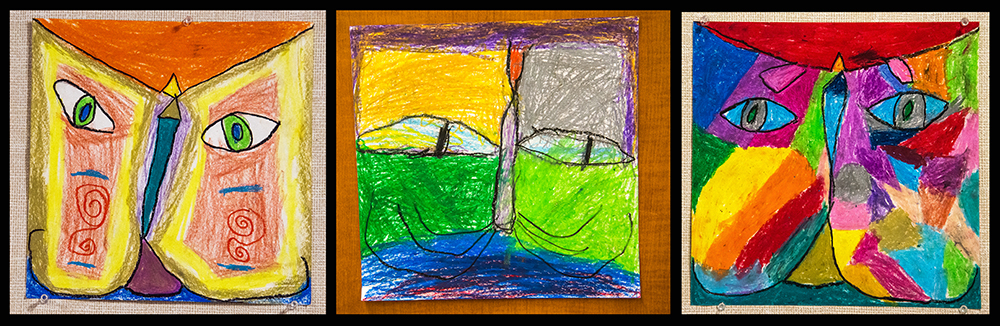
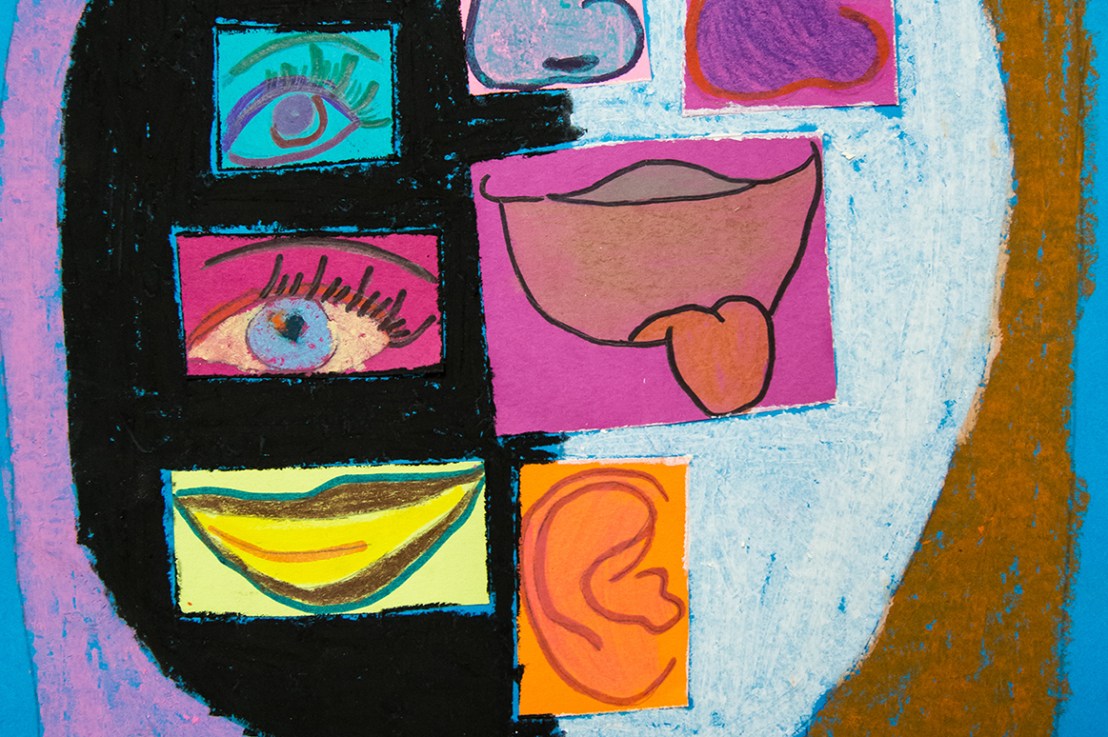
Students practiced aspects of traditional figure study, learning to draw facial features, hands and feet. Students then built on their experience to explore the Cubist approach to the figure, and used what they learned about Cubism to create a cubist-inspired portrait or figure collage their earlier drawings.





 In the K-8 Art Studio with Anita Sagastegui