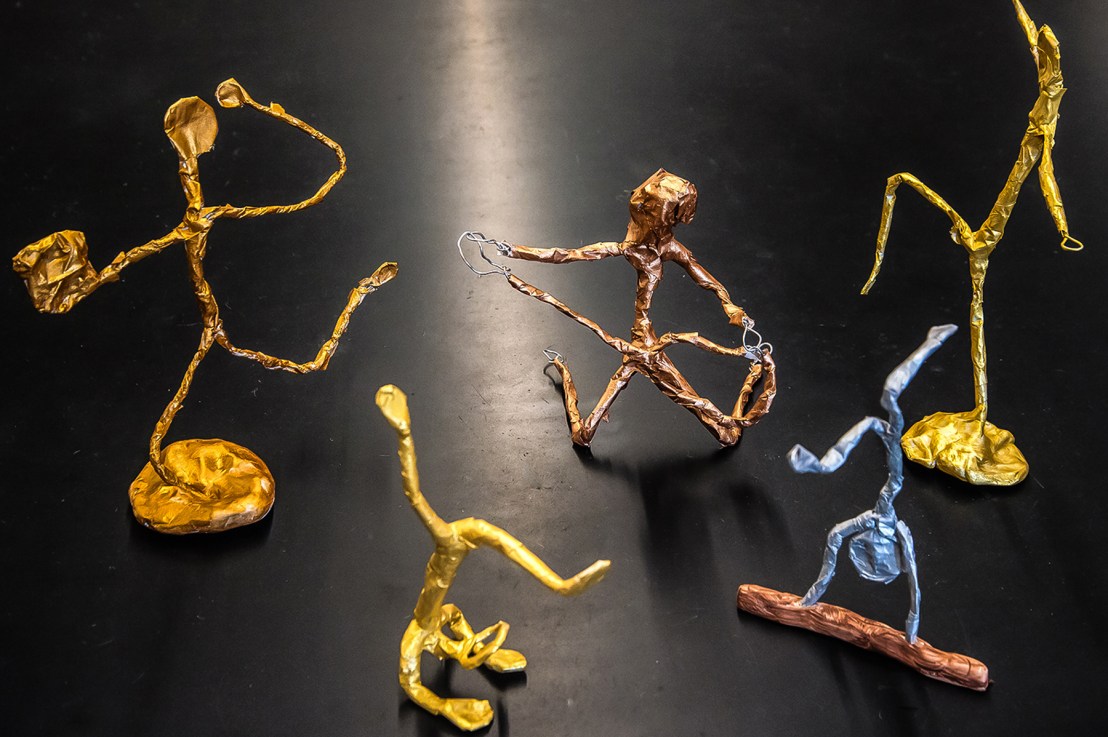
Observing the distorted gestural figure sculptures of Alberto Giacometti (1901-1966), as well as the elongated, rhythmic figure paintings by Ernie Barnes (1938-2009) that both emphasize and exaggerate long limbs, students will create similarly distorted, gestural sculptures primarily out of wire.
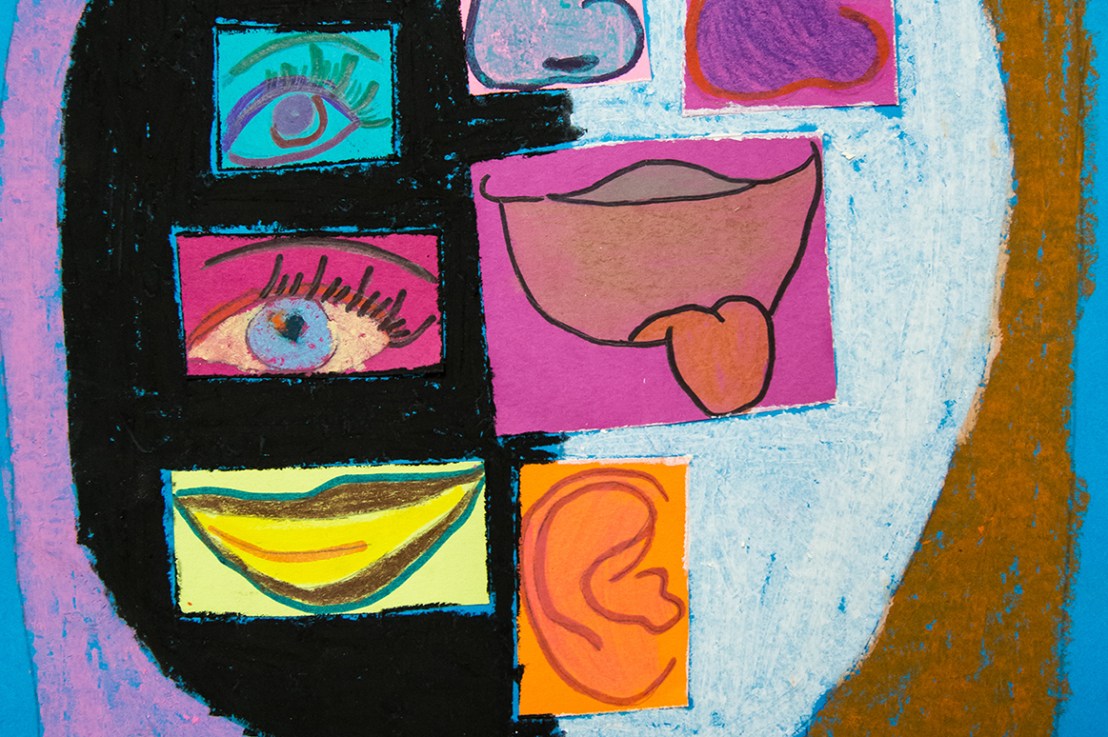
Students practiced aspects of traditional figure study, learning to draw facial features, hands and feet. Students then built on their experience to explore the Cubist approach to the figure, and used what they learned about Cubism to create a cubist-inspired portrait or figure collage their earlier drawings.
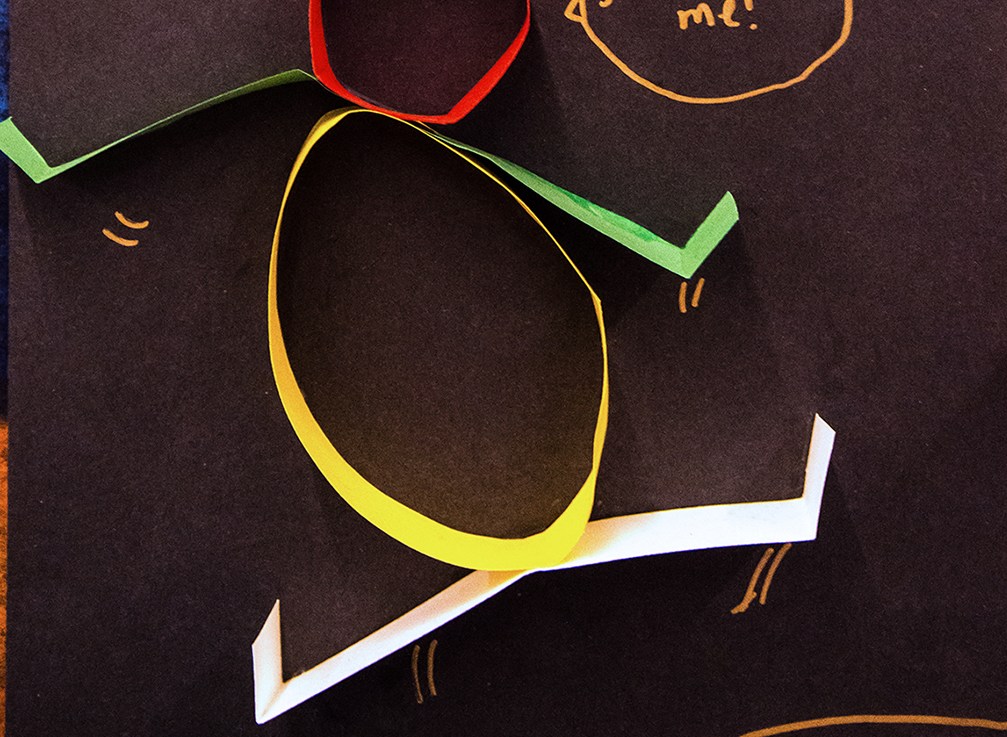
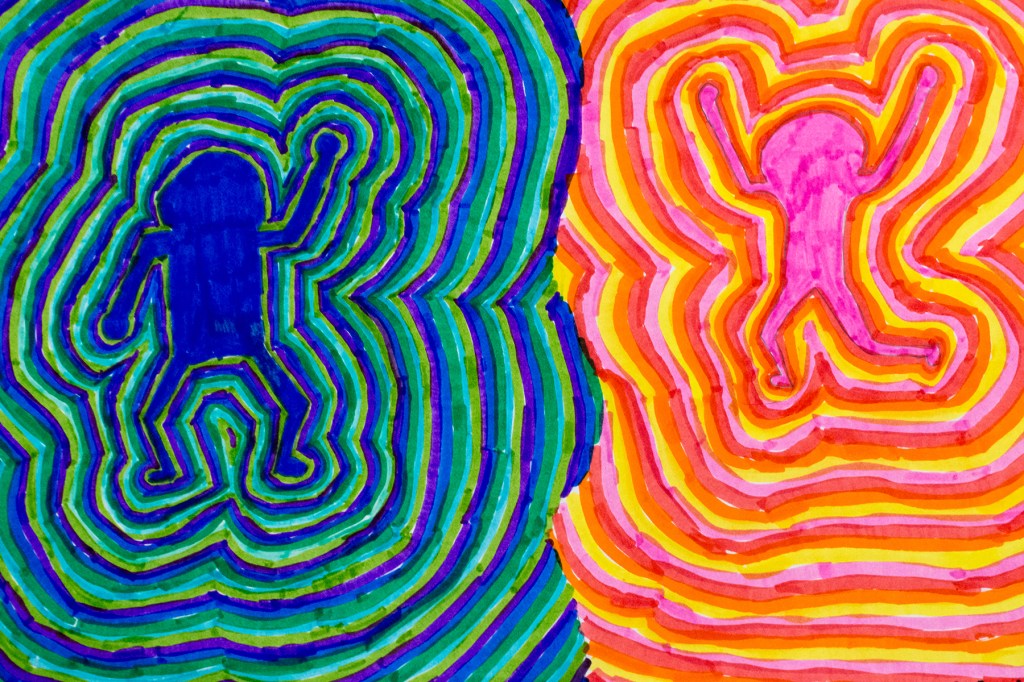
Students explored the work of contemporary New York artist Keith Haring. A crafty, resourceful and thoughtful artist, Haring created artwork with powerful messages using deceptively simple, cartoon-like designs in a variety of spaces, both private and public. His work was accessible to a diverse public in ways few artists had achieved.
Students observed and discussed his use of bold, primary and secondary colors, but more importantly they focused on Haring’s use of straightforward line to suggest movement, gesture and feeling. Students attempted their own designs inspired by the characteristics of Haring’s work. The first lesson had students create designs in 2-D, the second in 3-D.
Students will learn about a variety of mixed media collage artists and create their own mixed media collage from thoughtfully compiled items.
(FYI: I have a little video tutorial that I made for my students during the Covid-19 shelter-in-place period that takes this assignment one step further by making it a “secret” collage. Check it out to see what I mean:)
Activity statement –
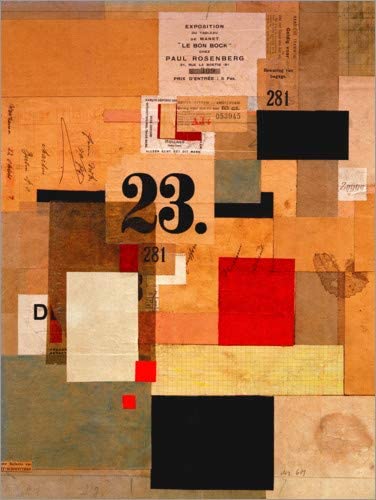
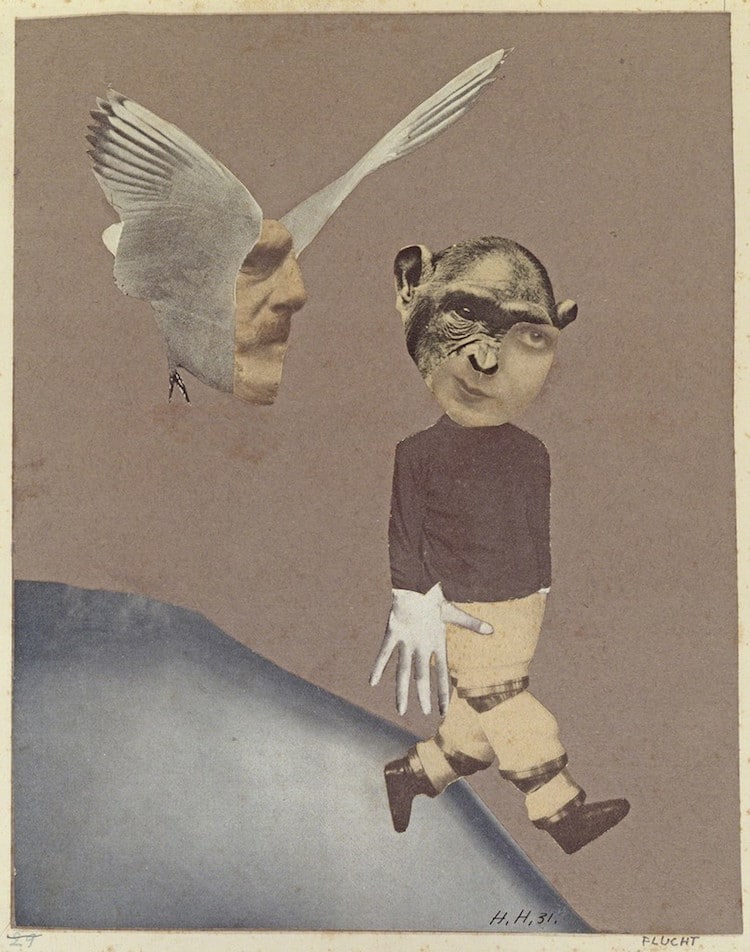
The term “collage” comes from the French word coller, or “to glue.” Originated by the Cubists, the collages were mixed media assemblages of newsprint, photographs, magazines and books, as well as wood, painted paper and sometimes even three-dimensional objects. For this lesson students will observe and discuss the work of three well-known collage artists, Hannah Hoch, Eileen Agar & Kurt Schwitters, and use their collages as inspiration for their own mixed media collage. However, students will be considering very personal objects and text to include in his or her own collage as each collage will also feature a stylized self-portrait photo.
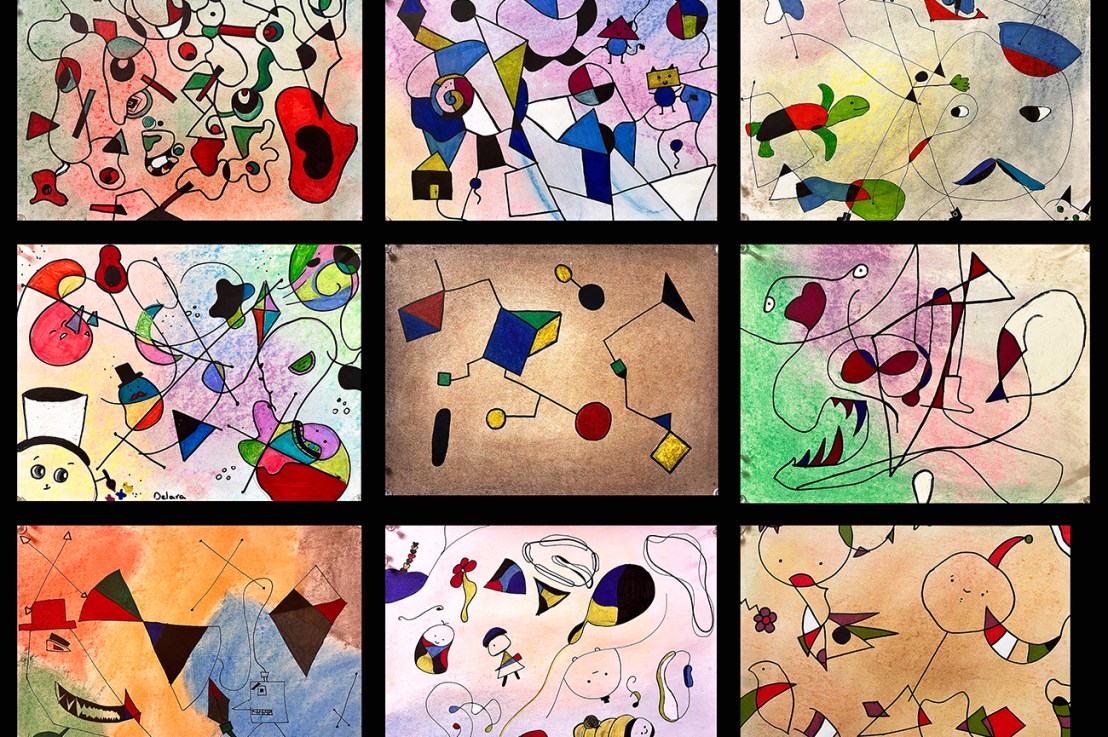
Students discovered the work of Joan Miró (1893-1983), a modern artist who blended thoughtful, “high art” concepts with spontaneous, playful designs that captured the imagination and challenged then-current notions of what constituted “good” art. A Miró tableau employed a muted, sparsely colored background with childlike doodles, geometric shapes and blocks of mostly primary color as foreground.
Guided by a similar sense of play, whimsy and surprise, students reproduced similarly styled, playful designs of their own.
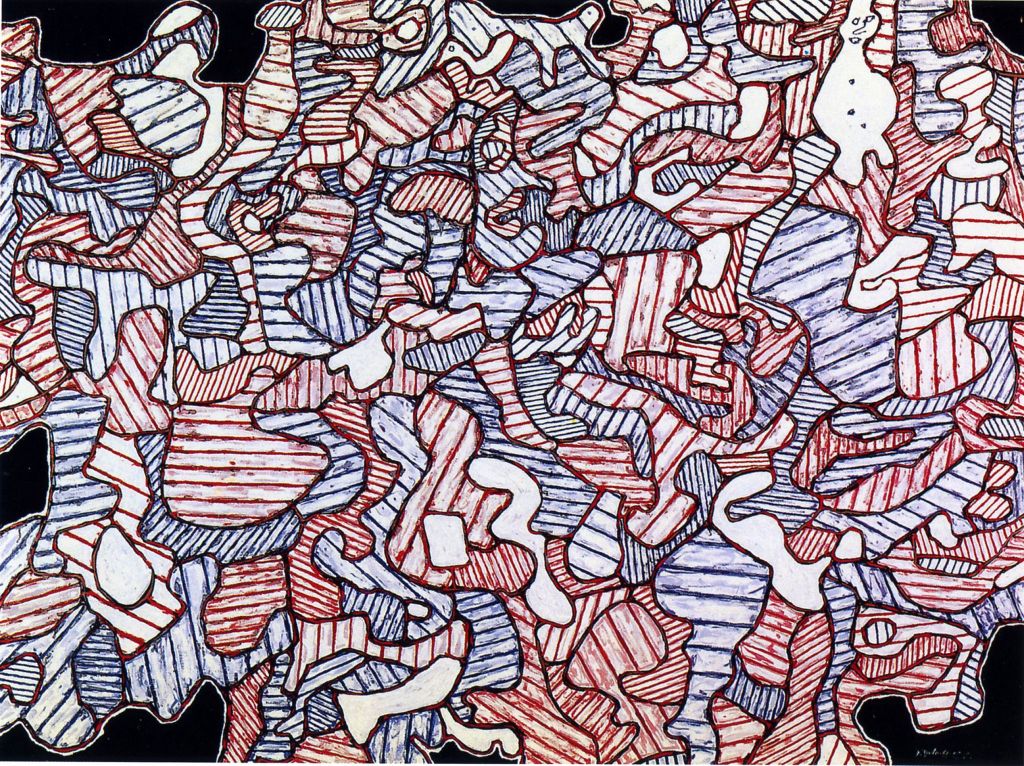
Description of the Unit – Emphasizing line and pattern with Jean Dubuffet’s Hourloupe style
According to one of my favorite modern art history sites, the Art Story, “Dubuffet’s L’Hourloupe series began in 1962 and would preoccupy the artist for many decades. The inspiration came from a doodle he created while on the telephone, in which the fluid movement of line combines with limited fields of color to create movement. He believed the style evoked the manner in which objects appear in the mind,” (https://www.theartstory.org/artist/dubuffet-jean/artworks/#pnt_5).
Jean Dubuffet, Banque des équivoques, 1964
Students love to learn about the origin of the Hourloupe series, being surprised at how much can be done with a seemingly simple doodle. They like the notion of trying to find hidden images within the doodle as well.
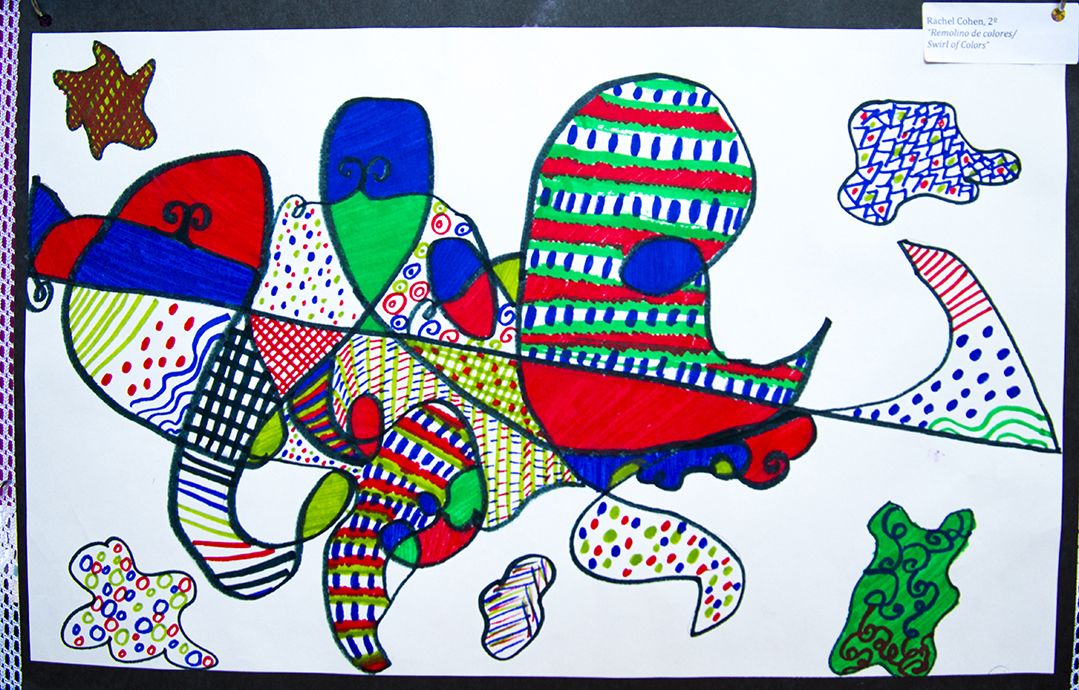
As students are shown ways to embellish a doodle with a variety of lines and patterns, we are given the opportunity to reinforce their understanding of repetition and pattern (having been introduced in kindergarten and practiced in 1st grade). To be able to identify and practice repetition and pattern is prescribed in most states’ standards for second grade visual arts.
2nd grade Jean Dubuffet-inspired design
As we observe Dubuffet’s Hourloupes, I call students’ attention to his minimal use of color, and have them comment on whether the colors are primary or secondary, and whether they are complementary. Later when making their own designs I have them also choose only a few colors, and have them think about whether they want the colors to be mostly warm or cool.
Description of the Unit – Frida Kahlo-inspired self-portraits
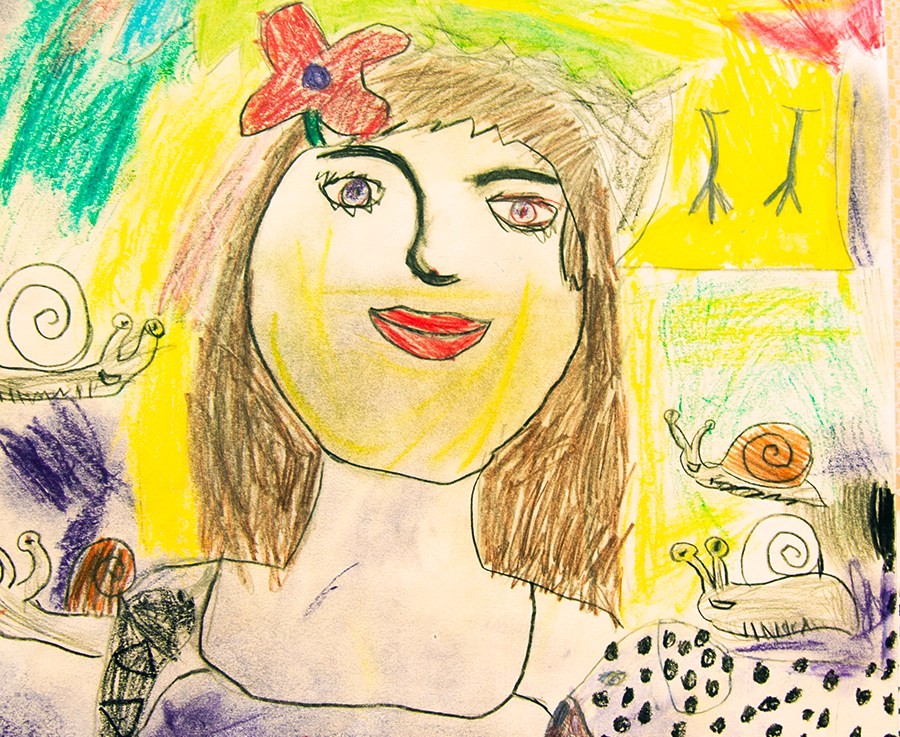
Students will explore Frida Kahlo’s iconic self-portraits and, using their observations of her work, create their own, including at least one “spirit” animal in the portrait with them.
Self portrait with Bonito, 1941
Relationship to life –
Frida Kahlo was a prolific painter whose most painted subject was herself. She often painted herself with various animals by her side, such as monkeys, parrots, hummingbirds and deer. Some of these were her real life pets, others were animals she identified with. If students had to choose animals that they personally identify with, what animals would they be, and why?







 In the K-8 Art Studio with Anita Sagastegui