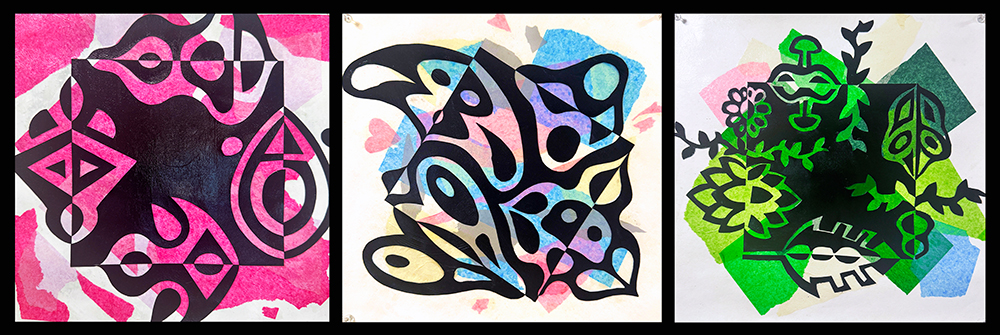
In this unit, students observed the traditional Japanese art of Notan designs, exploring the relationship between positive and negative space between elaborately cut designs, and how this relationship affects composition, balance and symmetry. Students created their own Notan designs.
Description of the Unit – To celebrate Halloween, students chose a famous painting featuring any kind of portrait, such as one of Vincent van Gogh’s or Frida Kahlo’s self-portraits. They recreated the painting onto posterboard, cutting out the area with the face so that they could ultimately “wear” the painting as a Halloween costume!
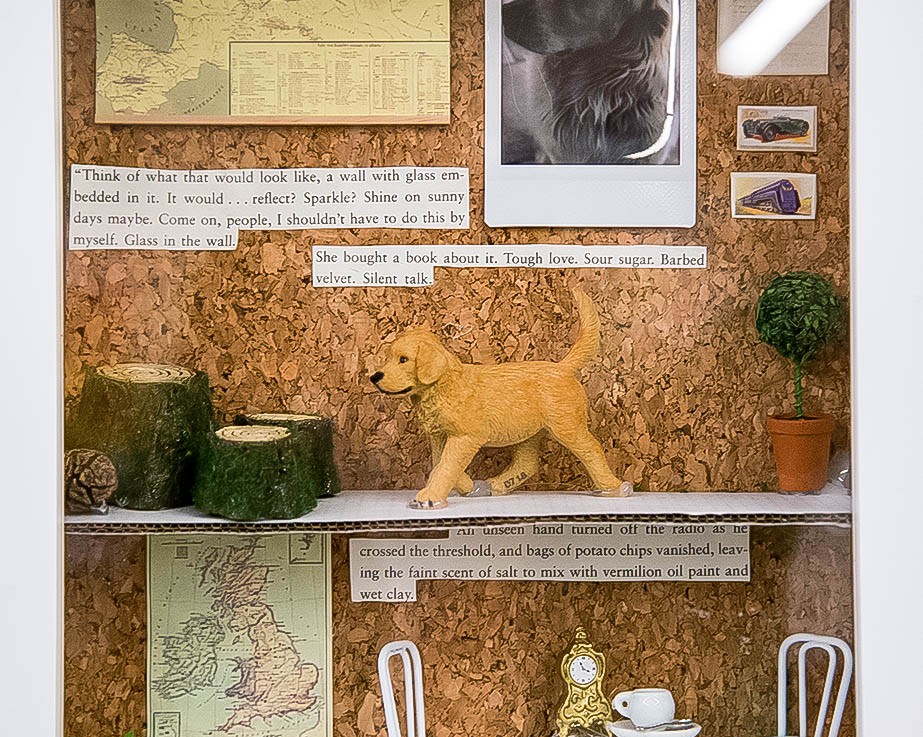
Description of the Unit – Students will observe and discuss Joseph Cornell’s memory boxes, and, gathering their own personal objects, found objects and other materials, students will thoughtfully create their own memory boxes.
Description of the Unit – When I introduce students to Cbabi Bayoc they often wonder about his “cool sounding” name. Where does it come from? His beautiful name comes from the artist himself. He changed his first name from Clifford to Cbabi, an acronym for Creative Black Artist Battling Ignorance, and, together with his wife, created a new last name for themselves, Bayoc, an acronym for Blessed African Youth of Creativity. Creative he is: Bayoc has worked his way from being a caricature artist at Six Flags in St. Louis to a renowned and sought-after artist commissioned by other notable institutions and artists, including the late musician Prince who commissioned Bayoc to create an album cover for him. Bayoc has also painted school and community murals, and in 2012 he took on one of his most ambitious projects, “365 Days with Dad.” Bayoc painted one painting a day that depicted a positive image of black fatherhood (all while raising his own kids) for the entire year. These uplifting, emotional paintings—such as one of a father swimming with his son, another of a dad reading to his child—has drawn praise from all around the nation, especially within the black community. Bayoc’s work is a testament to the positive influence an artist can have on a community and on the world, and he and his work should be studied and celebrated in our nation’s schools. Please visit his website at: https://cbabibayoc.com/
Activity statement – (Perspective and foreshortening)
One of the techniques that Cbabi Bayoc uses to great effect is foreshortening. I like to use three of his paintings of musicians to explore the mechanism and effect of foreshortening in two-dimensional art: Blues Man, Light Touch, and Serenading the Street. Observing the paintings, one notices how the use of foreshortening works to direct the movement of our eye, and to draw us towards a focal point.
Foreshortening places the viewer nose-to nose with the subject, especially in Bayoc’s work. The size exaggeration in foreshortening brings a sense of immediacy to the moment; we can hear the music being played, sensing the passion and concentration behind the music. Foreshortening in this case makes the action of playing music the true subject of the painting. Bayoc is inviting us to pay attention to the instruments and hands, but more abstractedly, he is asking us to pay attention to the music. In essence, foreshortening is emphasizing the music.
Students also observe the way in which two elements play a key role in how we relate to these paintings. Those elements are color and shape. The colors Bayoc uses are earthy, vibrant and alive, without being overwhelming. Some students have mused that the colors are used perhaps to emphasize warmth, energy and passion.
The features of the body and face are rendered through basic shapes, abstracting the figure somewhat to give us a more animated representation of reality. There’s an immediacy and accessibility to these paintings that seems to be the result of this slight abstract of the humans depicted.
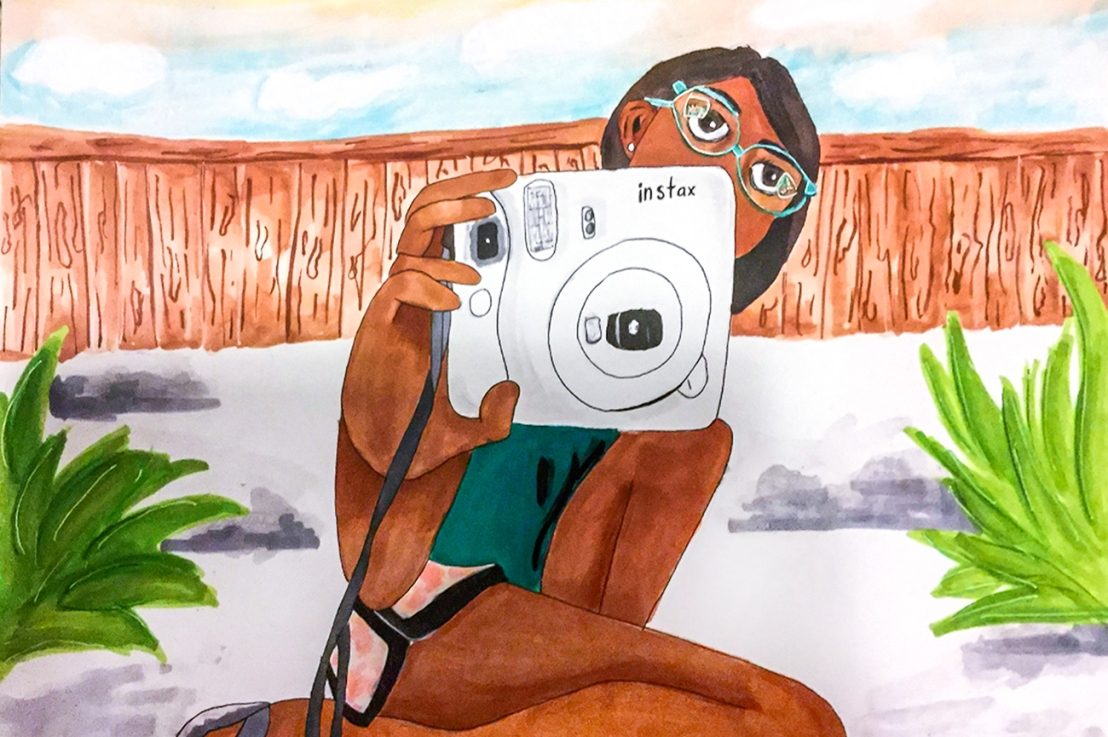
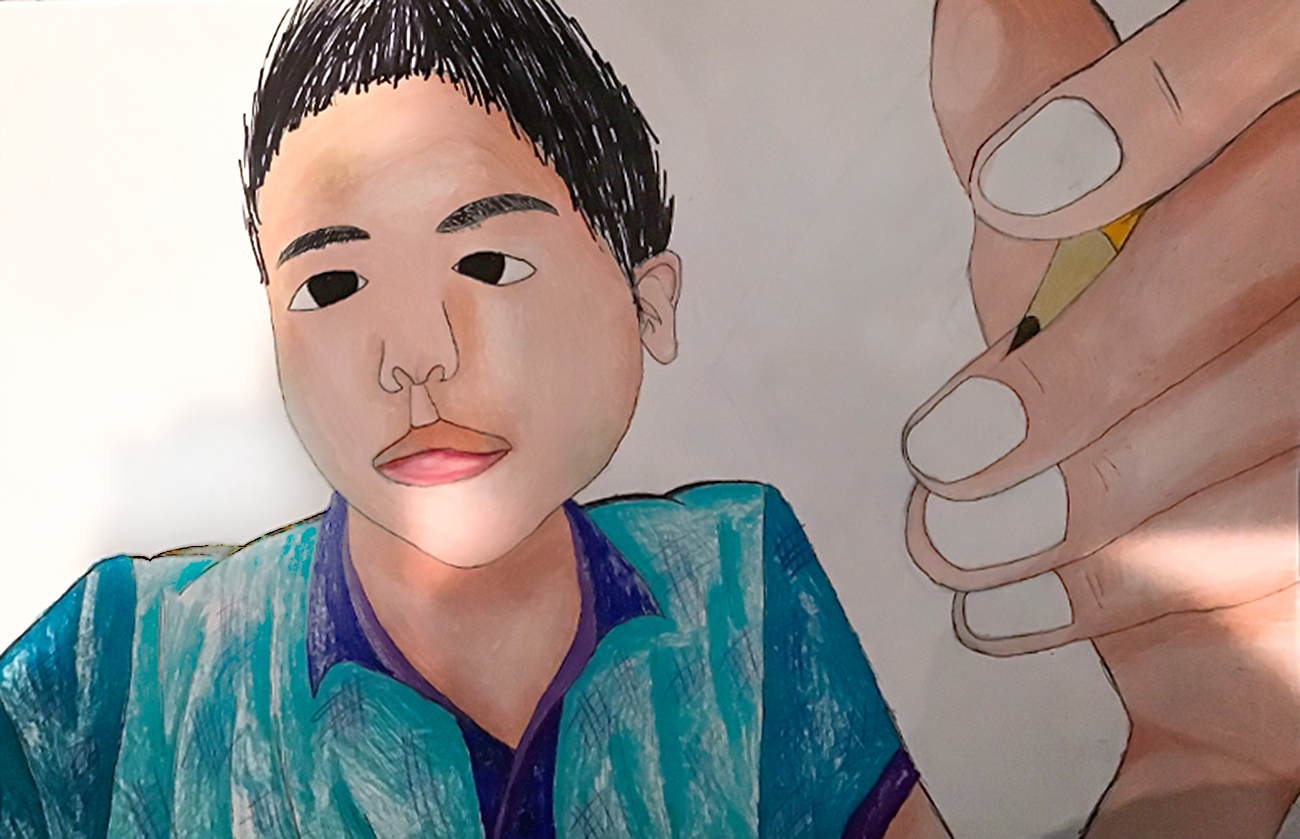
Student work: A Foreshortened Self-portrait – I ask my students: “how can you depict yourself in a situation that requires foreshortening, and make it truly come to life?” This is a challenging project for the students, for in order to express foreshortening you have to have the correct point-of-view. It is important to spend time looking at other images that express foreshortening as well, and I like to pull up images of swimmers, basketball players and martial artists that express foreshortening and non-foreshortened postures to discuss the differences in perspective, point-of-view and distance.
Examples of foreshortening
Goals – Students should…
Understand:
What foreshortening is, and why an artist might employ it in an artwork
Know:
How to express foreshortening
Other ways of emphasizing certain aspects of an artwork and creating a focal point
Be able to:
Complete one self-portrait using foreshortening, as well as thoughtful use of positive/negative space and accurate expression of light and shadow
Objectives – Students will:
Use vocabulary (foreshortening, emphasis, negative/positive space, background, foreground, warm/cool color, composition, geometric and organic—these latter two to denote shape) to describe Bayoc’s paintings and their own work
Demonstrate an understanding of ways to employ foreshortening in a self-portrait
Use mixed media to express light and shadow (basic three-dimensional effects) in their self-portrait
Express their personal aesthetic style through a self-portrait
Express their thinking and choice-making as they work
Finish one self-portrait that includes use of foreshortening, thoughtful use of positive/negative space, and accurate representation of light and shadow
Resources and materials – (Though not exactly a mixed media piece, I invite students to use any and all media below as they wish)
Exemplars of Cbabi Bayoc’s paintings, especially those emphasizing foreshortening
Tagboard or Bristol paper (or any heavyweight paper) in large format (12” x 18” is a good size)
Pencils
Erasers
Colored Pencils
Oil pastels
Chalk pastels
Paper towels (for blending)
Watercolor paint
Brushes
Cups
Questions –
•Topic questions (while observing Bayoc’s work):
What do you notice first?
What do you think the focal point of this painting is? Why?
What do you notice about the size ratio between foreground and background objects?
What kinds of colors are used here?
Do the shapes used feel more organic or geometric to you? Explain.
In what other ways does Bayoc draw our attention to the focal point?
Does this painting seem realistic? Why or why not?
How is light and shadow expressed? Describe.
How does this painting make you feel? Describe.
How does Bayoc use the space on the canvas?
•Association questions:
Why might an artist employ foreshortening?
In what other ways can you emphasize a focal point in a painting?
•Visualization questions:
What kinds of images or scenes can you imagine having a foreshortening element? Describe.
What are some perspectives in which you would not be able to express foreshortening?
What strategies might you use to create a focal point?
What strategies might you use to express light and shadow?
•Transition questions (observing completed work by other students):
What do you think the focal point is here?
What did the student do well? What might you suggest they could do to enhance their work?
Evaluation – Did students:
Properly express foreshortening (including correct use of perspective)?
Create a visible focal point?
Express realistic light and shadow?
Create a visually interesting composition?
Informal:
Group discussion
Oral responses to questions
Classroom observation
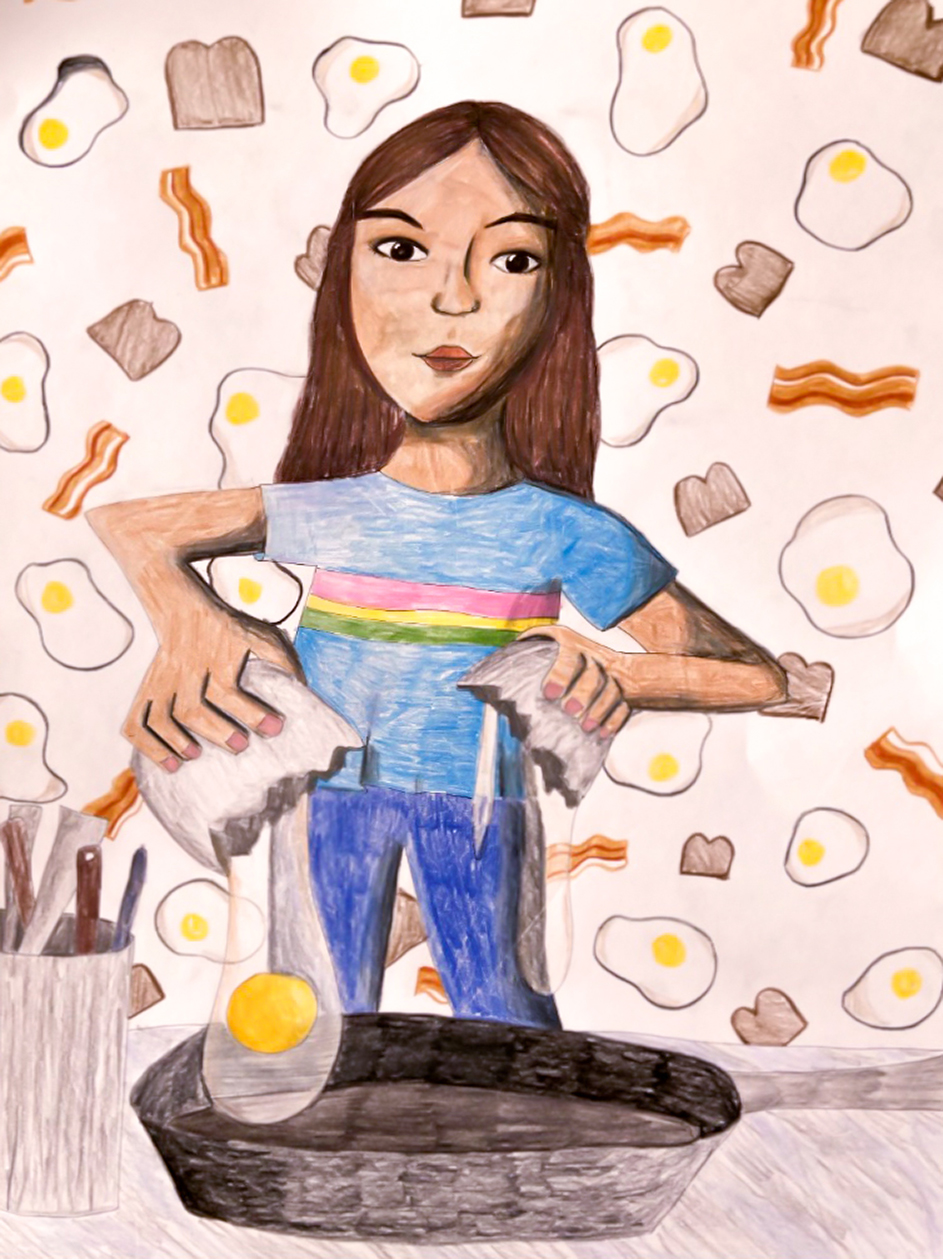
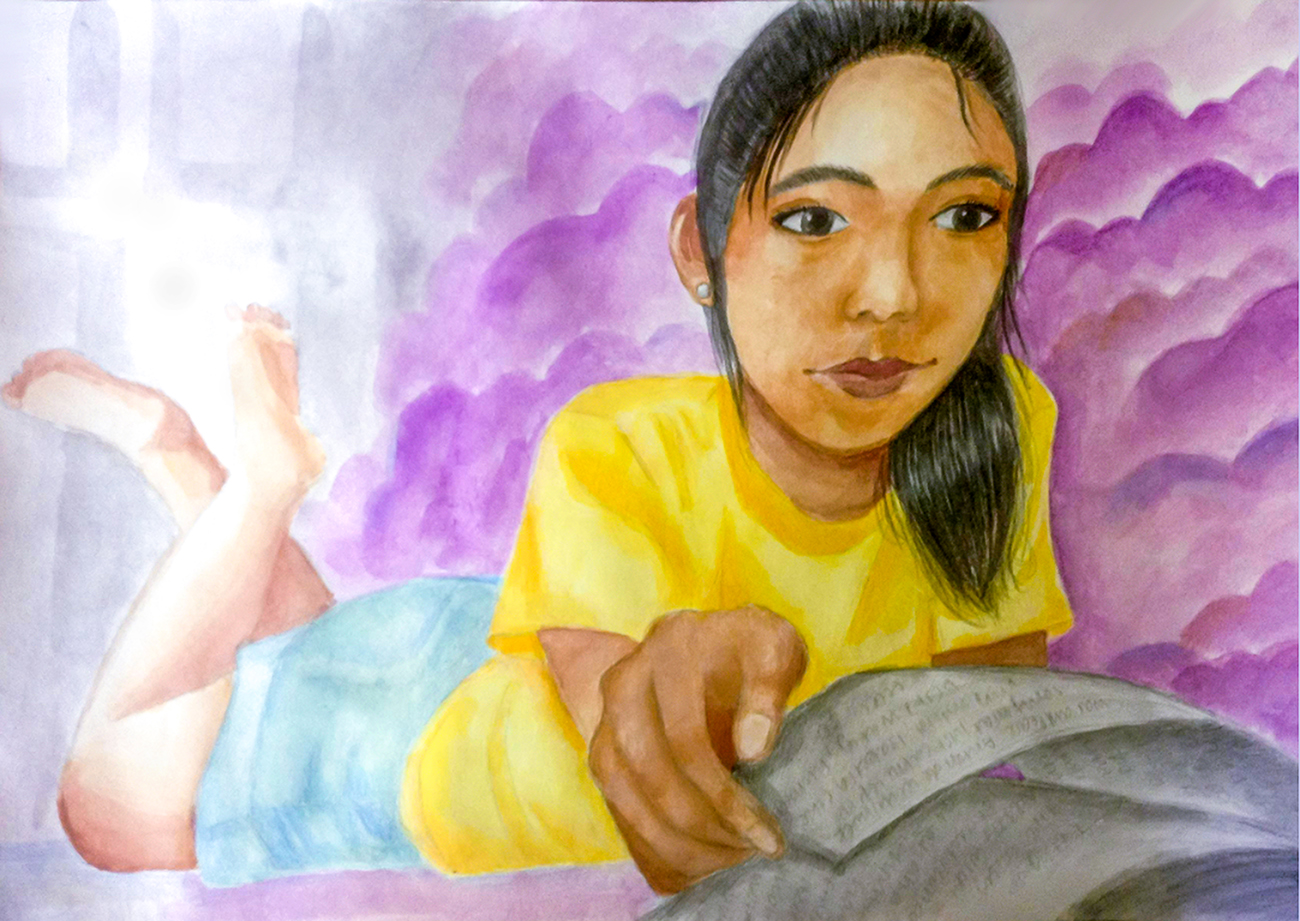
The following are student examples. I apologize for some of the shadows on these photos; we did this unit during the Covid pandemic, so students were at home, and responsible for sending me photos of their work, hence some of the shadows. What I enjoy so much about these pieces is how different they all are, from subject, to media to approach. It was such fun guiding the students through this unit and seeing the resulting artwork.
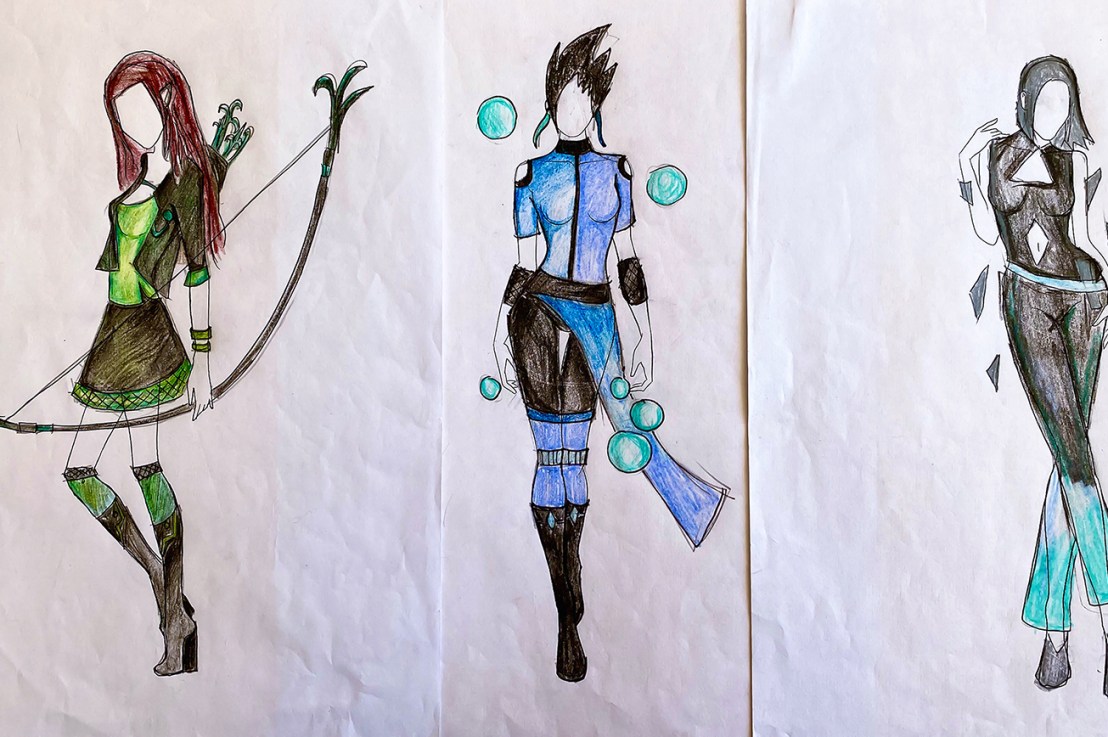
Description of the Unit – Students will create their own fashion line, featuring at least three different looks that share a unifying theme, be it color, pattern, line or particular article of clothing or accessory.
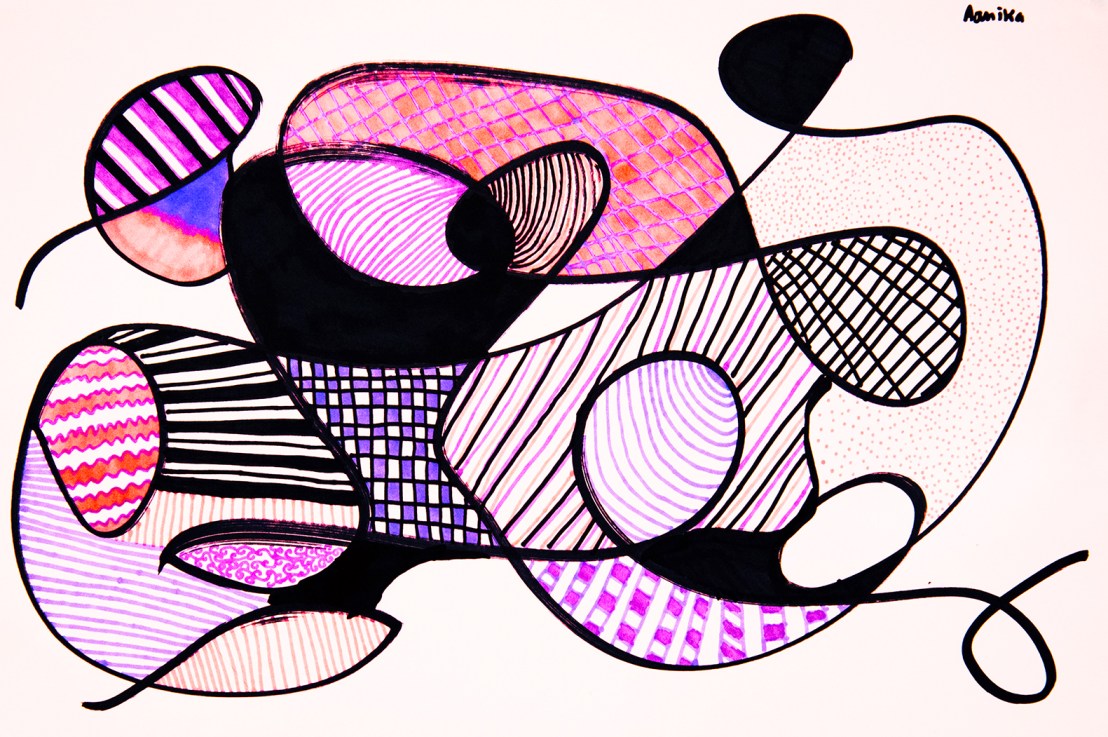
Description of the Unit – Emphasizing movement, balance and repetition with Jean Dubuffet’s Hourloupe
This unit revisits a second-grade unit which also focused on the Hourloupe to practice line and pattern; here we go further to practice the above-mentioned principles of design.
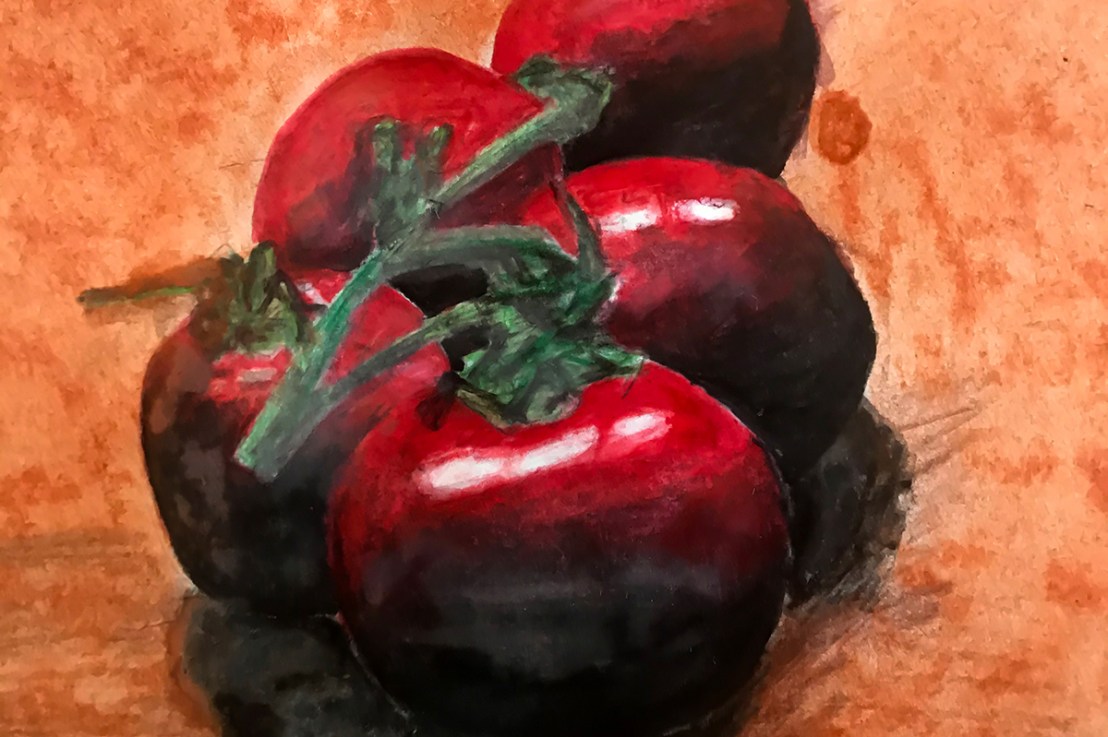
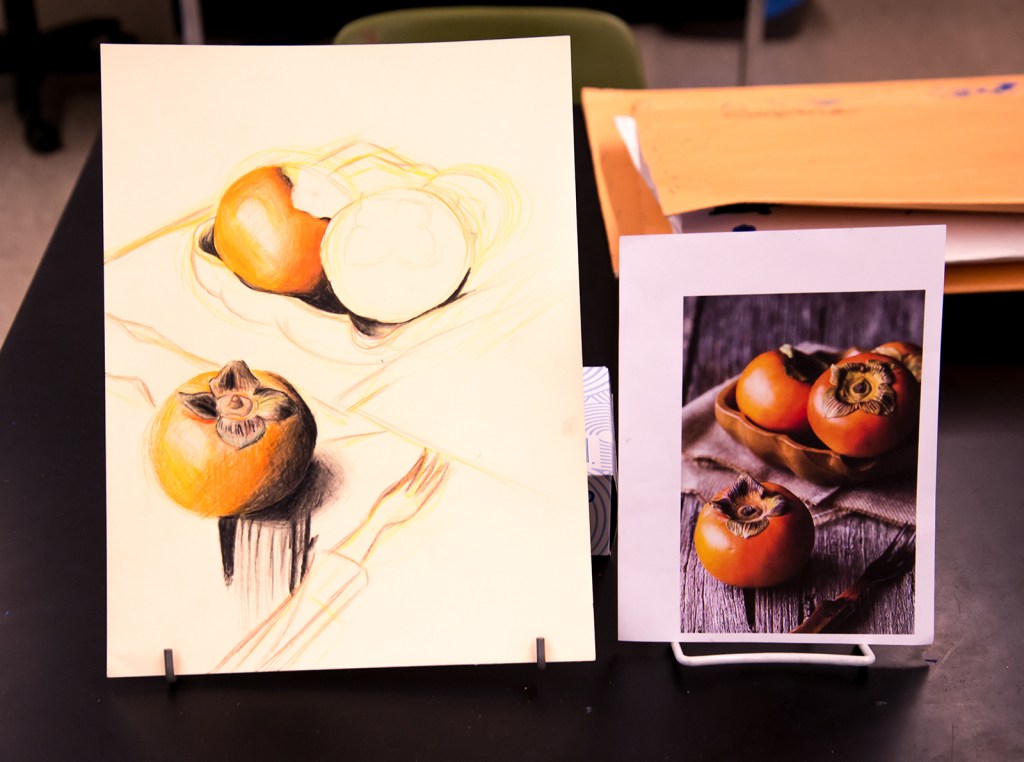
Students will learn and practice essential colored pencil techniques involving mark-making and shading to create a still life.
Activity statement –
Coloring with colored pencils can be a deeply rich and satisfying experience. Something about the feel of the medium as it is spread across paper, and then combined with other colors to slowly come to life, can be both thrilling and meditative. Given some basic techniques students can achieve highly rewarding results.
Students will explore the monochromatic, rhythmic and balanced found-art assemblages of Louise Nevelson, and create their own assemblages both individually and in small groups.
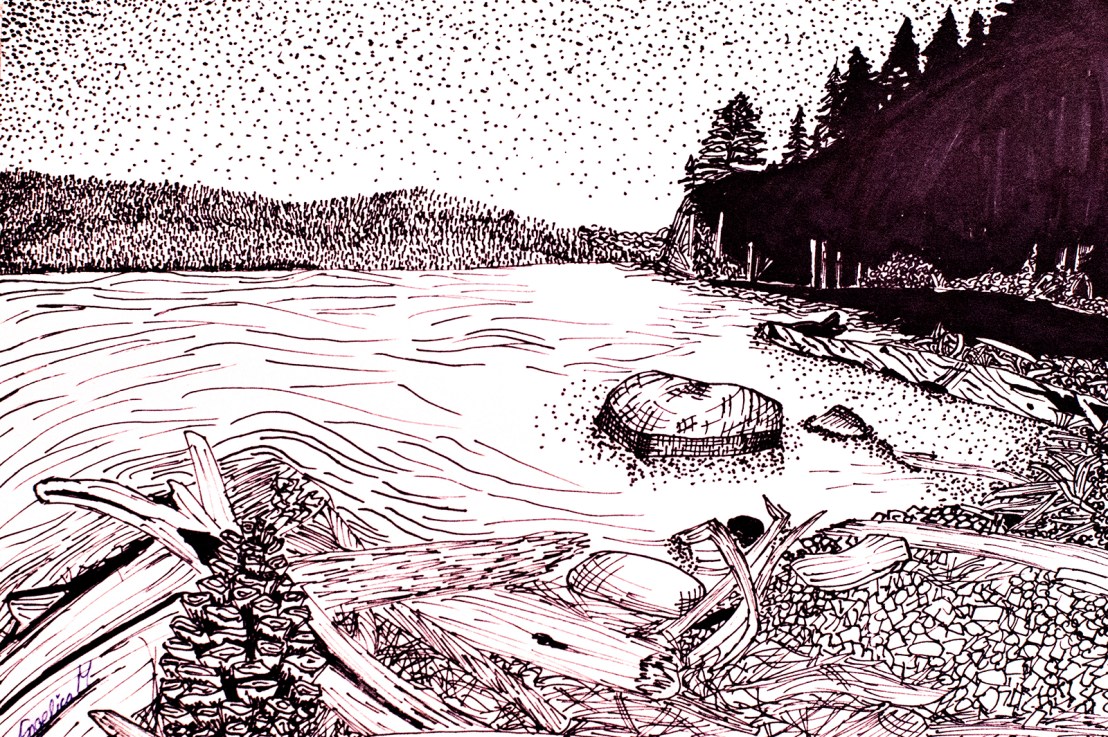
Students will first practice a variety of line drawing, or mark-making, techniques, and then use those techniques to render a landscape or still life in pen.
Activity statement –
Using photographs as a starting point, the objective of this lesson was for students to express changes in perspective, texture and value (light and dark) in a realistic drawing using a variety of lines, such as stippling, hatching, and cross-hatching, as well as varying the lines’ density. In this way they can transform a pen drawing into a realistic representation of a scene in nature. To help in this objective, students first created a mark-making chart expressing different types of lines, and discussed how the different types of lines could be used to represent texture, perspective and value.











 In the K-8 Art Studio with Anita Sagastegui