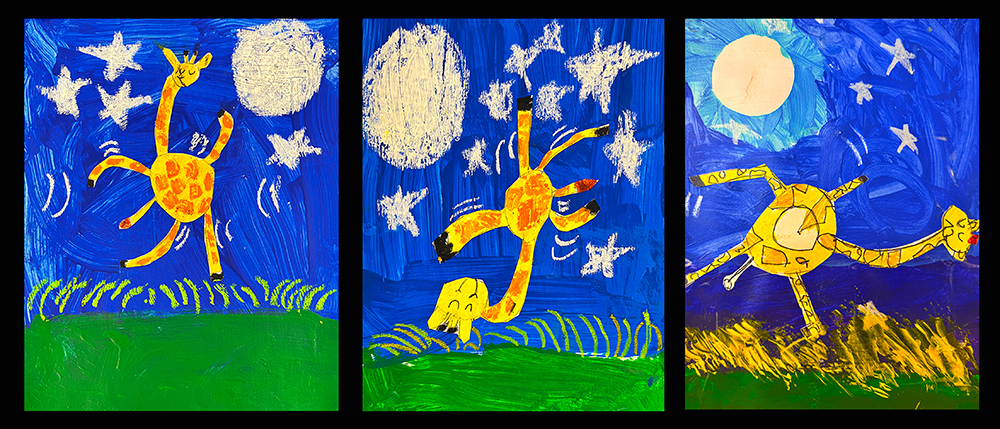
Description of the Unit – Inspired by the delightful children’s book Giraffes Can’t Dance by Giles Andreae and illustrated by Guy Parker-Rees, students learned about ways in which movement can be expressed in art, later recreating their own dancing giraffe.
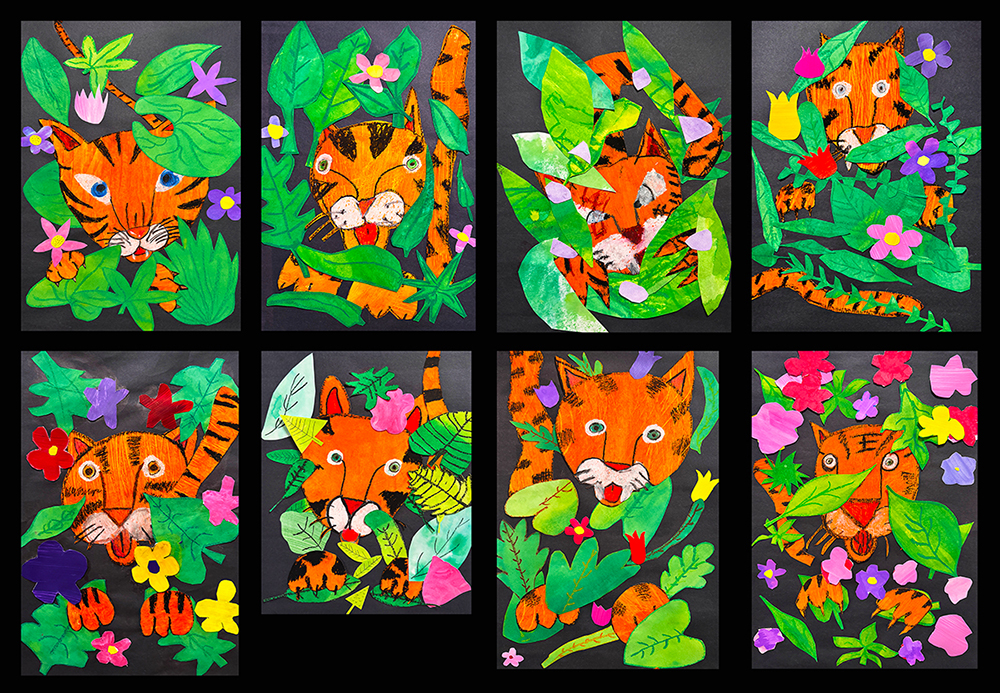
Description of the Unit – Students will observe Henri Rousseau’s paintings of tigers in the jungle with the objective of understanding foreground and background.
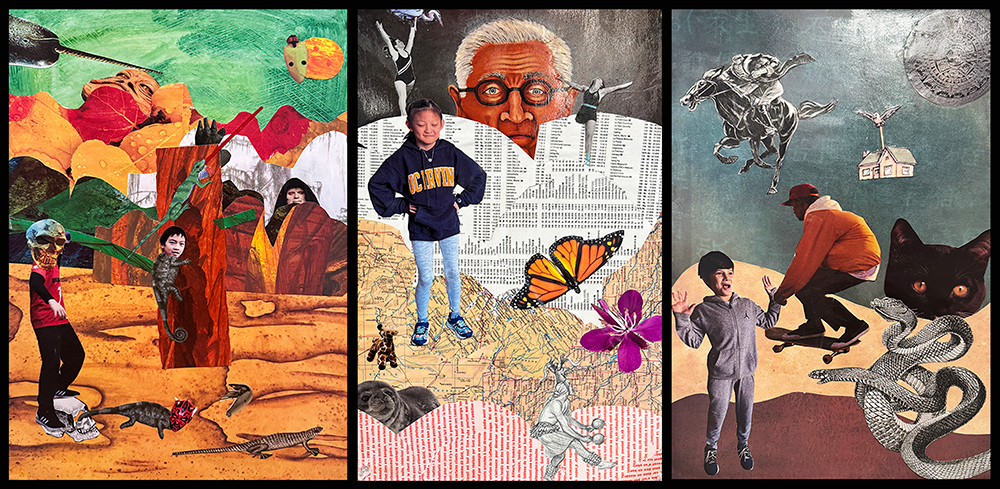
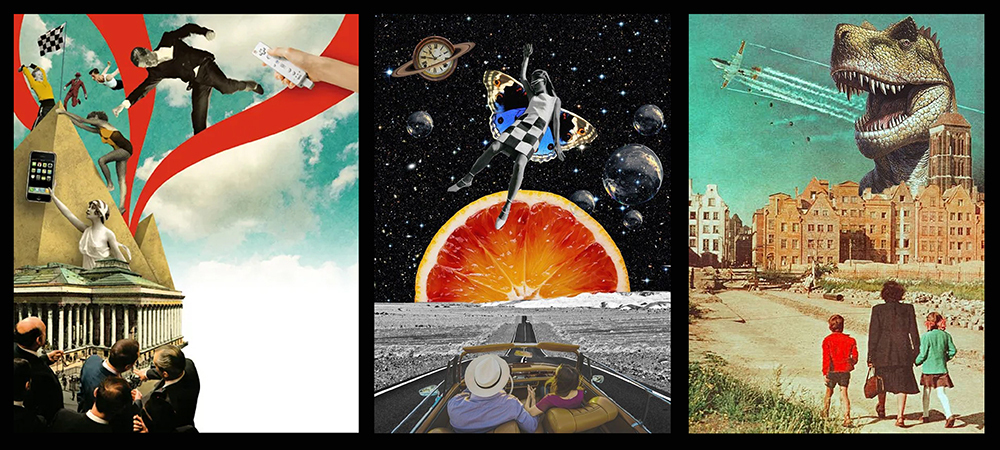
Description of the Unit – Observing the work of several Surrealist collage artists, like Julien Pacaud, students will learn about the meaning of the term Surrealism, and how it is used in collage art. They will then go on to create their own weird, wild and wonderful collages, using varied sources such as books, magazines, and hand-made paper, while also including an image of themselves within the composition.
Surrealist collages by (l-r): Julien Pacaud, unknown artist, and Ayham Jabr
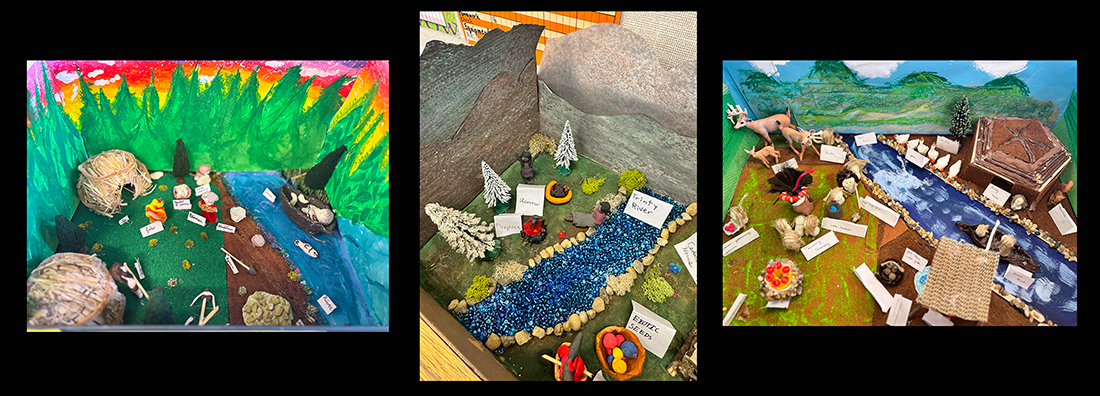
Description of the Unit – To support their research of California’s first Americans, students worked in groups to create dioramas representing the lives of a particular tribe (assigned to their group).
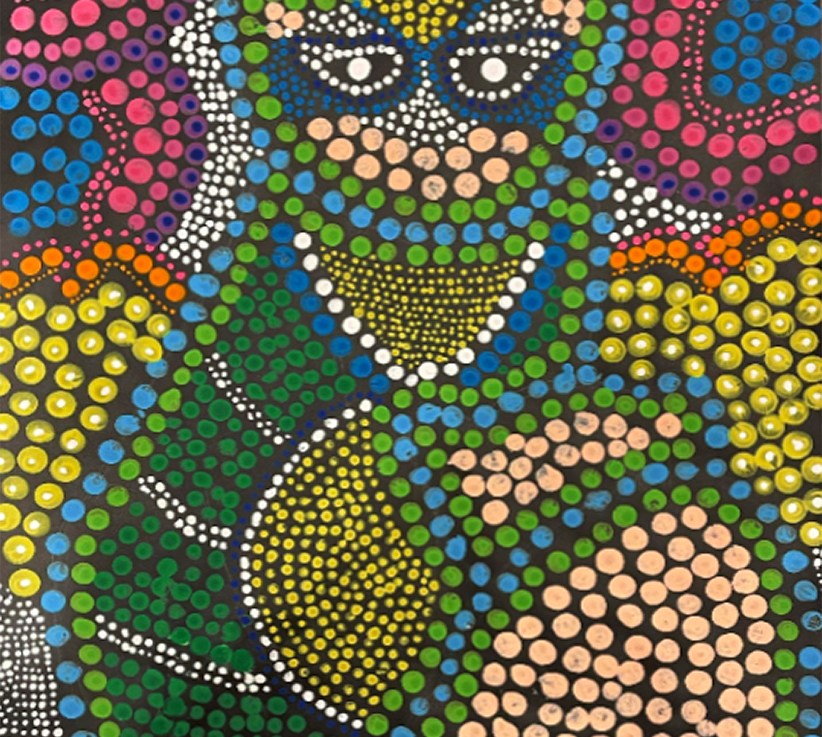
Description of the Unit – Students will observe and discuss examples of aboriginal dot painting, from very early examples to the art produced by the culture in present day. Students will use what they learned about color, pattern and symbol in their observations to create their own dot paintings, expressing scenes from nature.
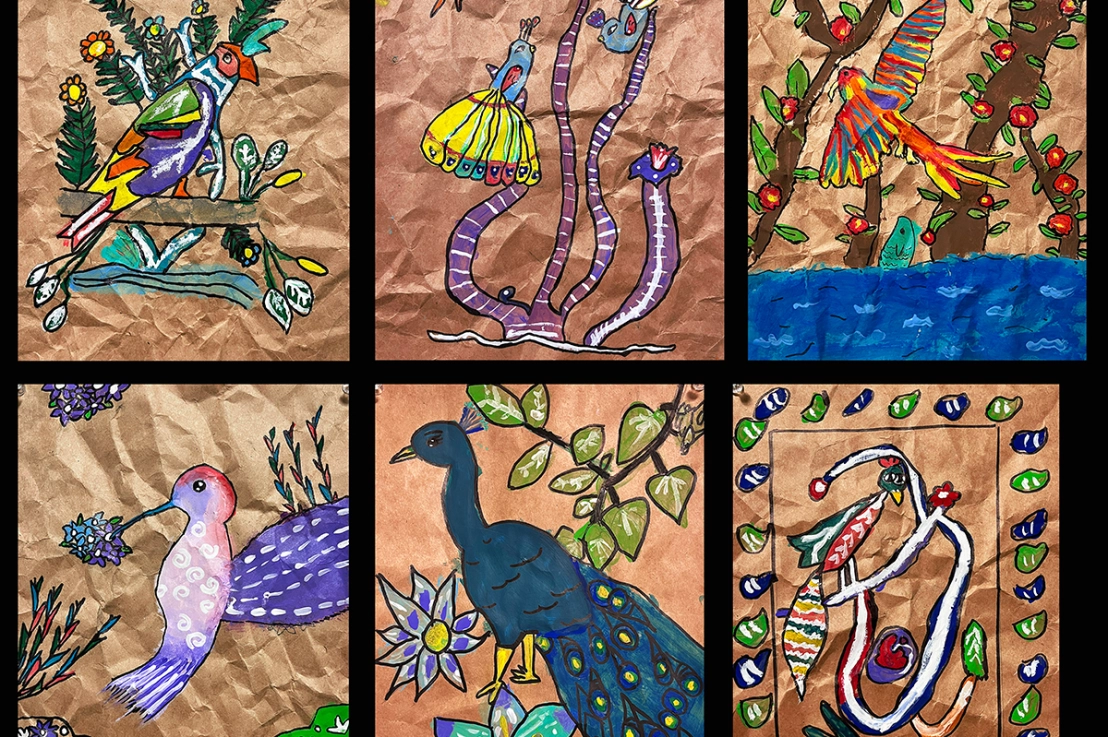
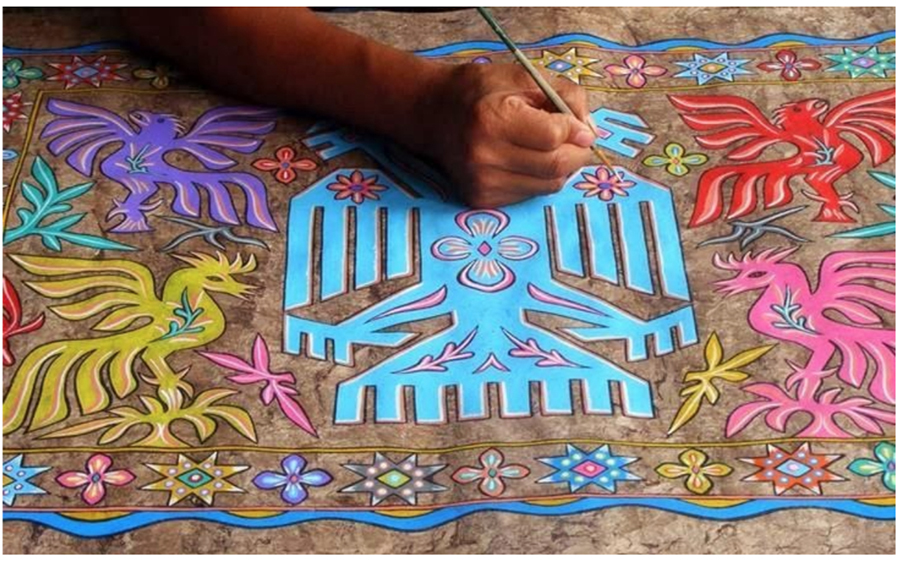
Description of the Unit – Students will explore the fascinating Mexican folk art known as Amate bark painting. Using their observations of the art form, students will crumple brown kraft paper (a part of this project they love) to give it a bark-like texture, and paint their own painting onto it in the same bold and bright colors as used by Mexican artisans of Amate.
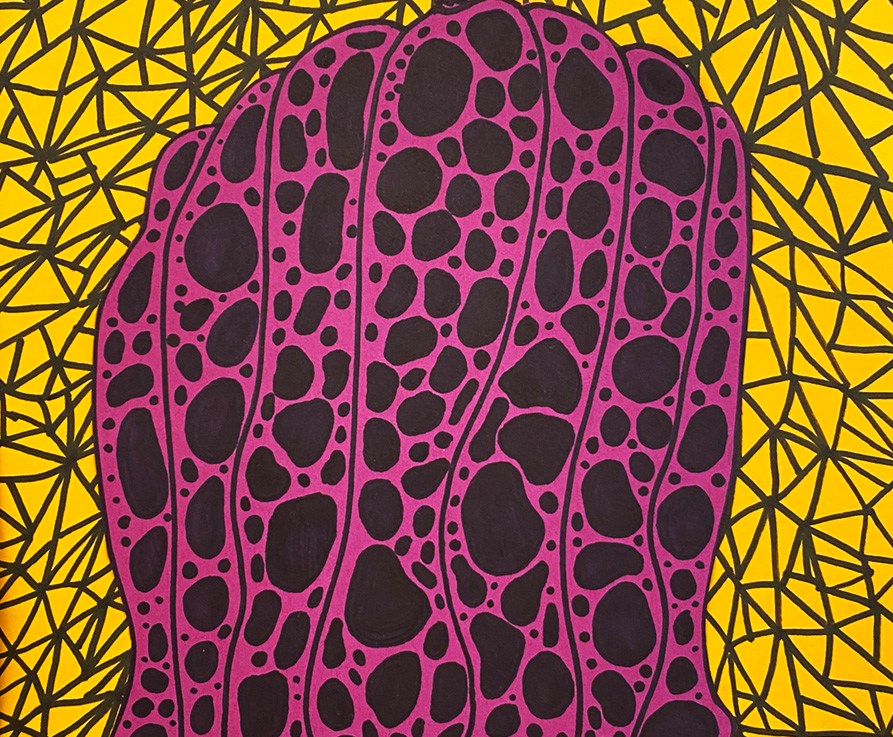
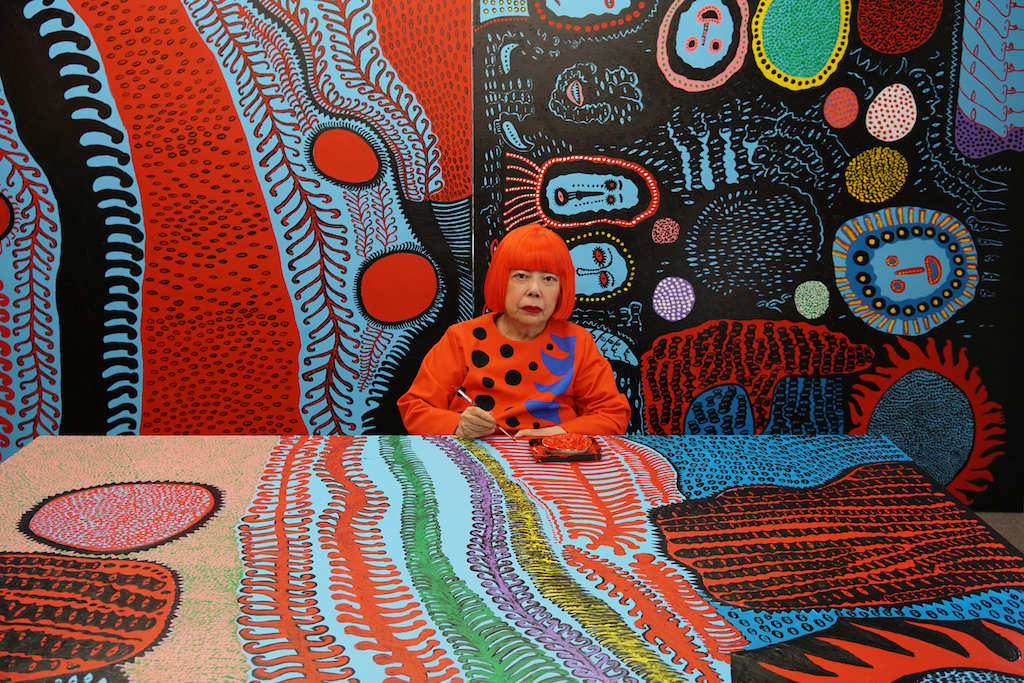
Yayoi Kusama is one of my favorite contemporary artists. Her irreverence, originality, rebelliousness and whimsy have won my heart, as have her personal struggles with mental illness. An artist whose work always surprises and delights, I love to bring her life story and work to my students.
Together we explore and discuss the work of this seminal Japanese artist, whose pioneering installations have enthralled visitors to her work over the last several decades. Using her iconic polka-dotted pumpkins as inspiration, students will emphasize the elements of line, color and shape, and well as principles of pattern, repetition and movement, in their own brightly colored pumpkins.
This is a two-part unit that will be guided by both technique and style, starting with practicing four basic watercolor techniques: 1) dry paint on dry paper; 2) dry paint on wet paper; 3) wet paint on dry paper, and 4) wet paint on wet paper. (For some students this will be review as we practice this in earlier grades as well.) In the second part of this unit students will explore Impressionist painting, particularly the work of Suzanne Valadon (to be posted next week).
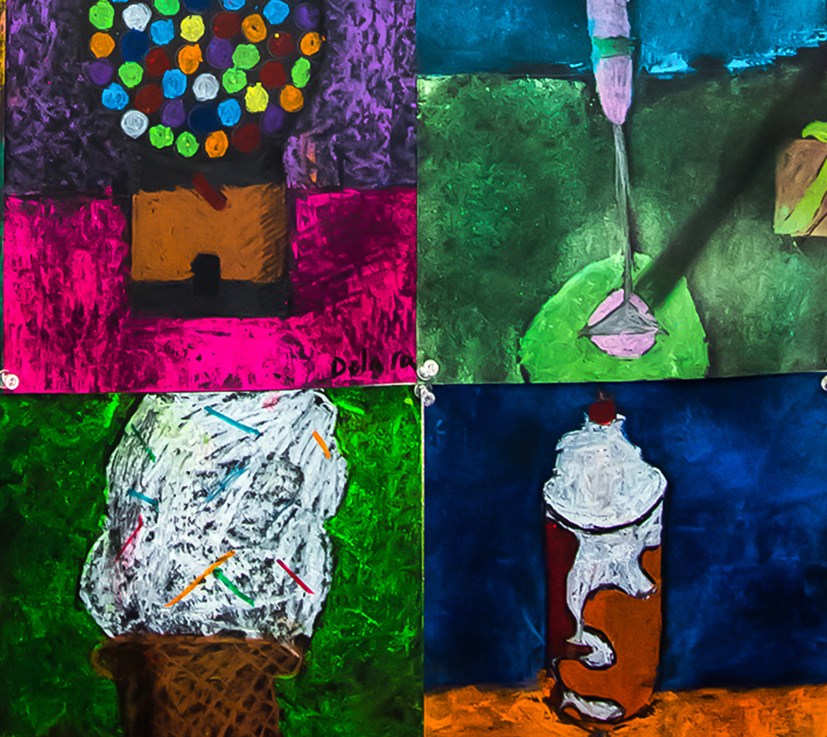
The class will observe and discuss the work of contemporary American painter Wayne Thiebaud, focusing especially on his dessert paintings. Using similar characteristics as seen on Thiebaud’s paintings, students will create their own dessert composition in oil and chalk pastels.
Activity statement –
According to the Jim Kempner Fine Art website, “Wayne Thiebaud (b. 1920) is an American painter best known for his still life paintings of edible treats and everyday objects in his singular illustrative style” (https://jimkempnerfineart.com/wayne-thiebaud.php ). His most popular subject matter includes cakes in colorful pastel hues, slices of pie, candies such as lollipops, cupcakes, and interestingly, the streets of San Francisco. His paintings generally include thick, bold applications of stylized color, highly defined shadows, and cartoon-like line. His approach to painting gives his desserts a tactile, textured feel. Students will consider using these same characteristics to create the composition of one sweet treat (or treats) of their own, while also considering the placement of the light source in their design, so as to properly express a form and cast shadow.





 In the K-8 Art Studio with Anita Sagastegui