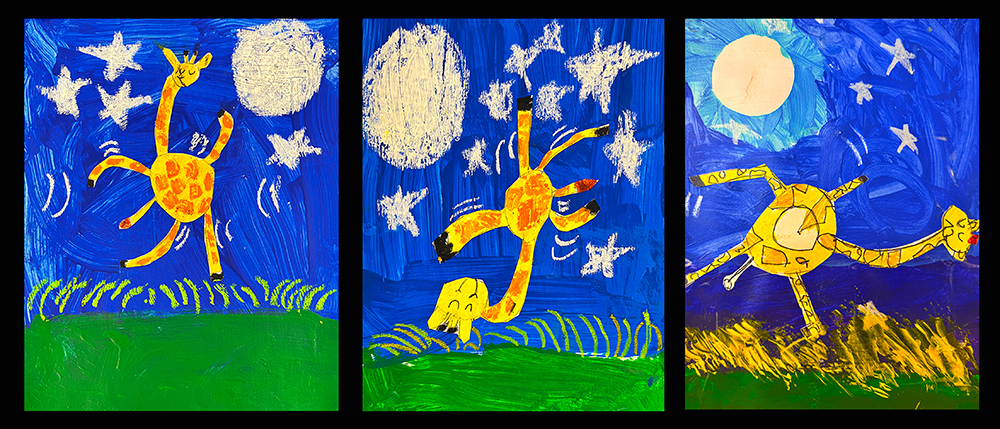
Description of the Unit – Inspired by the delightful children’s book Giraffes Can’t Dance by Giles Andreae and illustrated by Guy Parker-Rees, students learned about ways in which movement can be expressed in art, later recreating their own dancing giraffe.
Description of the Unit – It’s a fun experiment to introduce students this young to the concept of multiple perspectives. To approach this concept in a playful way, students created a Picasso-inspired oil pastel illustration of his beloved dog Lump.
Description of the Unit – Students will be “introduced” to Monet and will learn all about the ways he approached painting the world around him. Students will try to recreate his painting of water lilies, paying attention to their brushstrokes and the colors they choose.
Kindergarten student’s Monet-inspired Water Lilies
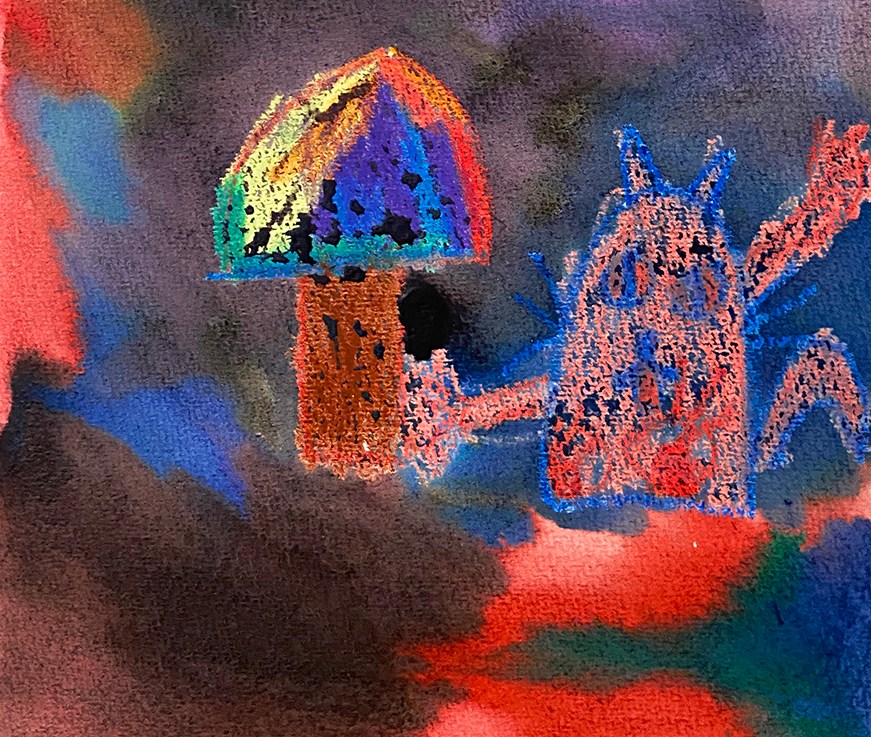
Description of the Unit – Students will learn about oil’s resistance to water both in nature and through the media of watercolor and crayon, and explore this resistance via playful experimentation and one finished composition.
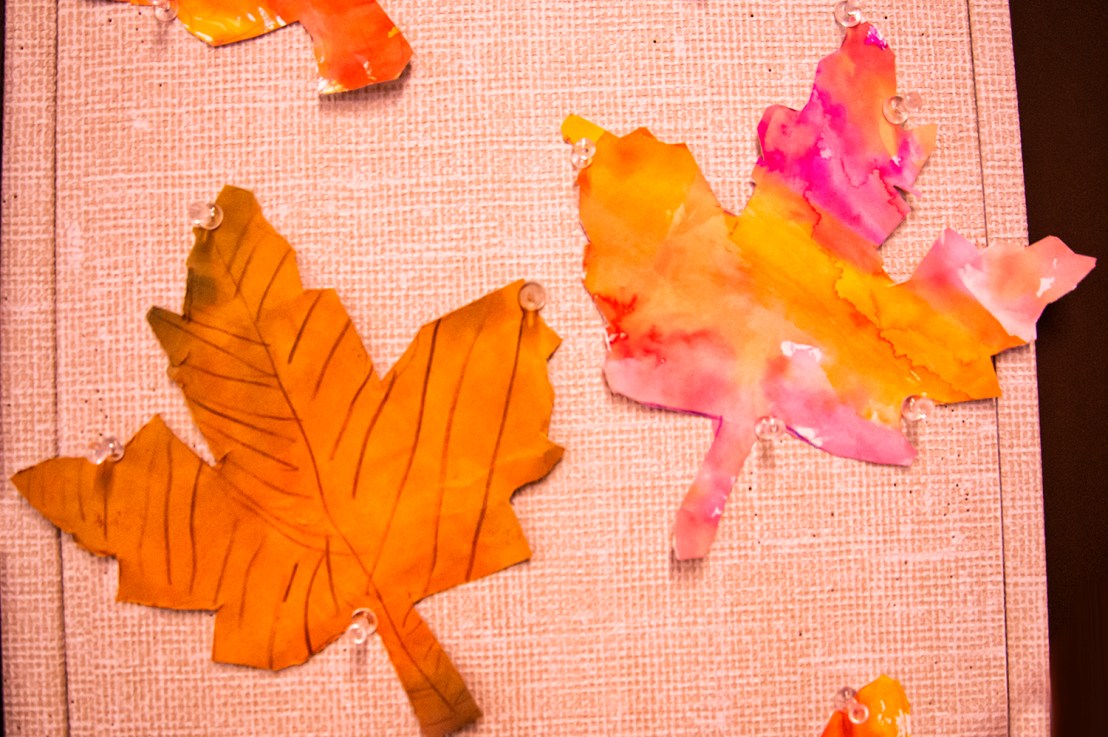
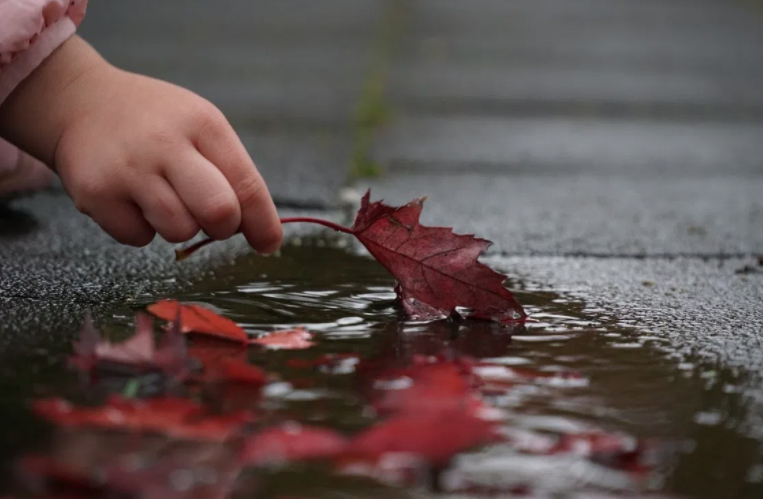
Description of the Unit – While outside on a beautiful fall day, students observed Autumn leaves, noticing the colors, shapes and textures of each leaf. Back in the art room, students used their observations to create their own vibrantly colored fall leaves.
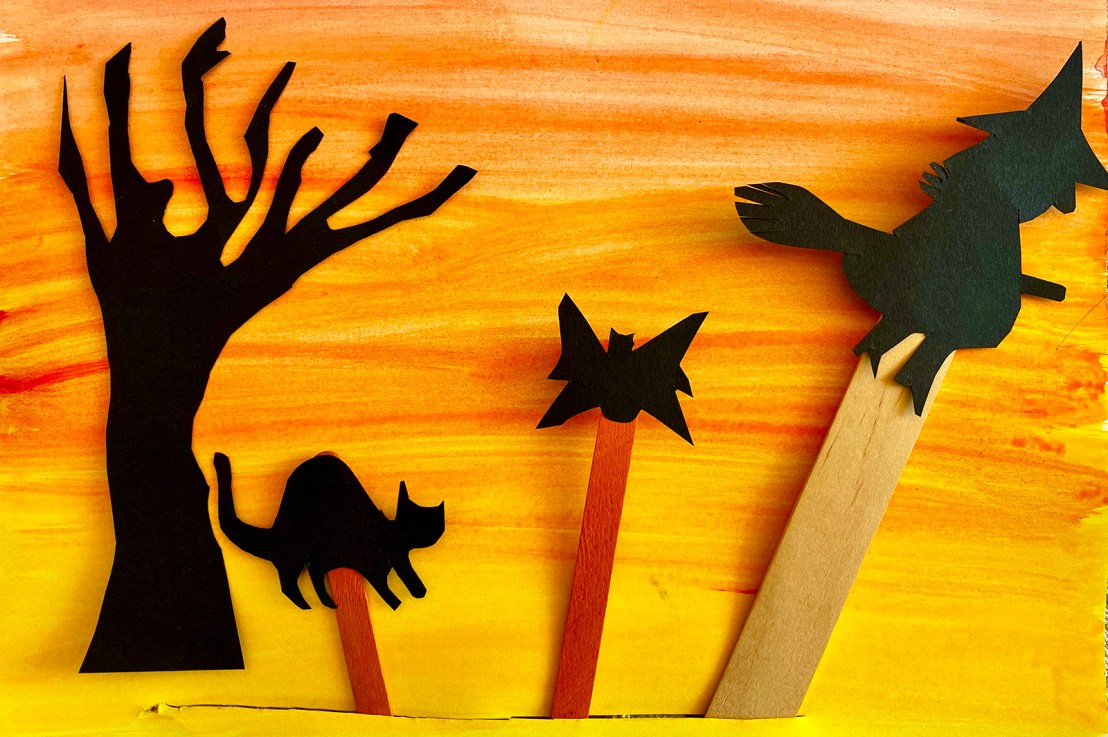
Description of the Unit – When I was about eight years old, an uncle of mine returned from working abroad in Jakarta, Indonesia, and brought back a pair of Wayang Golek rod puppets. These two-foot tall dolls both frightened and fascinated me, with their elaborately painted, expressive faces and beautifully dyed, patterned clothes. Many years later I learned that these puppets were related to another Indonesian puppetry art-form: the Wayang Kulit shadow puppets. These puppets are mostly two-dimensional and are manipulated in front of a diaphanous, backlit screen. The puppets themselves have designs and patterns cut into them making them look almost lace-like, adding to the characteristics of individual puppets.
Students will explore Andy Goldsworthy’s ephemeral land art, then venture outside to come up with their own environmental sculptures.
Activity statement –
Andy Goldsworthy is known as an environmental or land artist. What this means is that he uses natural artifacts—branches, leaves, rocks, ice, etc.—to create his sculptures and installations. Goldsworthy’s art is also temporary. He never creates anything that won’t eventually be destroyed by waves, wind and natural processes. Goldsworthy invites the viewer to contemplate the ephemeral, transitory beauty of the natural world. His works involve the use of pattern, color and balance. Interestingly, all of the color in his work comes from the objects themselves, never from him painting any of it. So for example, if you look at the image that looks like a tree trunk ringed with glowing light or fire, he simply used fallen gold and orange leaves to give it that effect.
Students will explore the work and approaches to painting innovated by Helen Frankenthaler, and use very simple soak-stain techniques to apply watercolor onto paper to create equally vibrant washes.
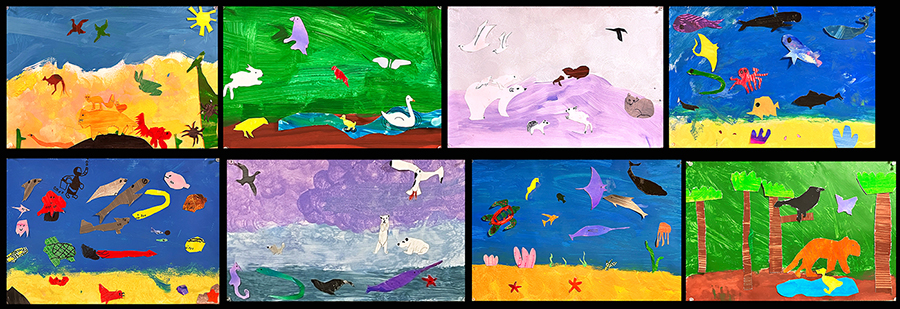
Integrated with a science unit on ecosystems, students will create an Eric Carle-inspired collage of an ecosystem.
Ocean ecosystem by kindergarten student: for this she used a dolphin stencil to help her
Activity statement –
In kindergarten science students explore an entire unit devoted to ecosystems. They learn about earth’s many ecosystems: climate, flora, fauna and so forth. Each student is assigned a specific ecosystem to research and present to the class. This collage will be one of the visual elements used in their reports.
To inspire the collage-making process, we will look at different Eric Carle books and notice his painted paper collages. Using his techniques as a guide, we will focus on color and texture as students first paint large pieces of paper in single colors and then add texture with the brushes, combs, forks, rollers and other tools provided. These pieces of paper will be used communally among the students for their collages, therefore no one piece belongs to one student.
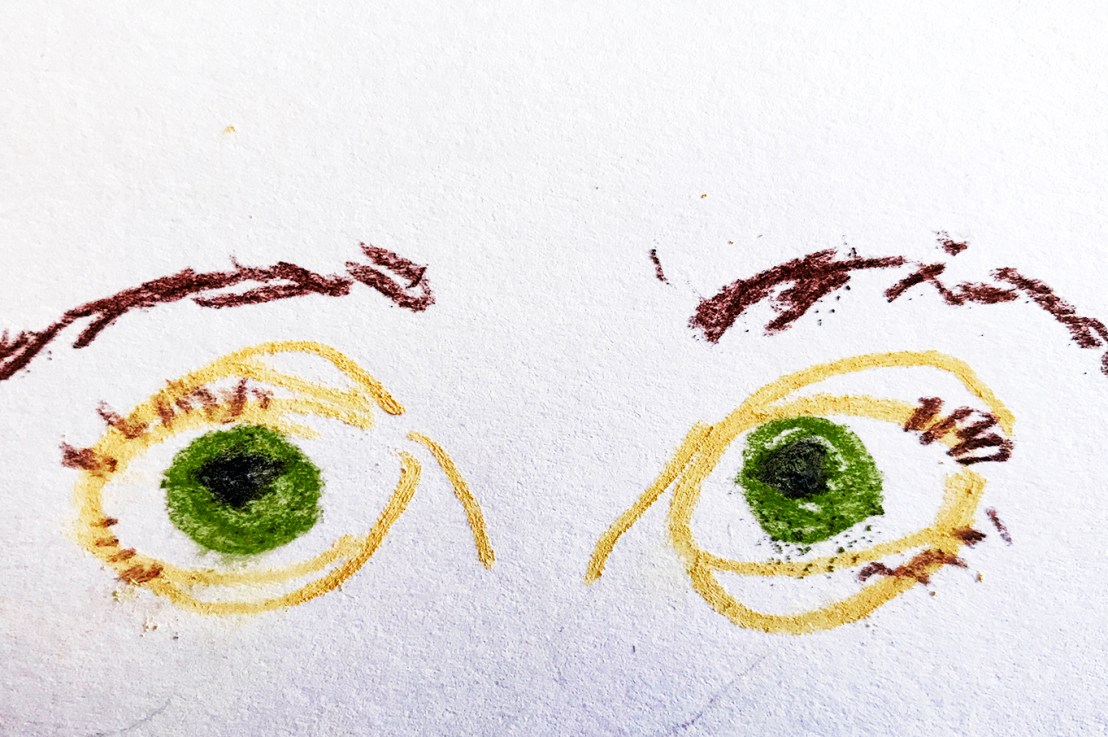
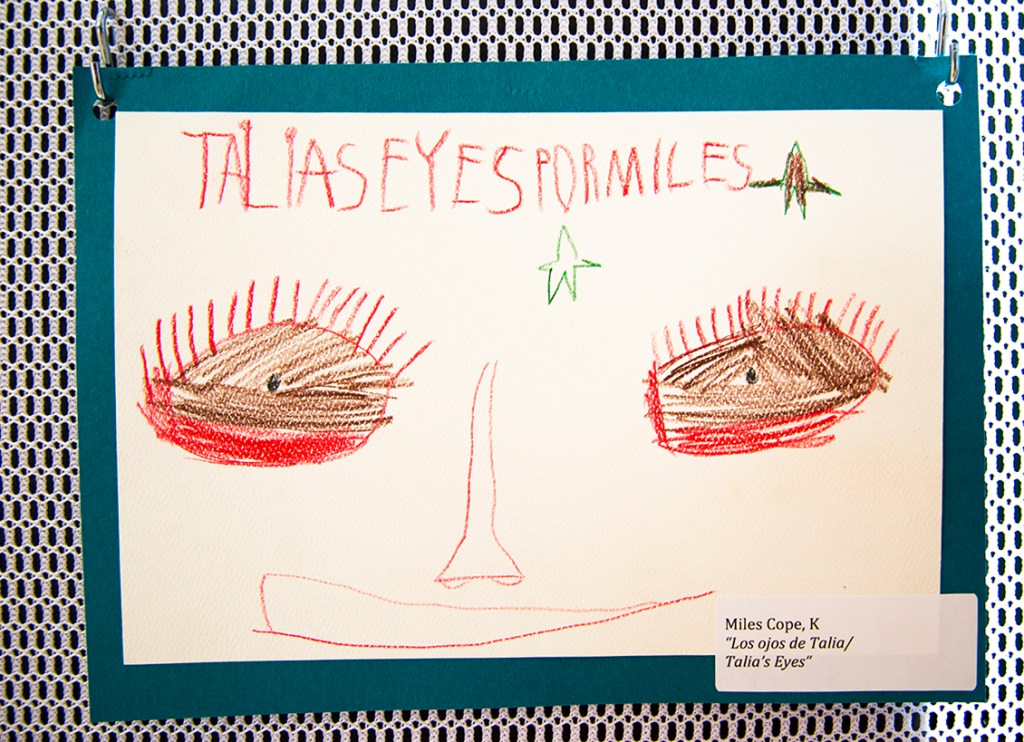
“Our Eyes” – Students take turns observing each other’s eyes and drawing them.
Kindergarten student draws another student’s eyes
Activity statement –
This lesson invites students to truly gaze. Students will feel silly at first, sitting face-to-face just staring at one another, and there will be embarrassed giggles all around, but the idea is to prompt students to notice two elements in particular: the shapes they see within the features of the eyes, and the texture of the eyebrows.






 In the K-8 Art Studio with Anita Sagastegui