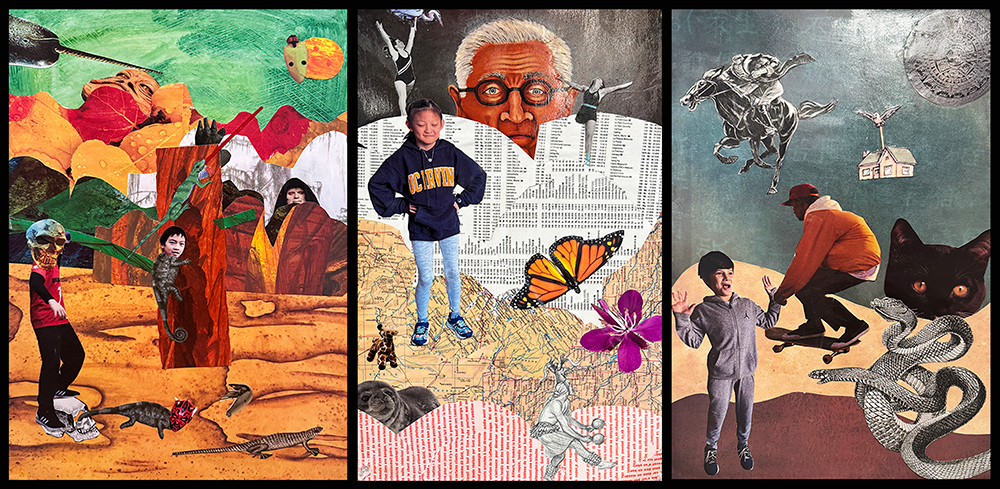
Description of the Unit – Observing the work of several Surrealist collage artists, like Julien Pacaud, students will learn about the meaning of the term Surrealism, and how it is used in collage art. They will then go on to create their own weird, wild and wonderful collages, using varied sources such as books, magazines, and hand-made paper, while also including an image of themselves within the composition.
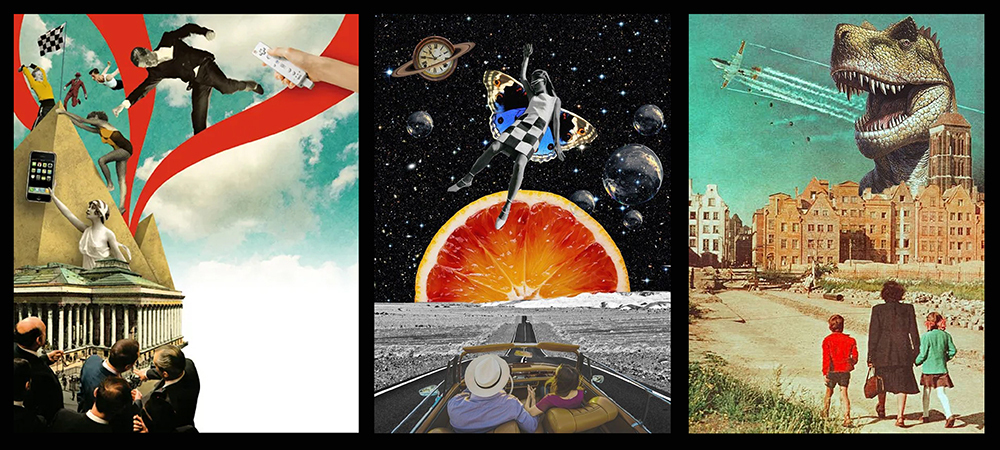
Continue reading “4th Grade Surrealist Collage”Category: 4th grade
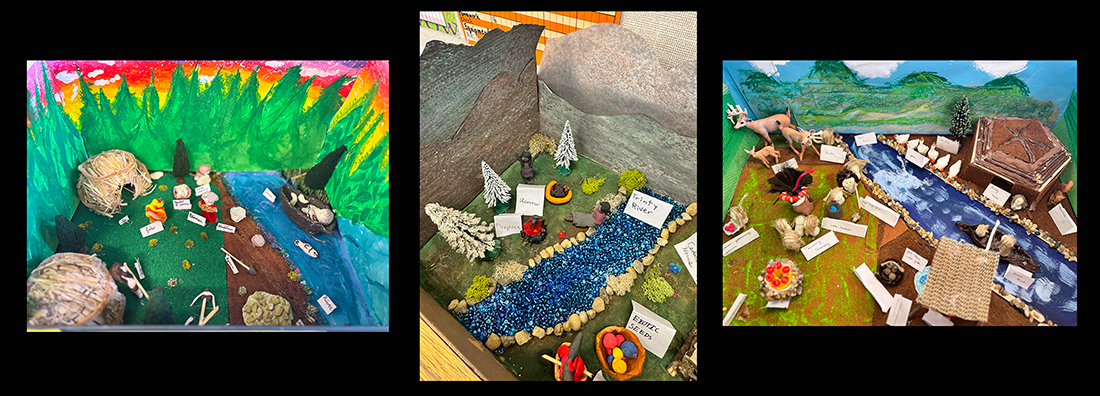
4th Grade – Dioramas of Native Californians
Description of the Unit – To support their research of California’s first Americans, students worked in groups to create dioramas representing the lives of a particular tribe (assigned to their group).
Continue reading “4th Grade – Dioramas of Native Californians”4th Grade – Still life with colored pencil techniques
Activity statement – Students will learn and practice essential colored pencil techniques (some of which can also be applied to painting, as well as chiaroscuro drawing) to create a realistic still life.
Continue reading “4th Grade – Still life with colored pencil techniques”4th Grade – Geometric String Designs

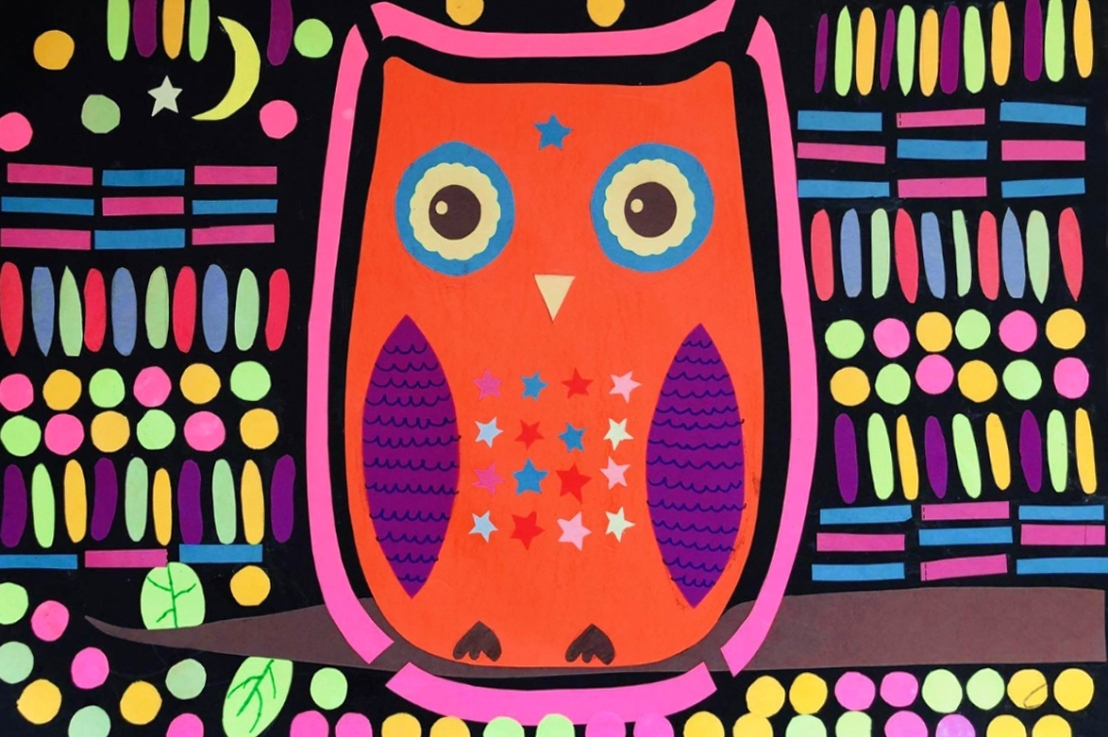
4th Grade – The Mola of Panama
Description of the Unit – The Mola, a traditional cloth worn by the Kuna (from the tiny San Blas Islands off the coast of Panama), are quite brightly colored, in contrasting patterns of various shapes, and in the center depicting what is typically an animal, plant or person of special interest to the Kuna. Students will explore the tradition of Molas, noting the use of contrasting colors, abstract patterns as well as noting the contrasting organic shapes of the main subject to the mostly geometric shapes of the background patterns. Students will use their understanding of these elements to create their own interpretation of the Mola in colored construction paper.
Continue reading “4th Grade – The Mola of Panama”4th Grade – Día de los Muertos “Sugar” Skulls!
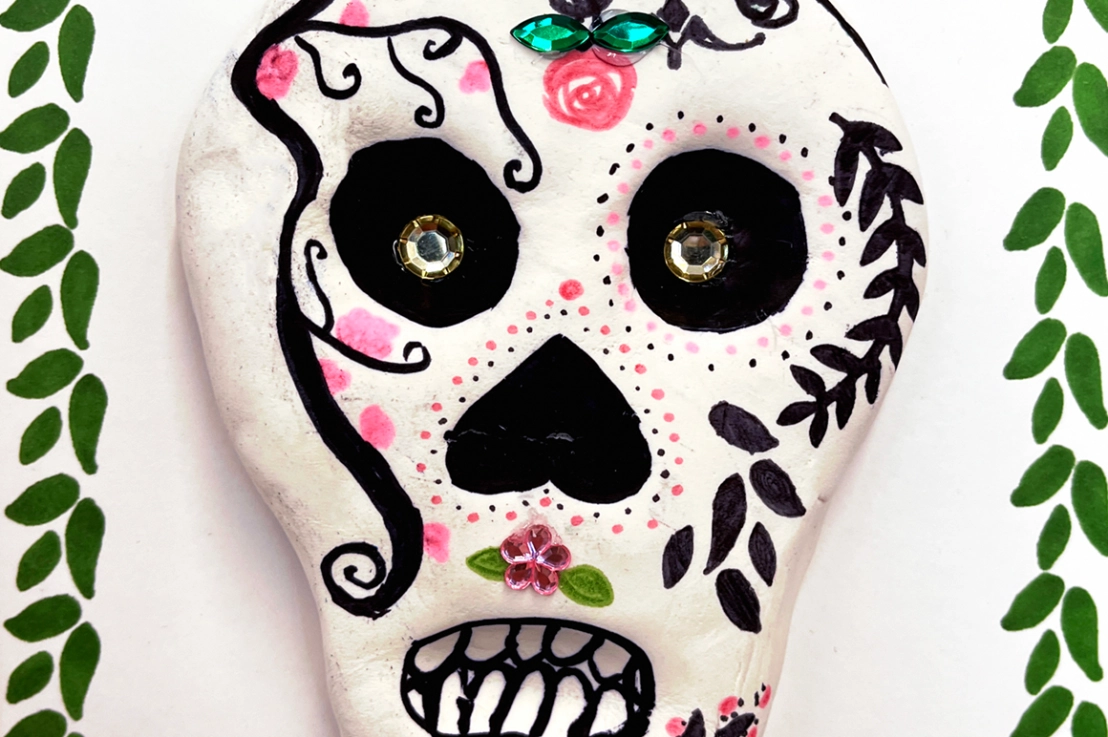
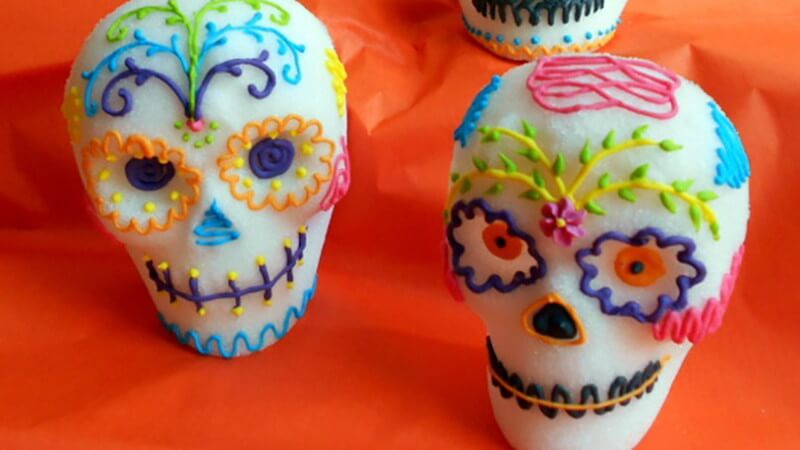
Description of the Unit – Students will celebrate Día de los Muertos by sculpting and designing their own “sugar” skulls (with clay) and setting them onto a colorful patterned background.

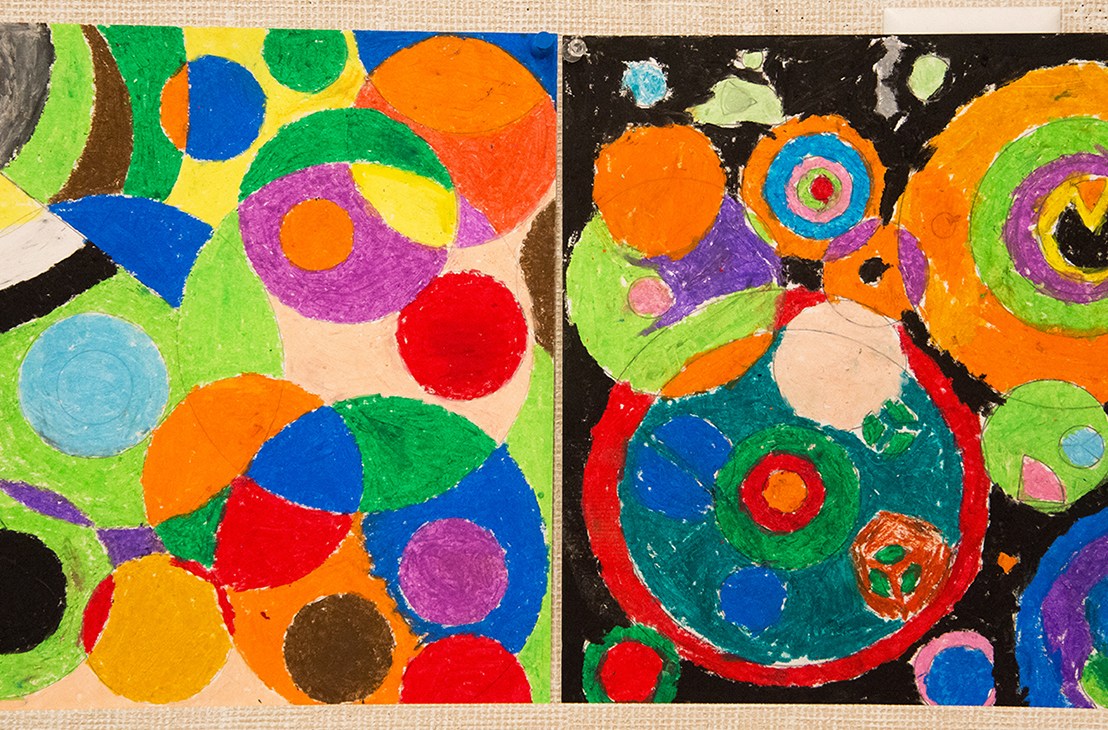
4th Grade – Intro to Orphism with Sonia and Robert Delaunay
Description of the Unit – Students will discover Orphism through the work of Sonia and Robert Delaunay, creating their own Orphism-style design, focusing specifically on the dynamics of color.
Continue reading “4th Grade – Intro to Orphism with Sonia and Robert Delaunay”4th Grade – Suzanne Valadon and subjective approaches
Description of the Unit –
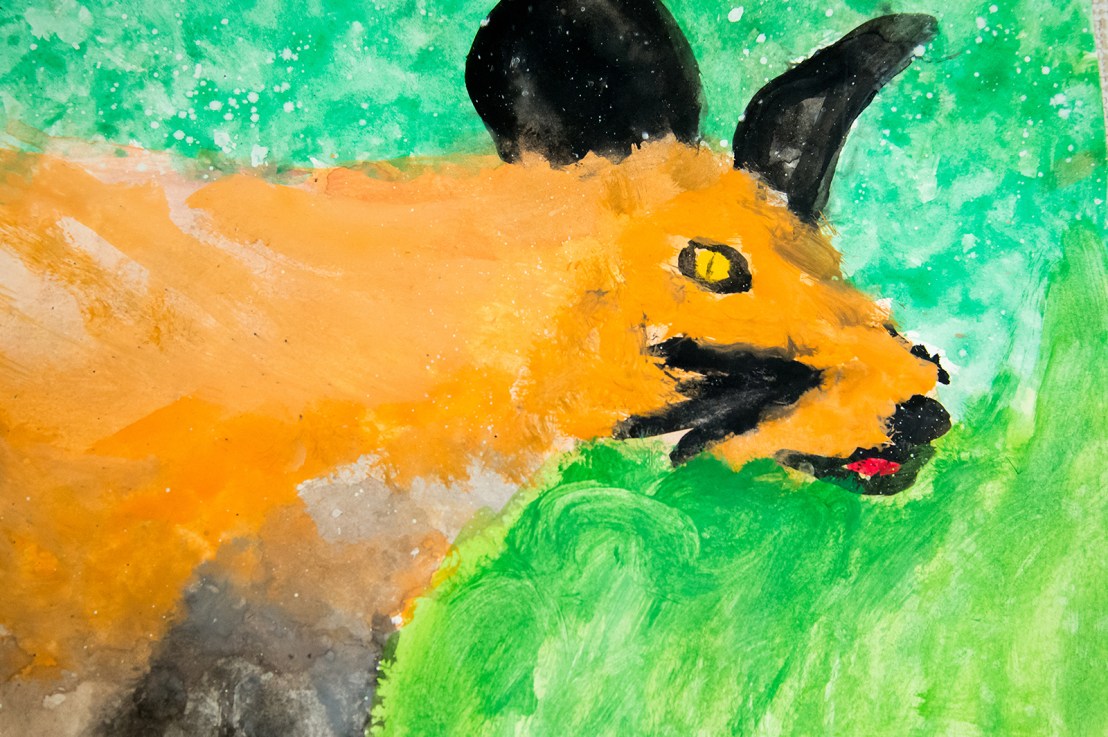
This unit will be guided by both technique and style. Students will observe the work of Impressionist painter Suzanne Valadon and discuss ways in which her paintings, particularly of animals, are impressionistic. How does Impressionism differ from realism?
Continue reading “4th Grade – Suzanne Valadon and subjective approaches”4th Grade – Basic Watercolor Techniques
Description of the Unit –
This is a two-part unit that will be guided by both technique and style, starting with practicing four basic watercolor techniques: 1) dry paint on dry paper; 2) dry paint on wet paper; 3) wet paint on dry paper, and 4) wet paint on wet paper. (For some students this will be review as we practice this in earlier grades as well.) In the second part of this unit students will explore Impressionist painting, particularly the work of Suzanne Valadon (to be posted next week).
4th Grade – Loom Weaving
Description of the Unit –
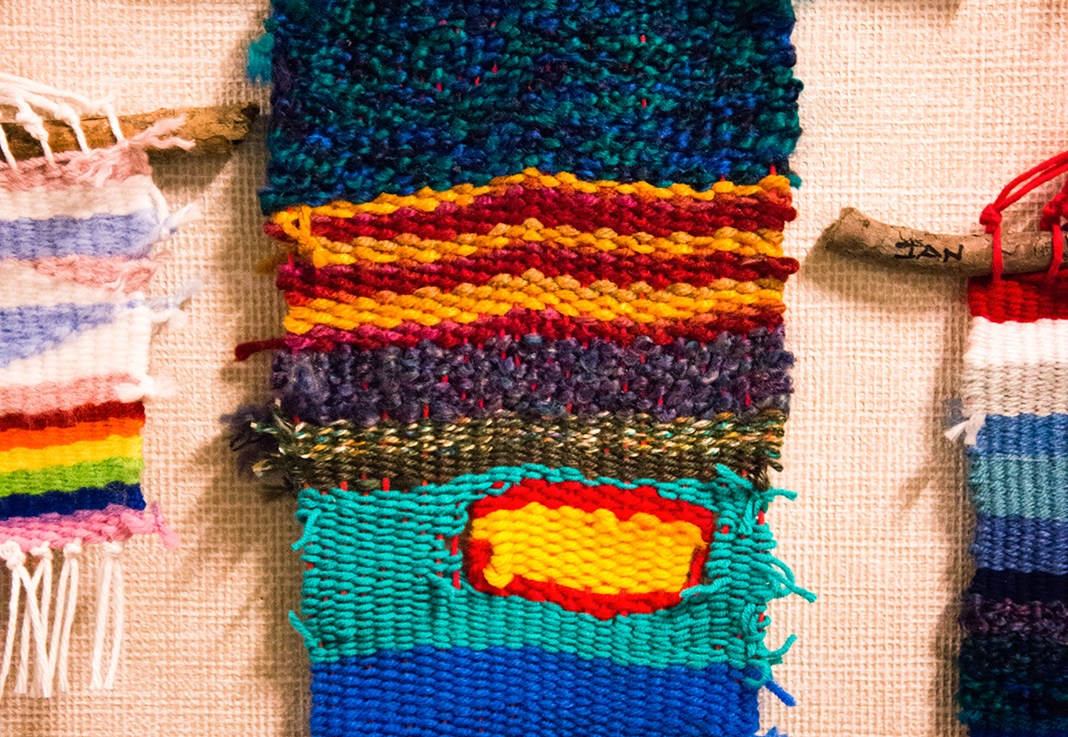
Students will practice simple loom weaving and create one small tapestry.
Activity statement –
In the California Visual Arts Standards, fourth grade students should experience using “fibers…to create a simple weaving,” (2.4, Creative Expression). Further, as students will be working on sewing samplers in fifth grade, they will benefit from this opportunity to develop their hand-eye coordination and fine motor skills. Finally, while practicing this simple weaving technique on a cardboard loom, students will reinforce their understanding of color and pattern via the design they choose to weave.