Description of the Unit –
Yayoi Kusama is one of my favorite contemporary artists. Her irreverence, originality, rebelliousness and whimsy have won my heart, as have her personal struggles with mental illness. An artist whose work always surprises and delights, I love to bring her life story and work to my students.
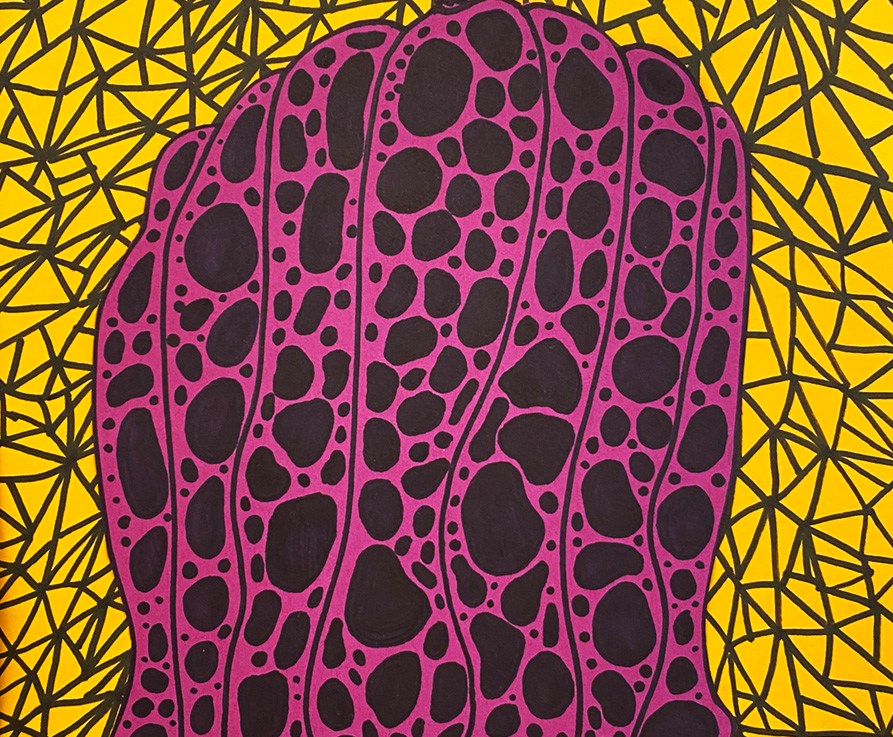
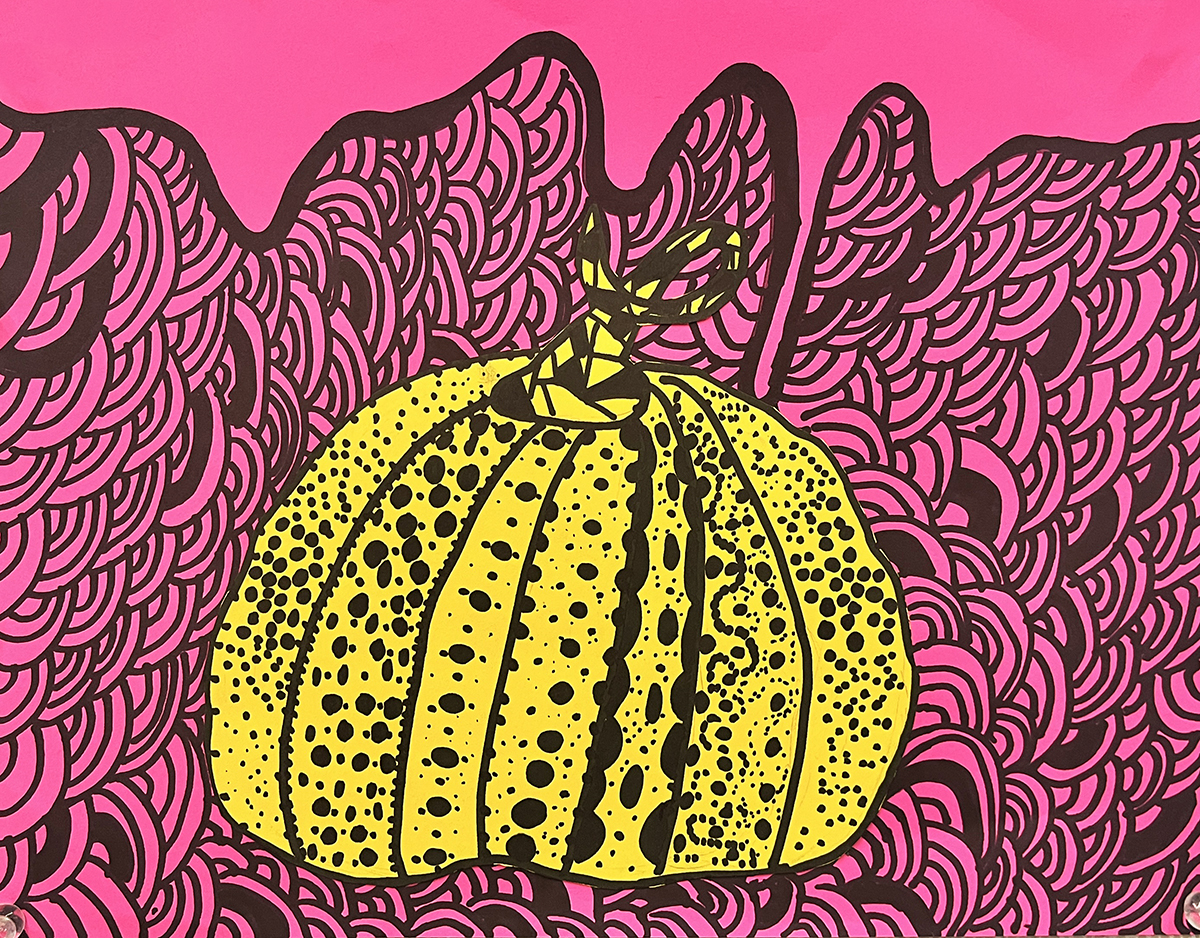
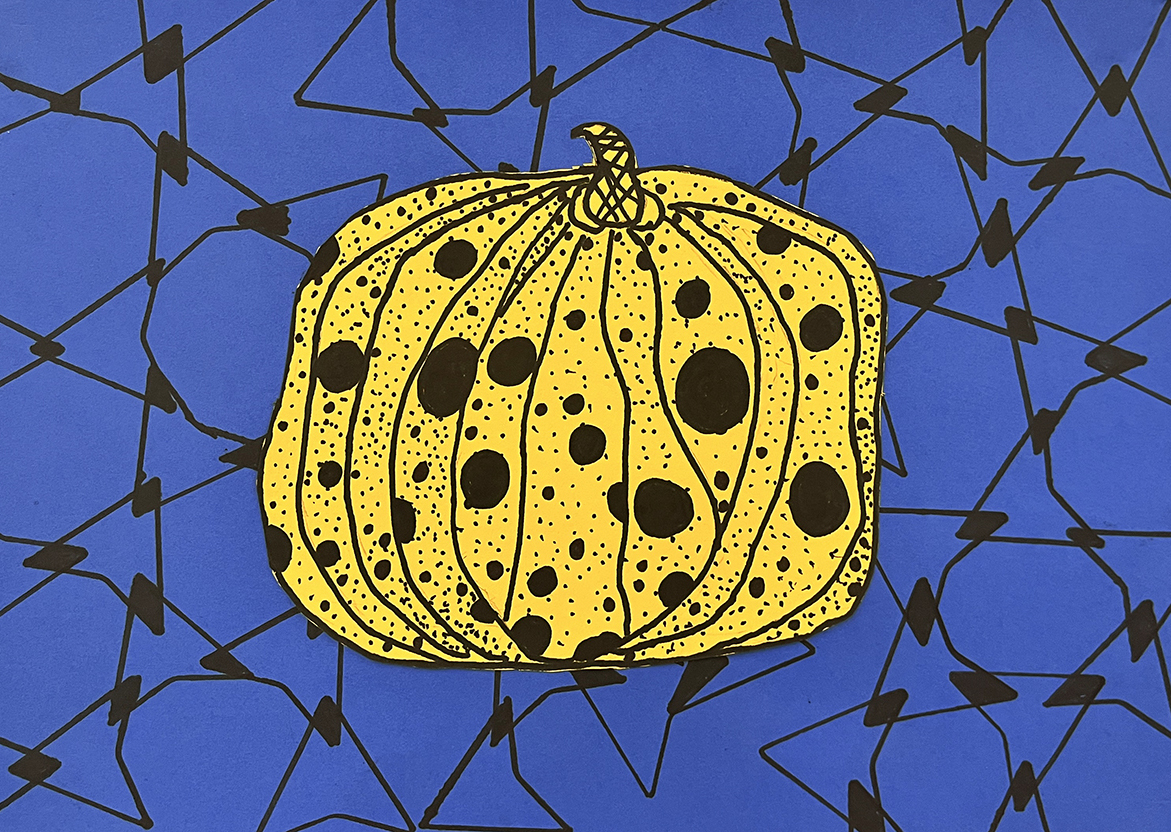
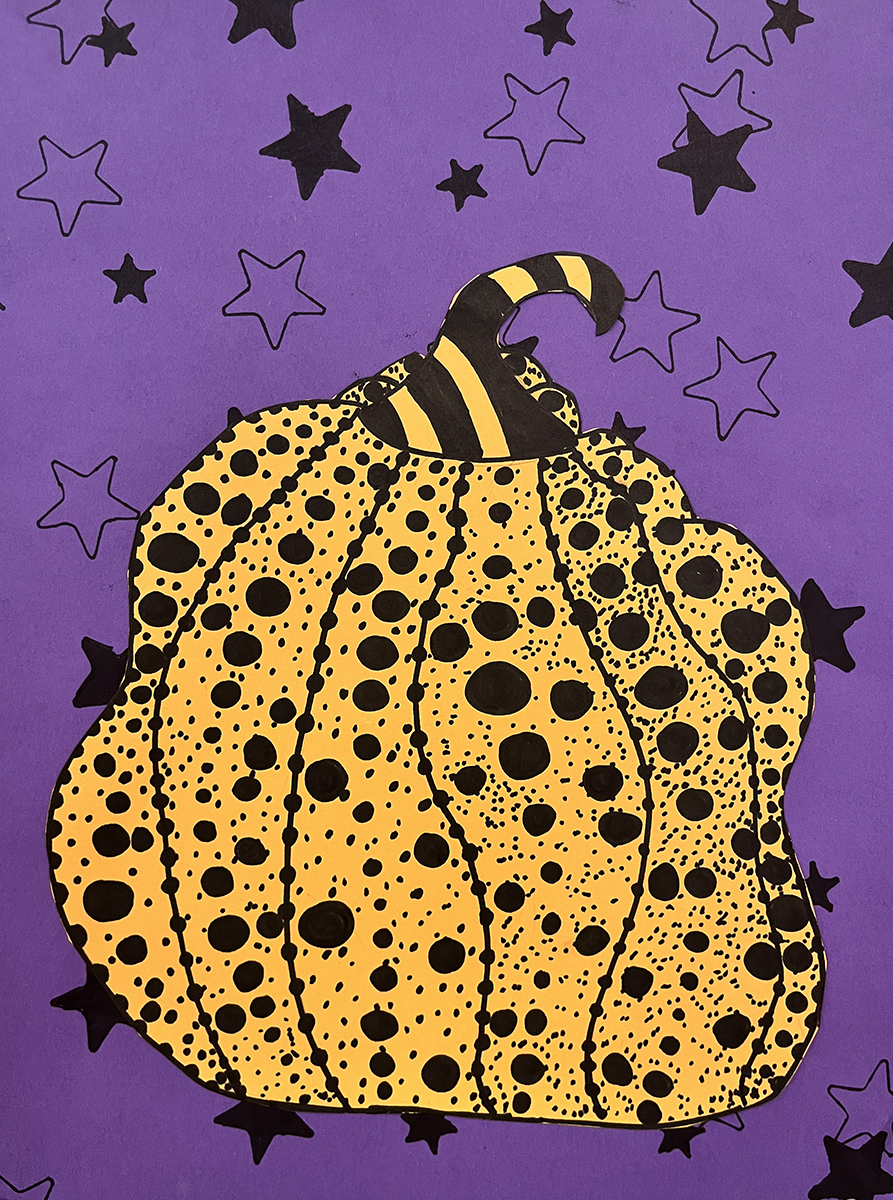
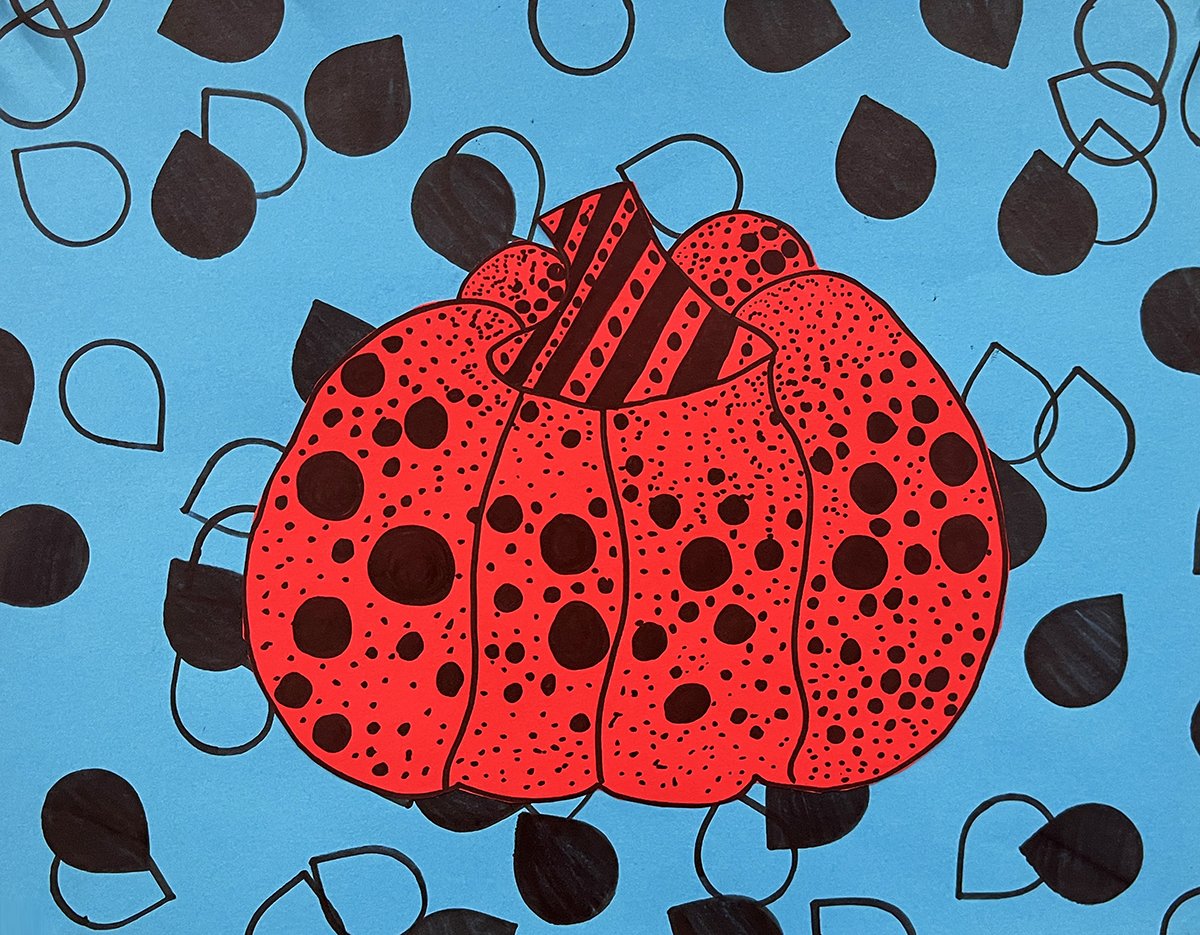
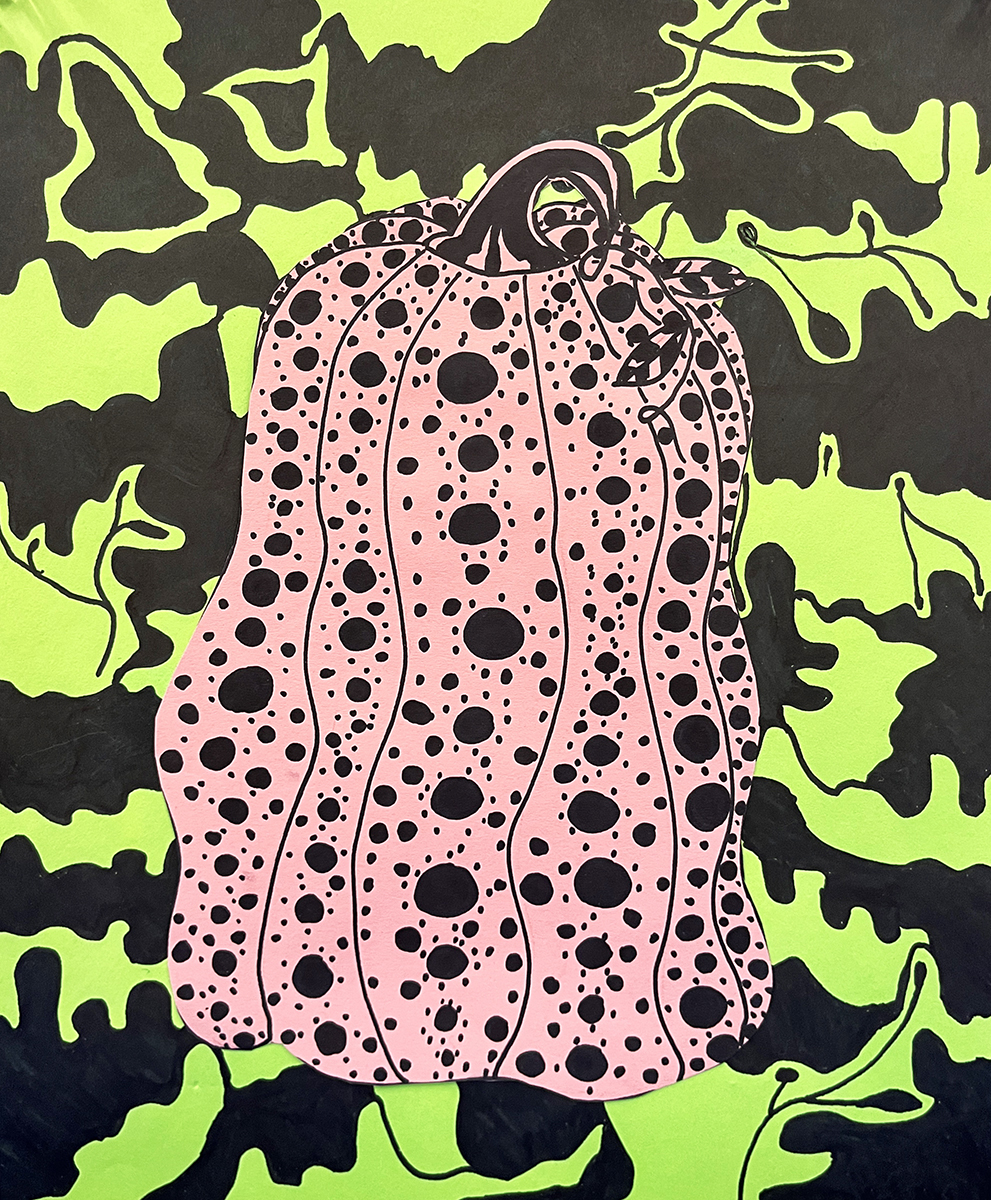
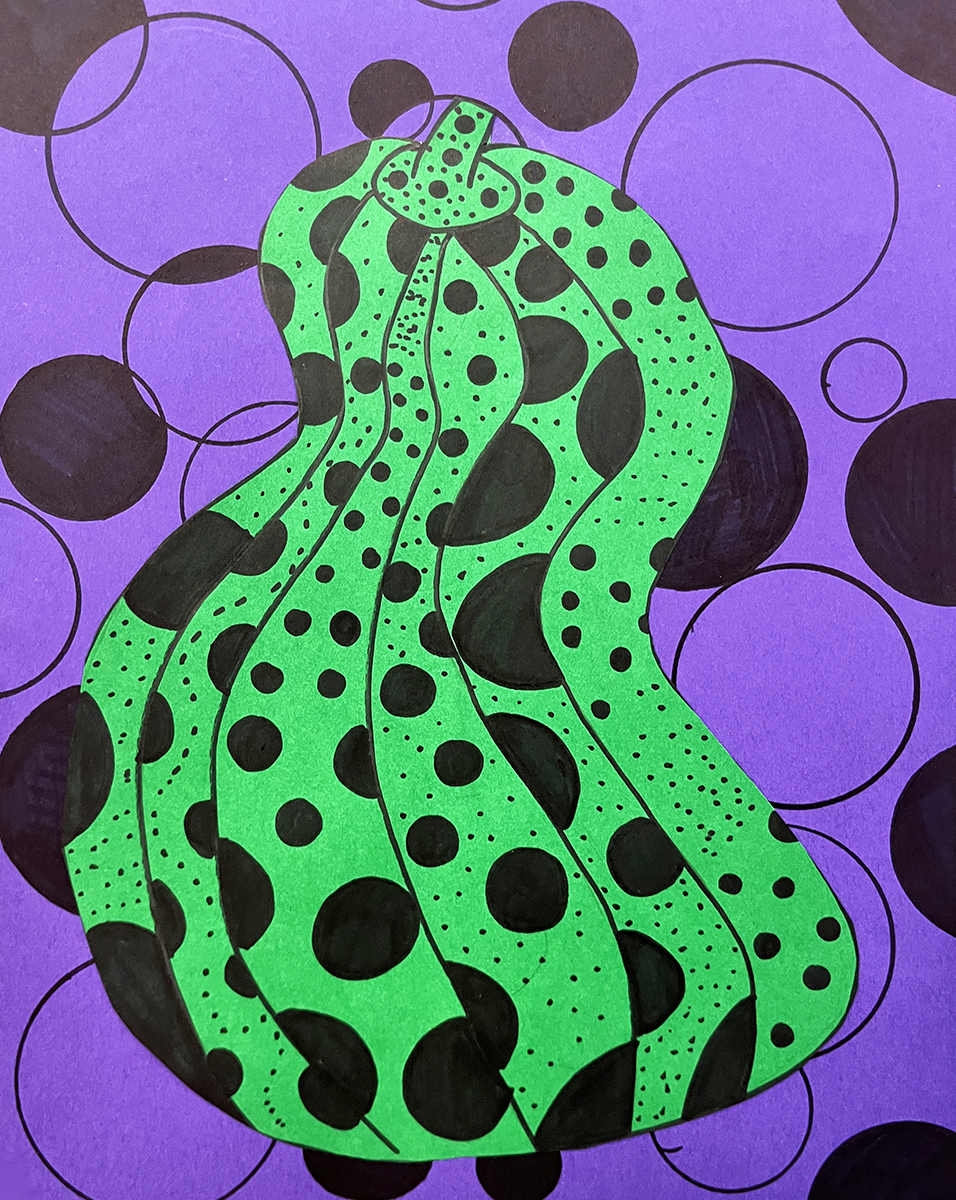
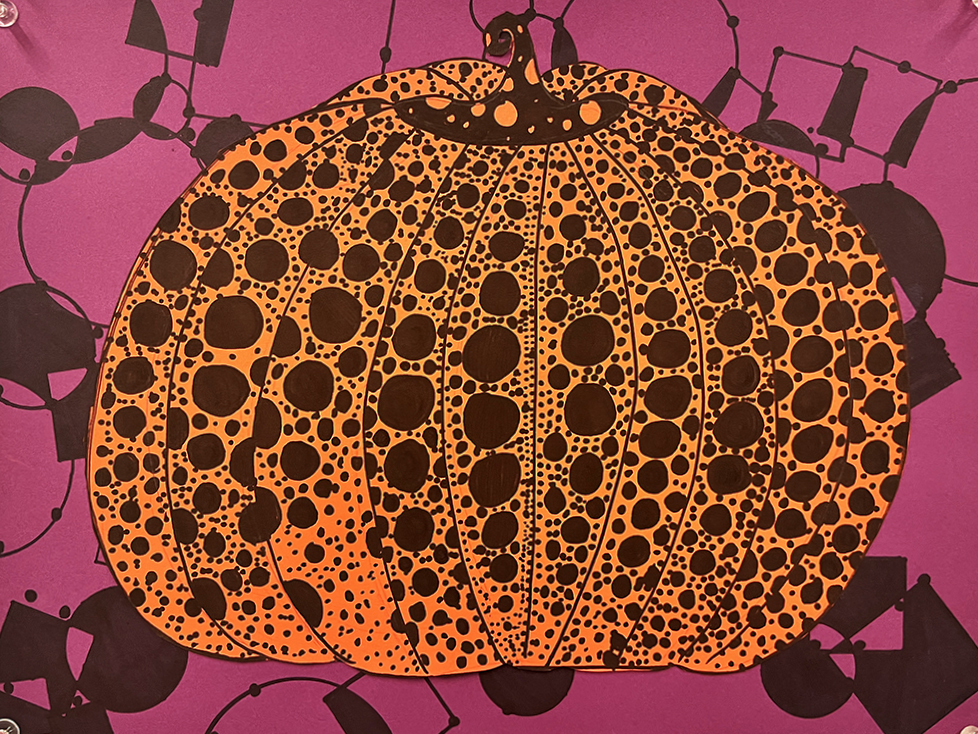
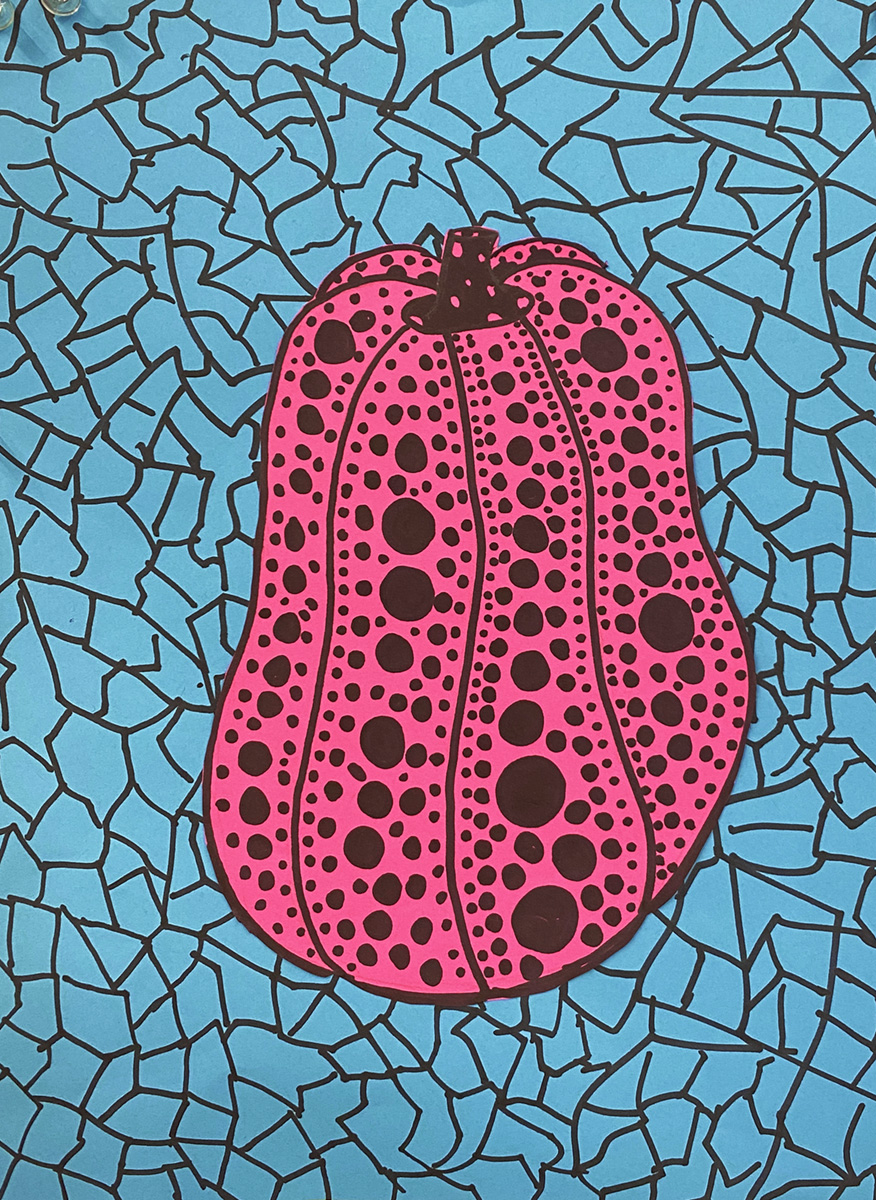
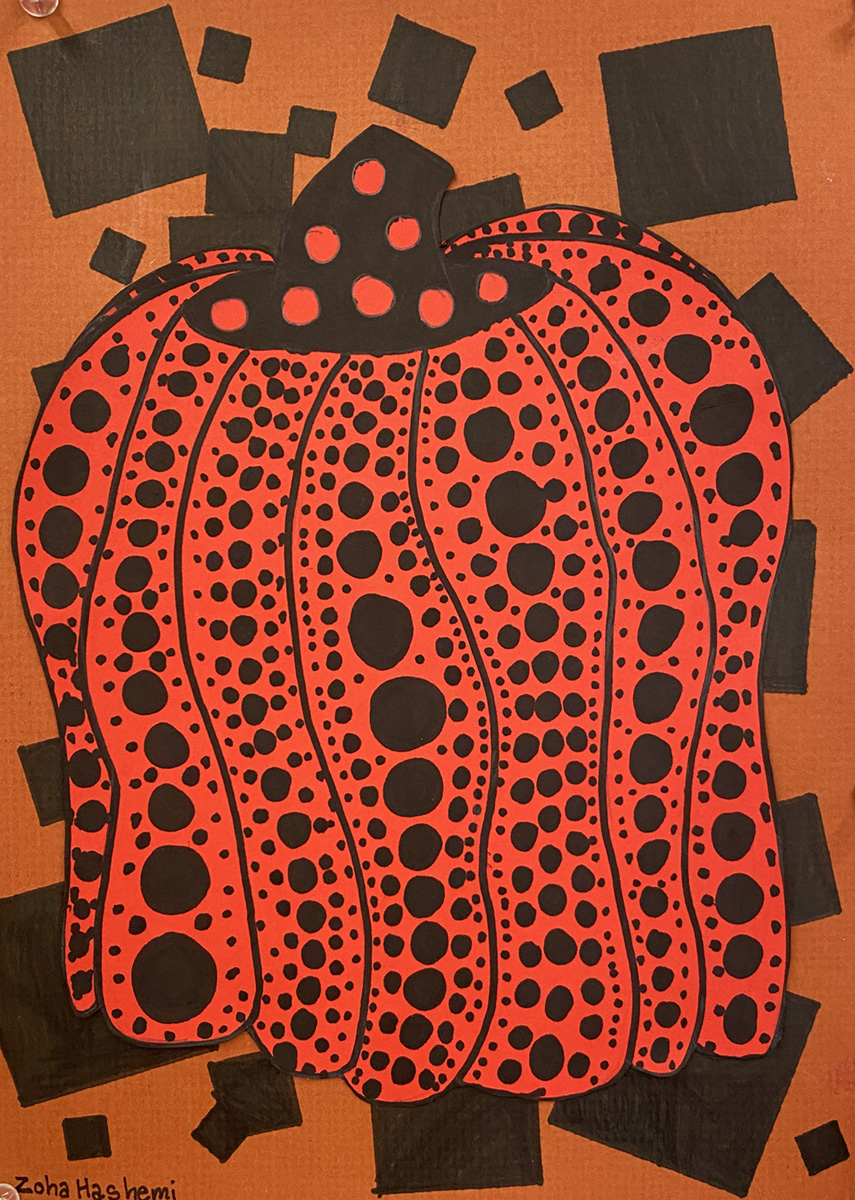
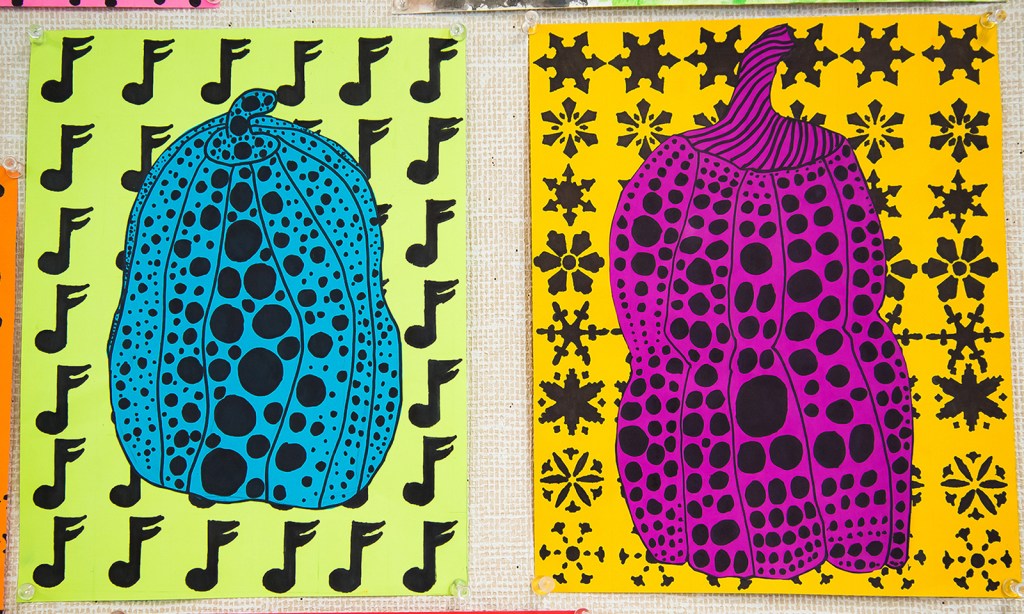
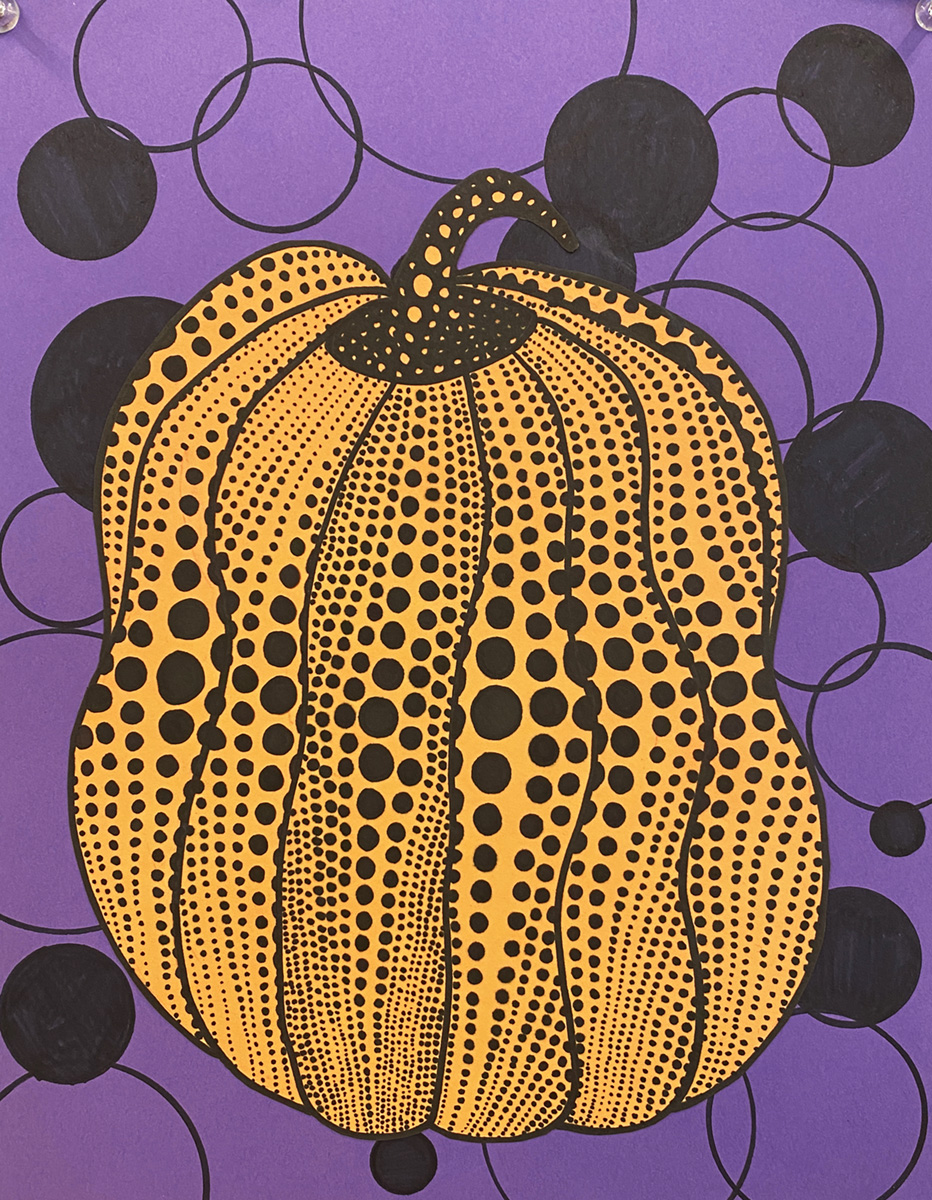
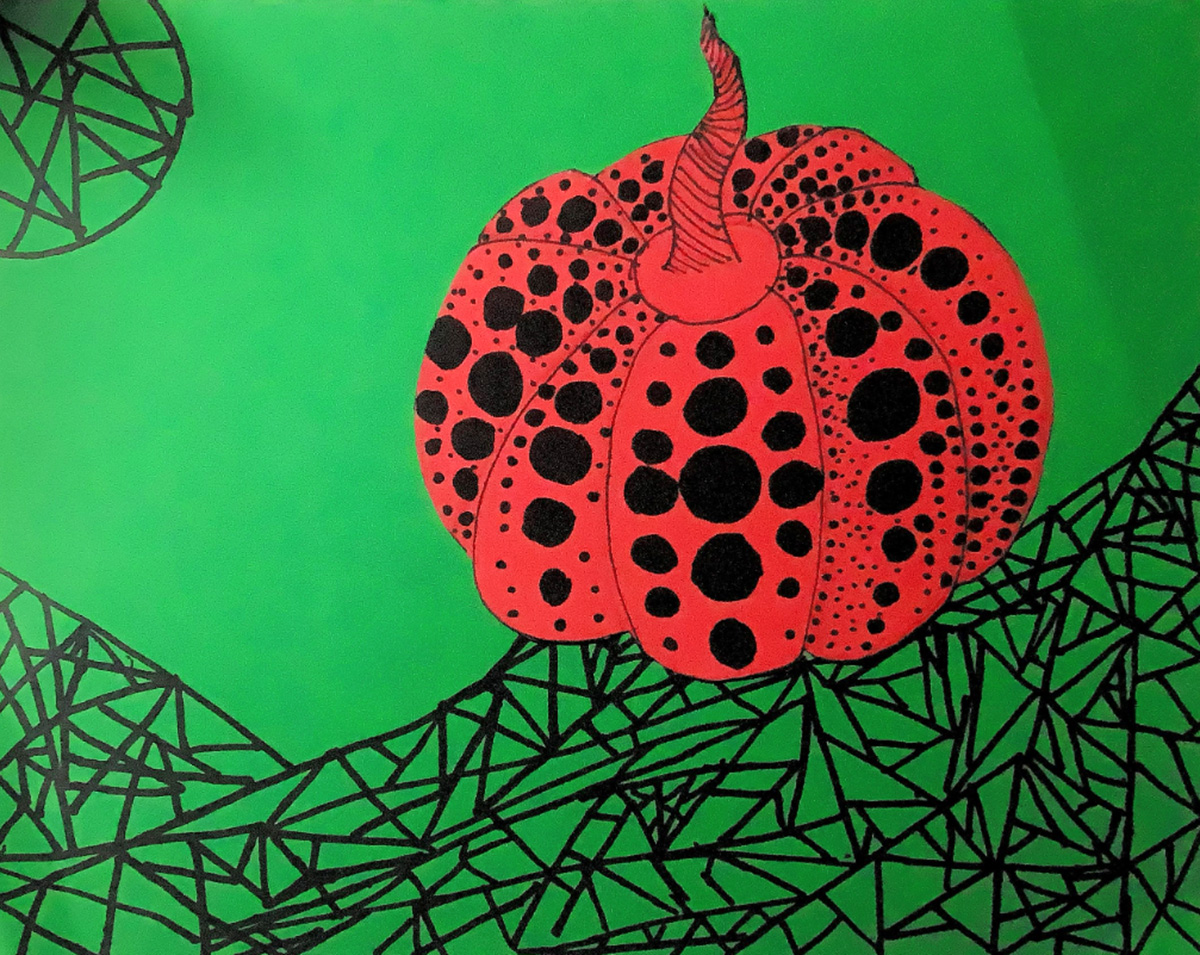
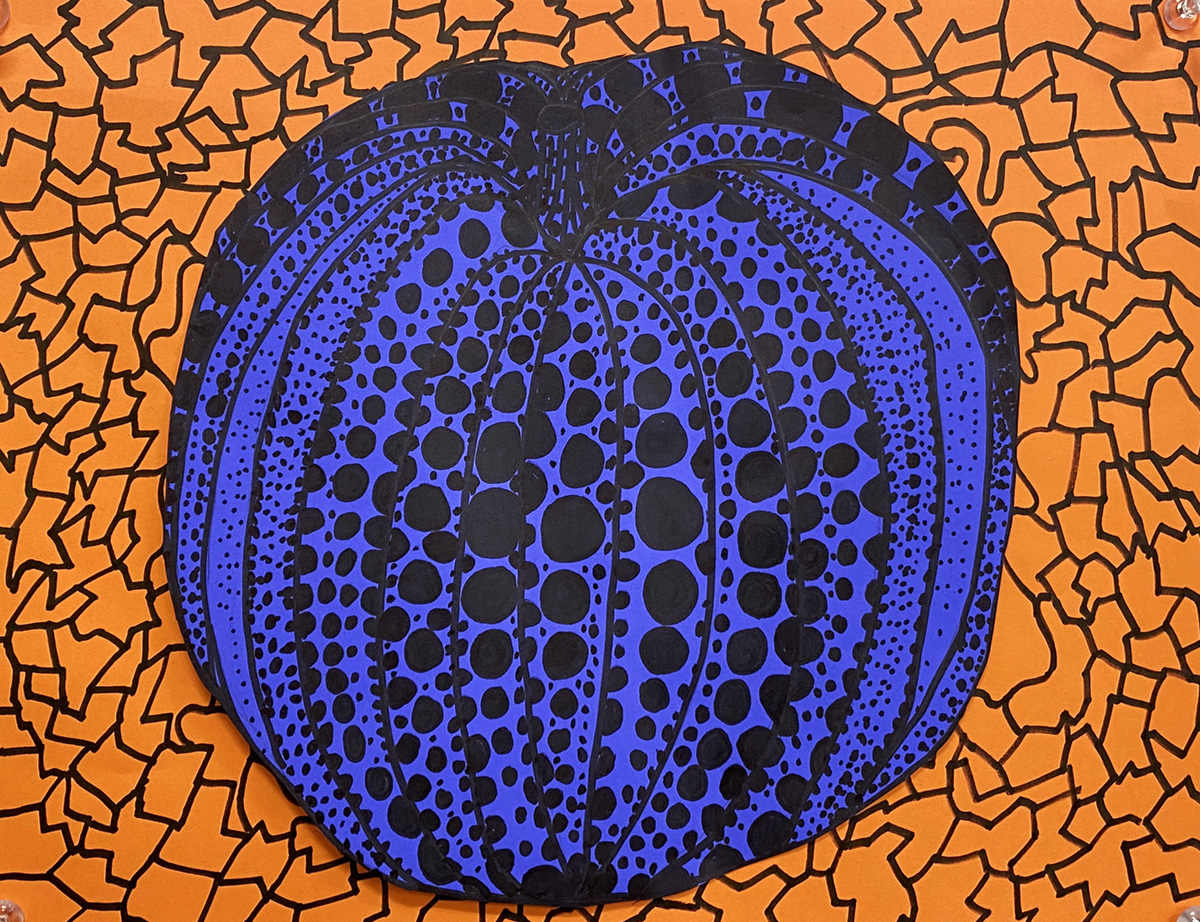
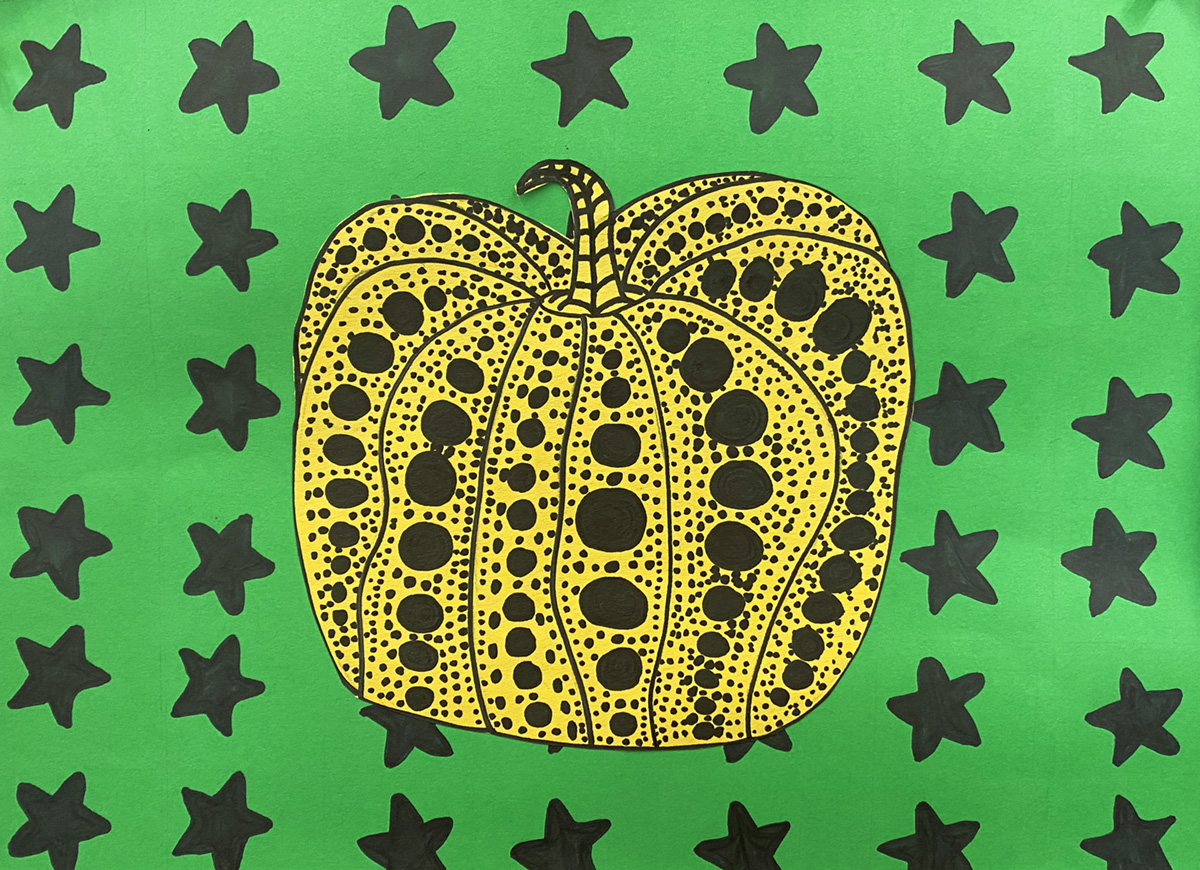
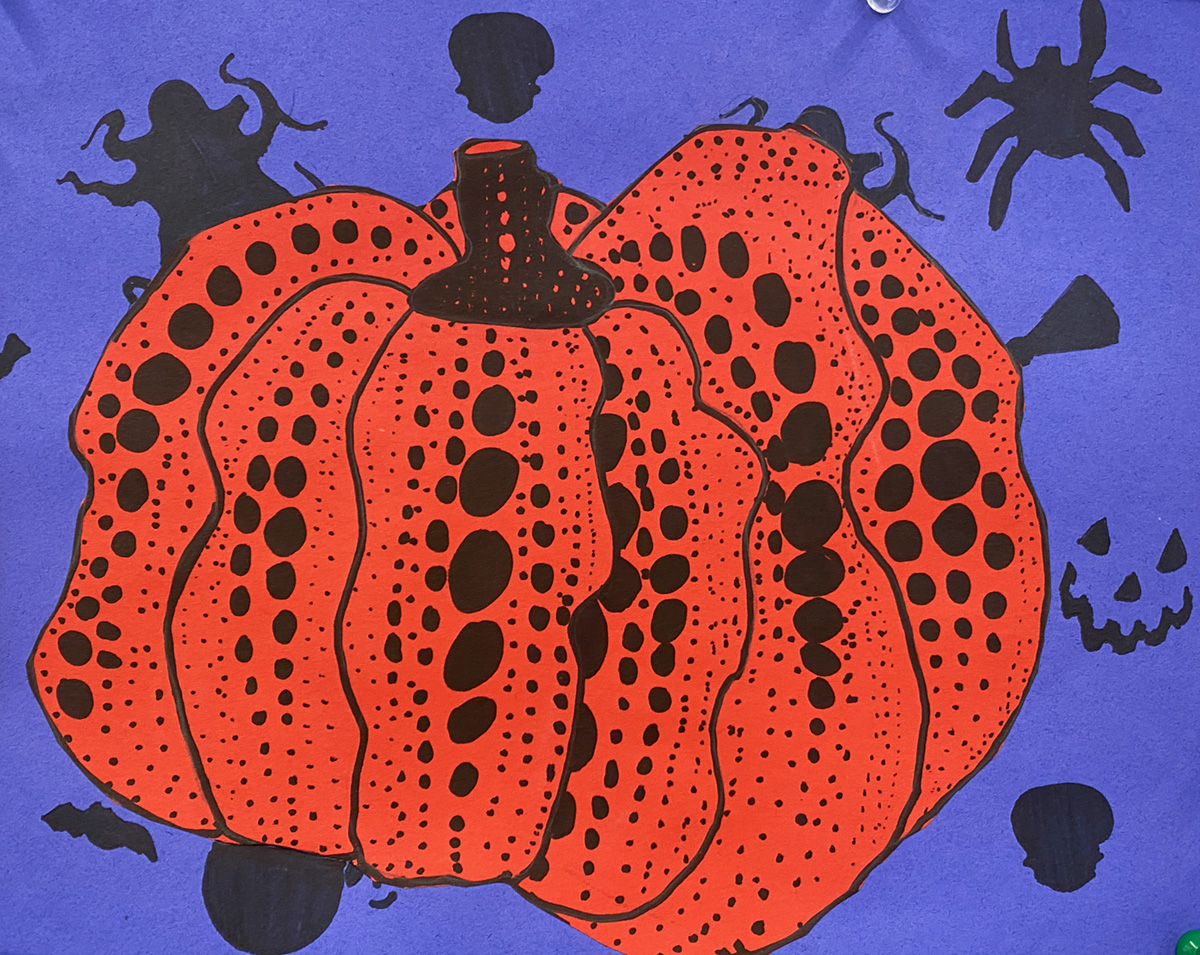
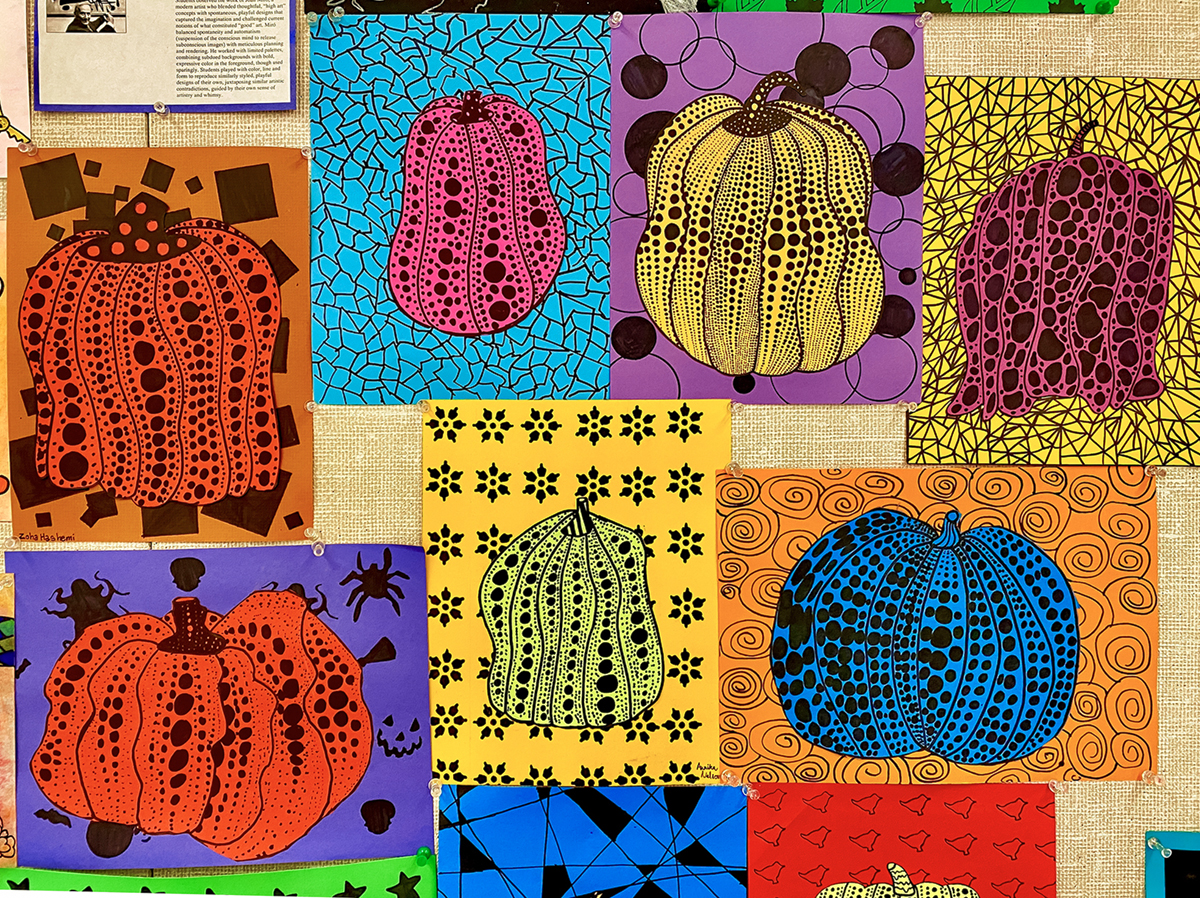
Together we explore and discuss the work of this seminal Japanese artist, whose pioneering installations have enthralled visitors to her work over the last several decades. Using her iconic polka-dotted pumpkins as inspiration, students will emphasize the elements of line, color and shape, and well as principles of pattern, repetition and movement, in their own brightly colored pumpkins.
Activity statement –
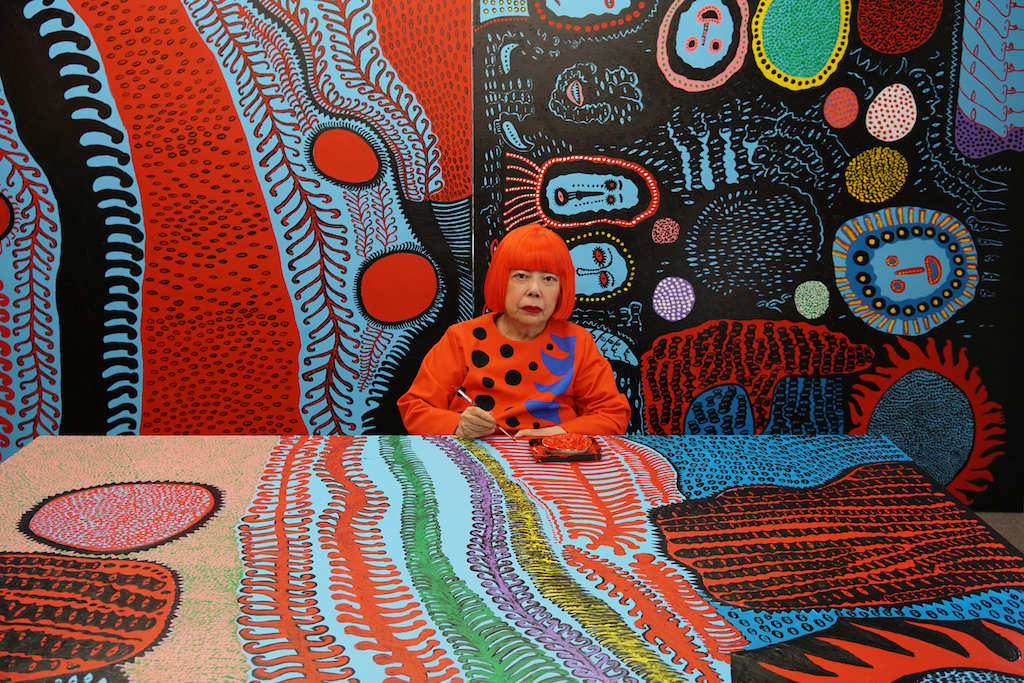
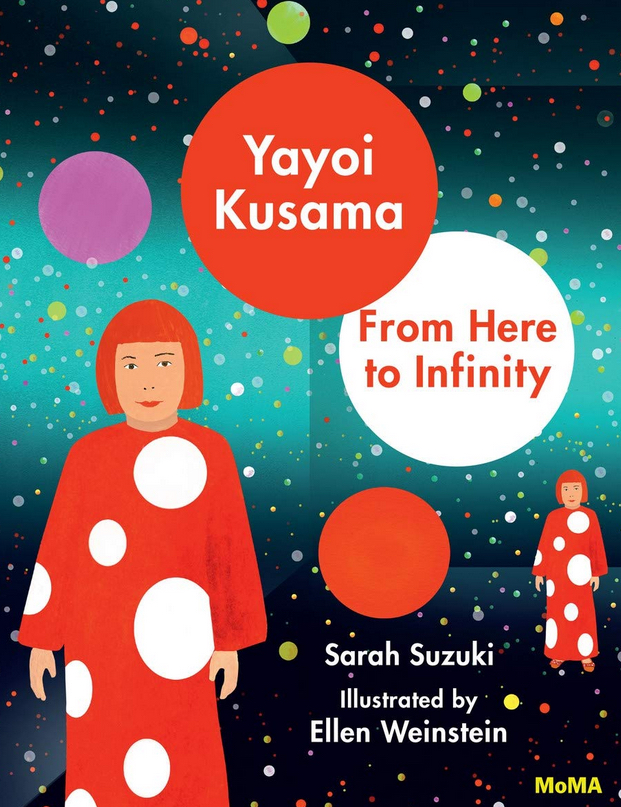
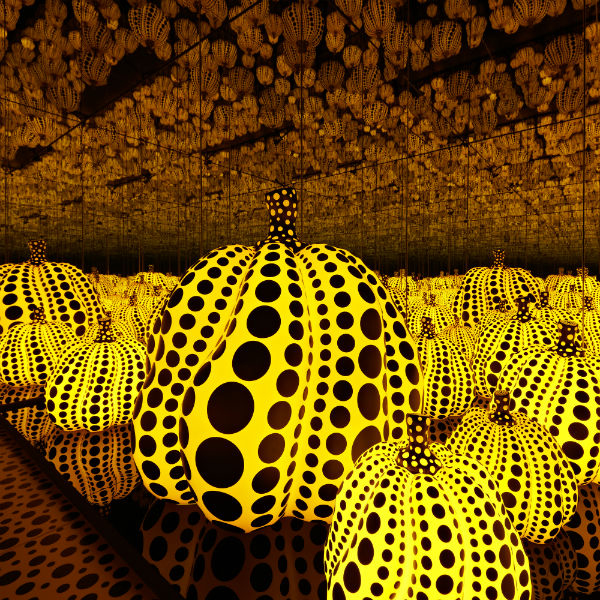
Yayoi Kusama is a contemporary Japanese artist who accentuates the use of bold, contrasting color, repetitive patterns, (especially dots), and movement (through the use of organic lines) in all of her work, whether it be painting, mixed media, sculpture or interactive installations. While observing various two- and three-dimensional examples of Kusama’s pumpkins, students will be asked their observations of the rounded, asymmetrical form of the pumpkins. Through observing and discussing of her work students will begin to understand how these elements and principles can be used in their own Kusama-inspired work of art. (For more information on the artist, visit: http://www.artnet.com/artists/yayoi-kusama/. Also, I like to share the following book with my students: https://smile.amazon.com/gp/product/1633450392/ref=ox_sc_saved_title_5?smid=ATVPDKIKX0DER&psc=1.)
A longtime fan of Kusama’s work, I had searched around for a way to introduce her to my 5th grade students in an accessible way, while helping to reinforce certain elements and principles integral to 5th grade art education. I want to give a HUGE thank you and shout out to the blog Art Room Britt based in Germany for the idea for this lesson: https://artroombritt.blogspot.com/search?updated-max=2018-11-27T14:45:00-08:00&max-results=25. She has some great lessons to share, so please do check her out!
Goals – Students should…
Understand:
- The following elements: color, line and shape
- The following principles: pattern, repetition and movement
Know:
- What contrasting/complimentary colors are
- How to repeat shapes to create pattern
- How to recognize movement in line
Be able to:
- Recognize features of Kusama’s work
- Create a work of art featuring pattern, movement and contrasting color
Objectives – Students will:
- Explore the work of Yayoi Kusama, especially her pumpkins
- Discuss her use of line, color, shape, pattern, repetition and movement
- Integrate line, color, shape, pattern, repetition and movement into one pumpkin design
Resources and materials –
- Exemplars of Kusama’s work and a brief bio
- Colored construction paper (teacher decides the size that works best)
- Pencils
- Black sharpies
- Stencils with a variety of designs
- Scissors
- Glue
Questions – (The first few while observing Kusama’s work)
- What do you notice about Kusama’s art?
- What sorts of characteristics does she tend to use a lot of?
- What do you notice about the colors she uses?
- Does she use more geometric or more organic lines?
- Can you point to any patterns?
- What repeats?
- What would it feel like to you to walk among so many large, polka-dotted pumpkins?
- What are contrasting (complementary) colors? Why?
Evaluation – Did students:
- Understand and describe the concepts of line, color, shape, pattern and movement?
- Begin to recognize the key characteristics of Kusama’s work?
- Integrate deliberate use of line, color, shape, pattern, repetition and movement in their individual pumpkin designs?
Informal:
- Group discussions
- Oral responses to essential questions
- Personal focus and risk-taking
- At least one finished pumpkin design



 In the K-8 Art Studio with Anita Sagastegui
This is great! What size do you recommend for the construction paper?
We use 9×12 construction paper. Let me knows how it goes if you try it!
LOVE this lesson! Did you provide templates for the students pumpkins or did they design/draw the overall shape themselves?
Oh my goodness, I thought I had replied to you back in September, but I was replying to someone else! I’m so sorry! The students draw their own pumpkins, which is part of the fun, as they all turn out very different. In fact, we talk about how pumpkins tend to have weird, asymmetrical, organic shapes, which takes the pressure off of having them look a certain way. We just completed this project again this year, and I loved the weord shapes that came out of it, so hopefully soon I can update this post with some of this year’s examples.
what a great work! What type of colors do you use? Water color? How could they paint it so neat or full of color? (Without mixing up with the sharpie or other color tool) Thank you
The materials list is very simple, and listed here in the lesson. To answer your question, we only use black sharpies and colored construction paper. Wonderfully straightforward! 🙂
Did you have stencils for the background? or did the students make their own patterns for the background?
Great question! They had a choice of either. Let me know how the project works out for you.
I love this lesson! Thank you so much for sharing it. It has really helped me to formulate my own lesson as a first year art teacher. I noticed that you listed black sharpie and stencils. I just wanted to make sure that I understand this correctly. The students color in the stencils with sharpie? Or do they trace them and fill in with sharpie. Thank you so much!
Thank you for your kind comments and interest in the lesson! As far as using the stencils, either approach works, and I leave it to the student to make the choice as part of their process. I also encourage them not to use stencils at all, and come up with their own design. So really, the more variety and options the kids are given, the more unique each one will be. Have fun and do reach out to let me know how it goes!
I love this lesson! Thank you so much for sharing it. It has really helped me to formulate my own lesson as a first year art teacher. I noticed that you listed black sharpie and stencils. I just wanted to make sure that I understand this correctly. The students color in the stencils with sharpie? Or do they trace them and fill in with sharpie. Thank you so much!
I’m sorry, I thought I had replies to this, but now am not sure, so my regrets if this is so late. Some kids use stencils and others don’t–I actually prefer when they don’t and can come up with their own designs, but if they do choose to use a stencil yes, they use black sharpies, whether regular or ultra fine point. I hope this helps!