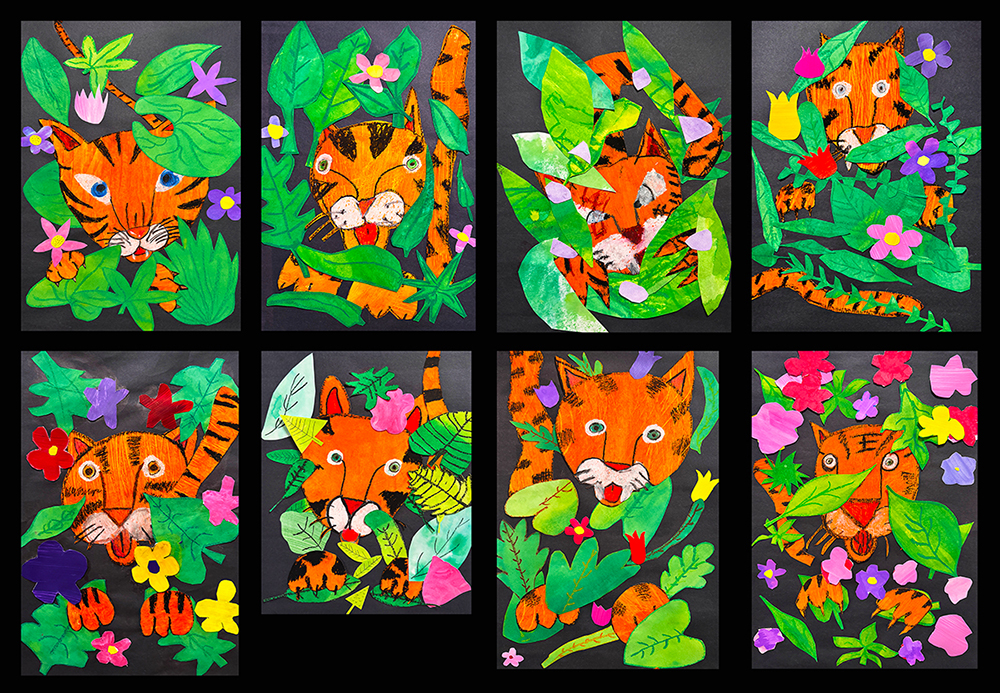
Description of the Unit – Students will observe Henri Rousseau’s paintings of tigers in the jungle with the objective of understanding foreground and background.
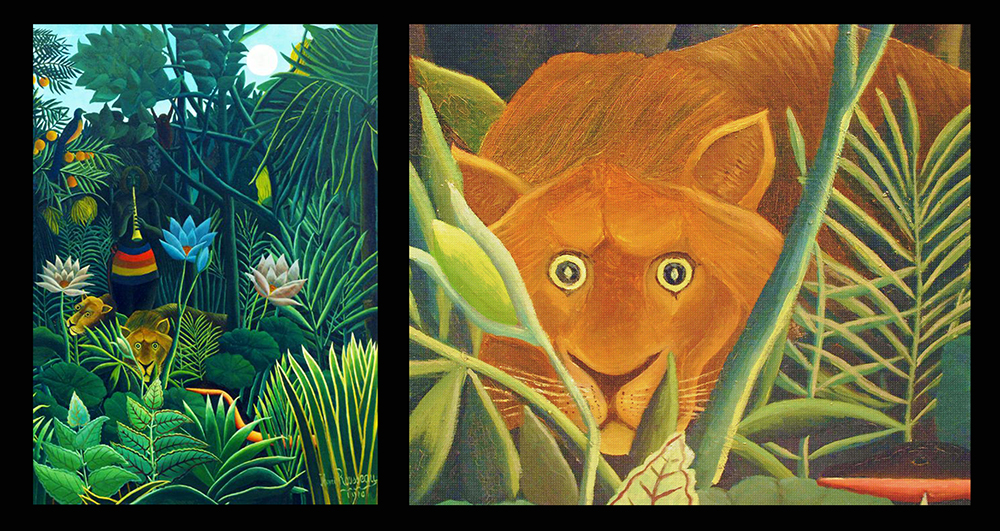
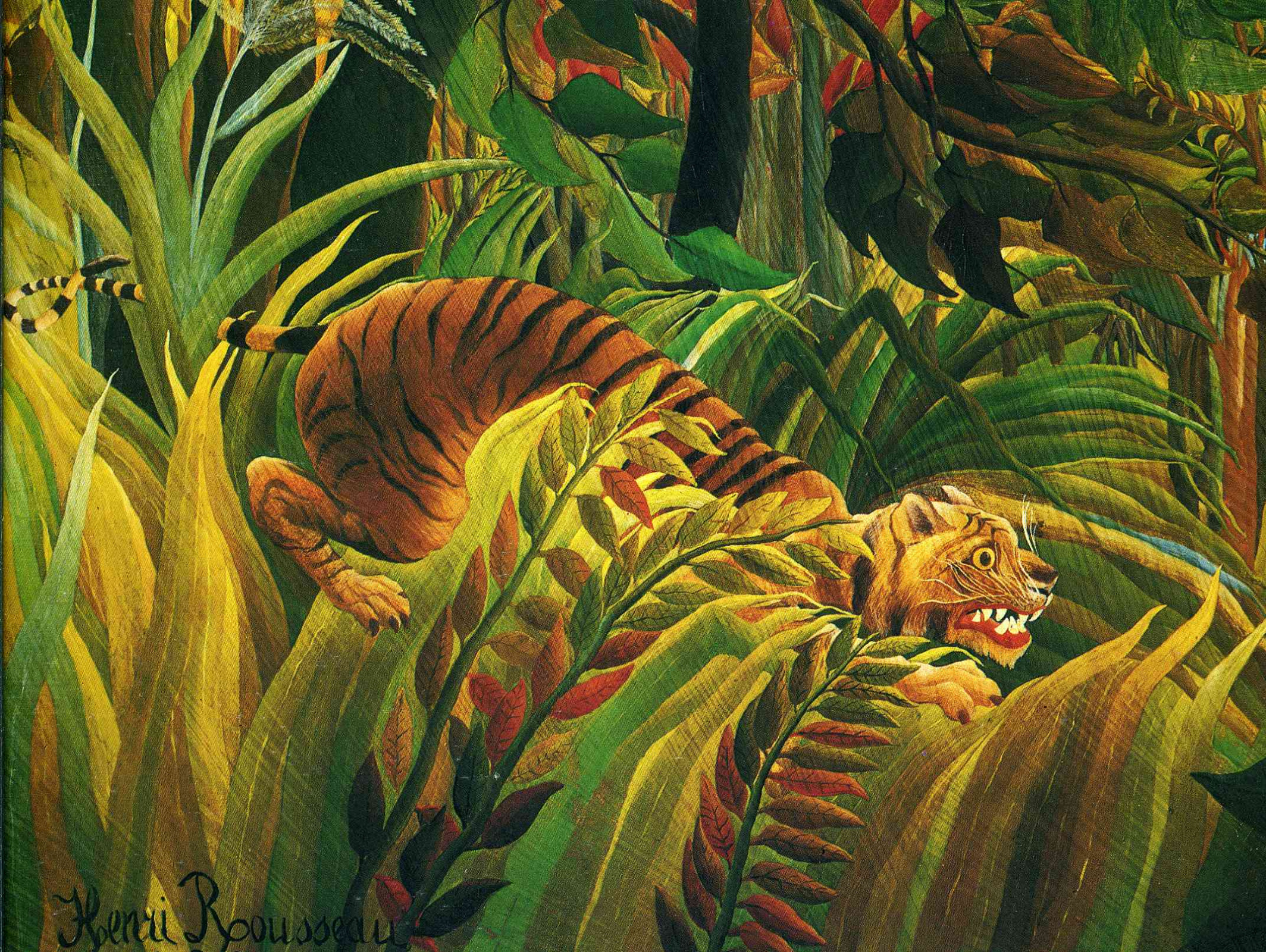
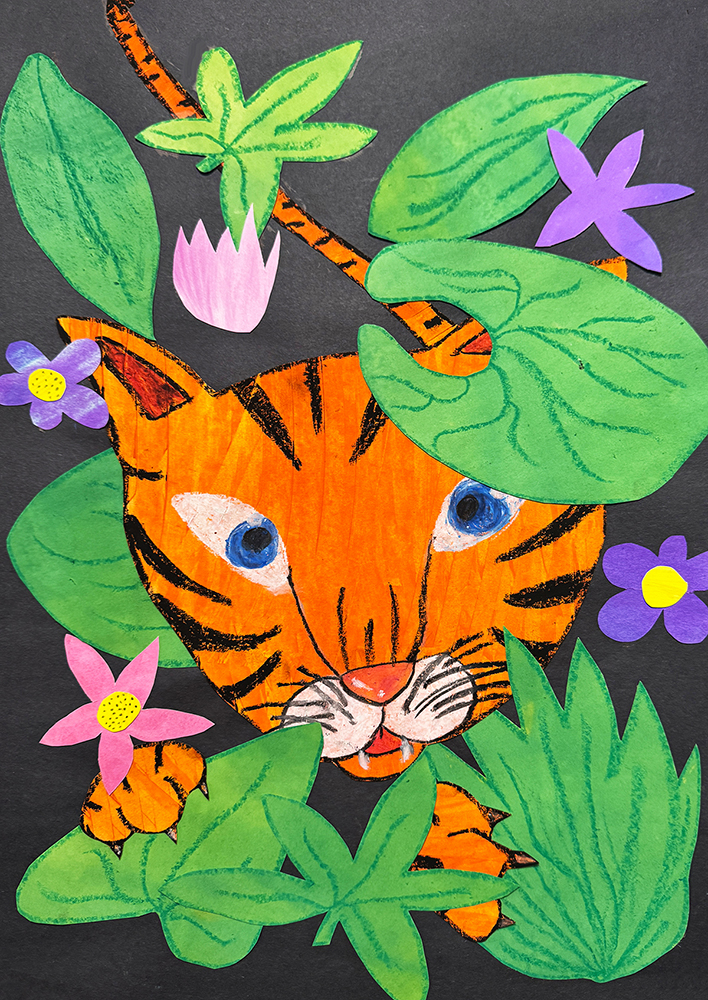
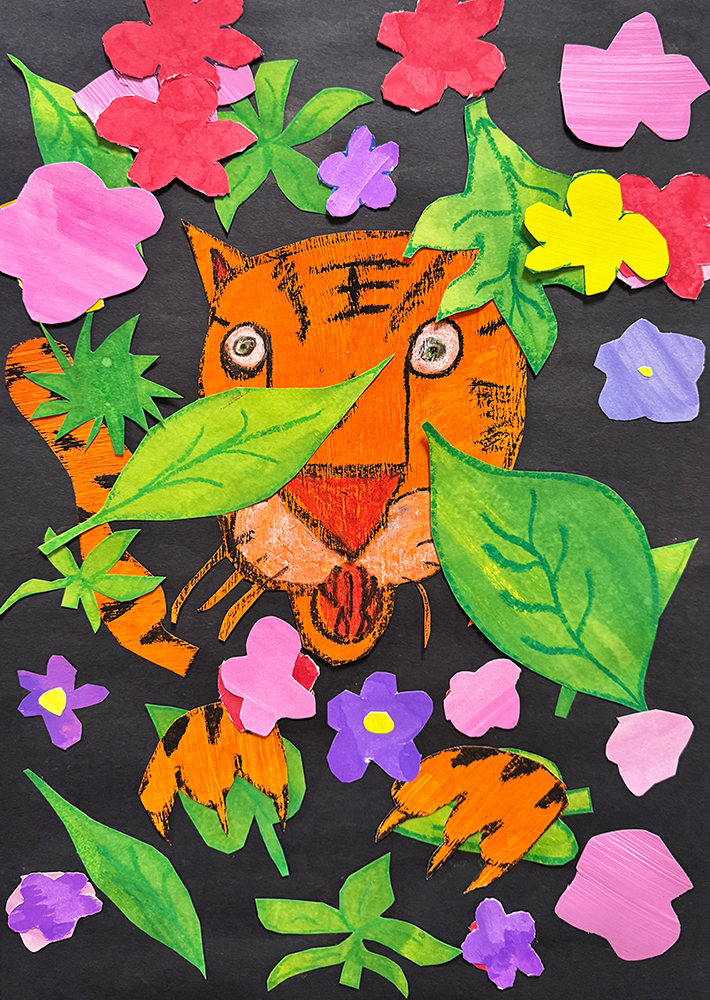
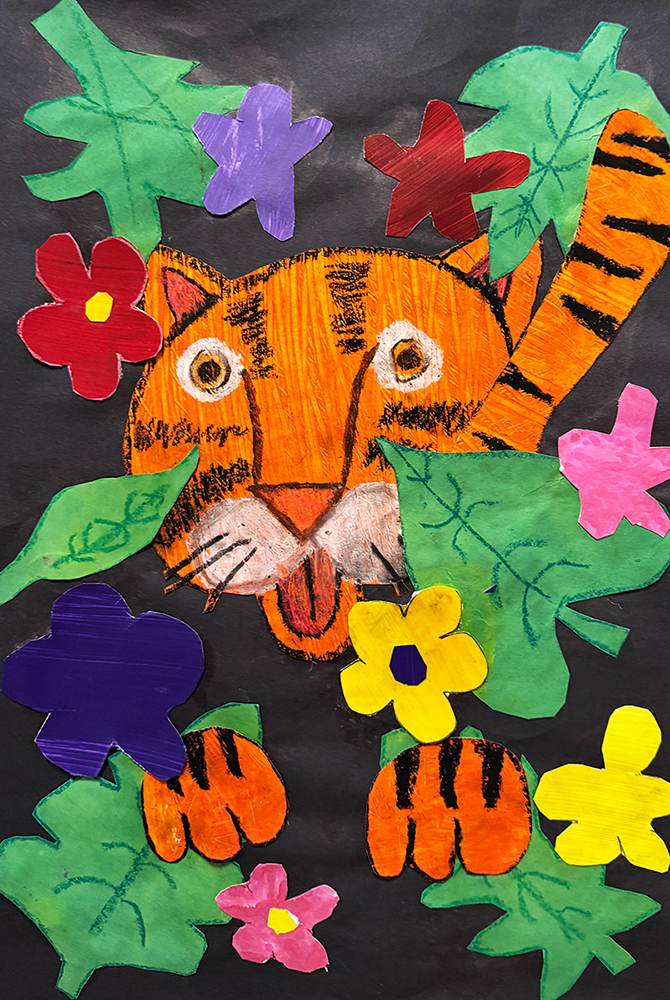
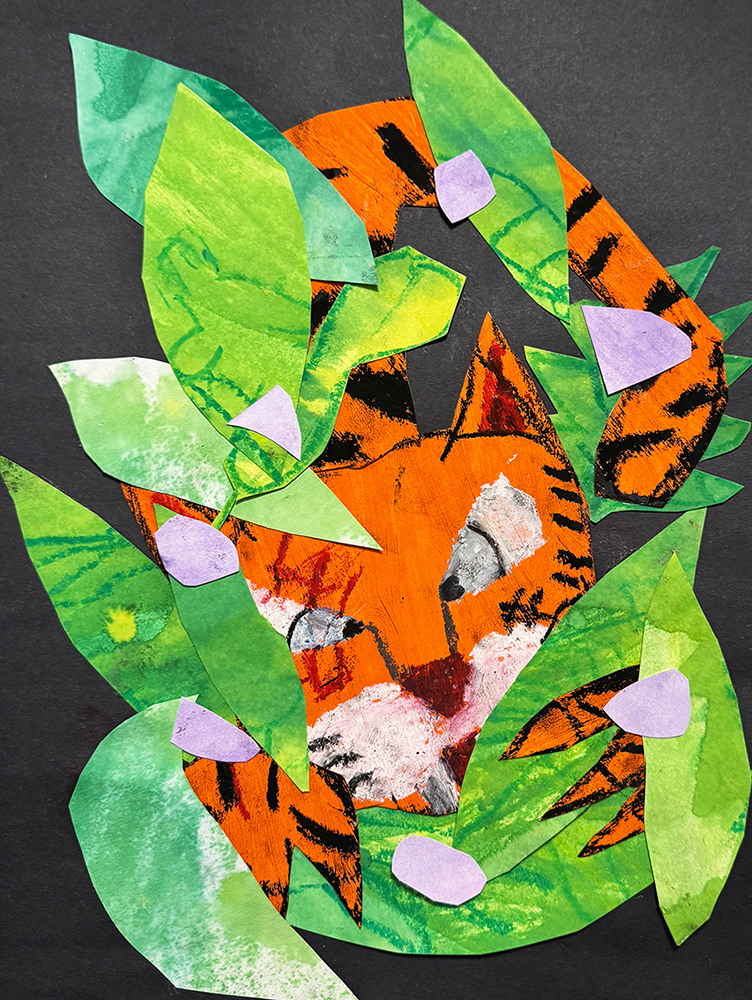
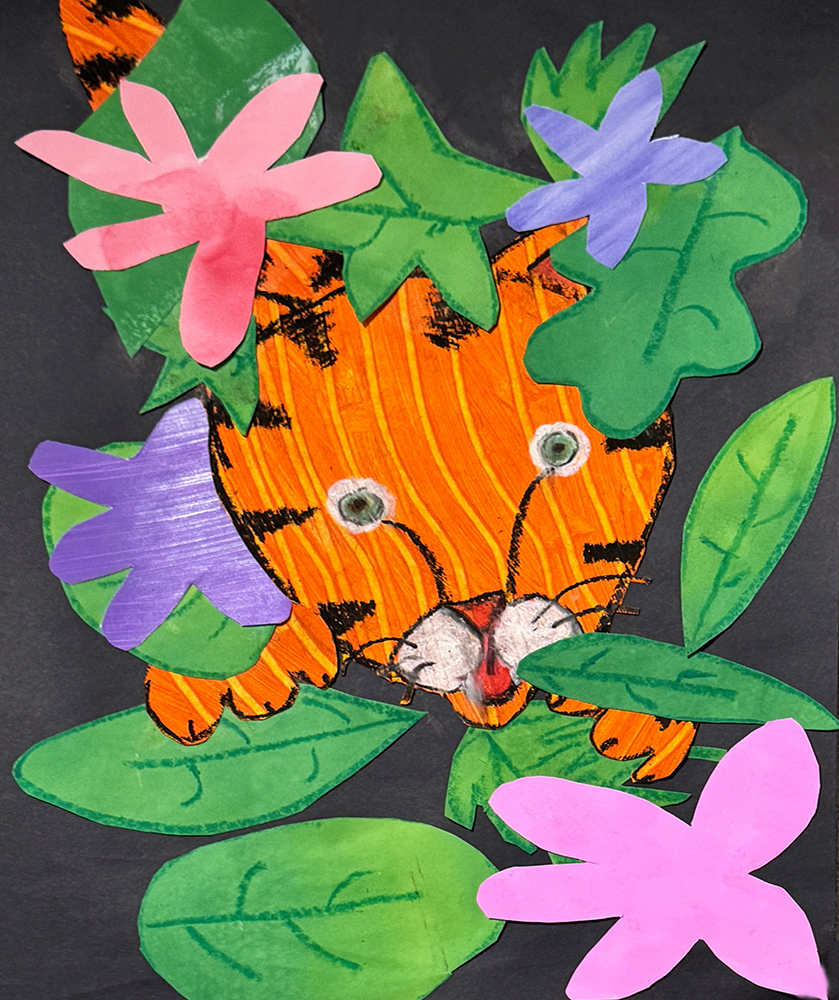
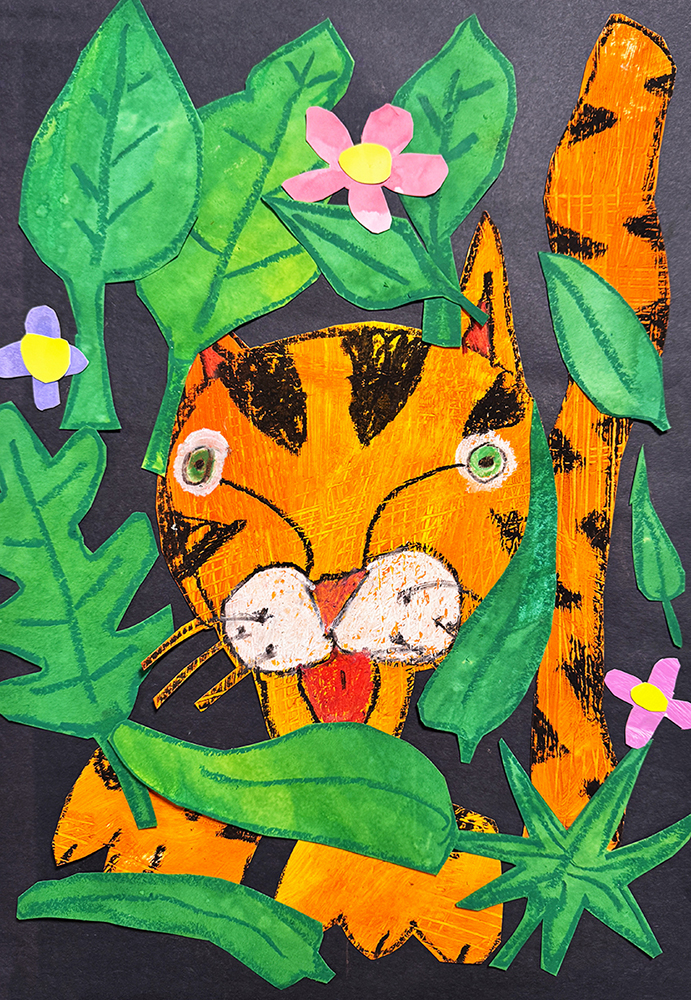
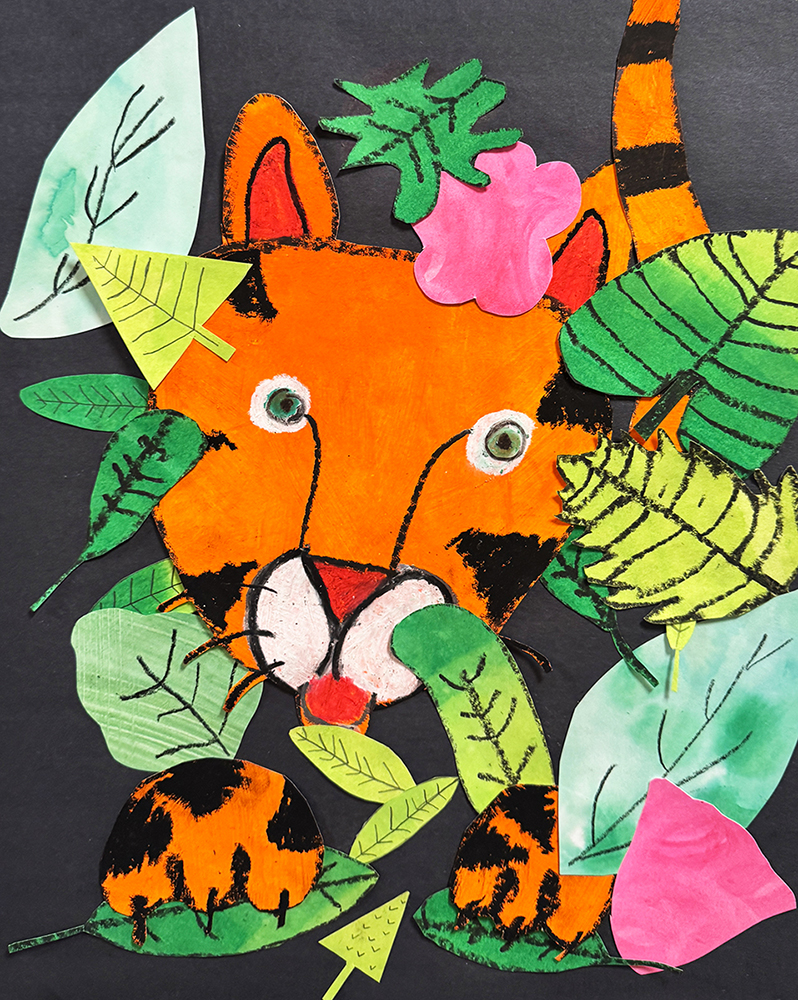
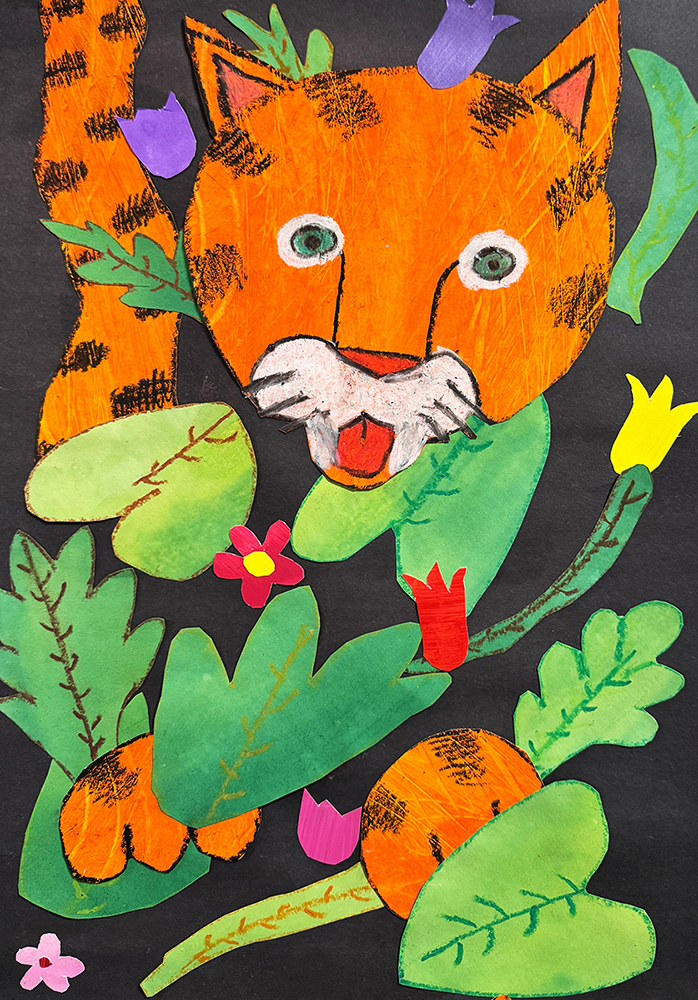
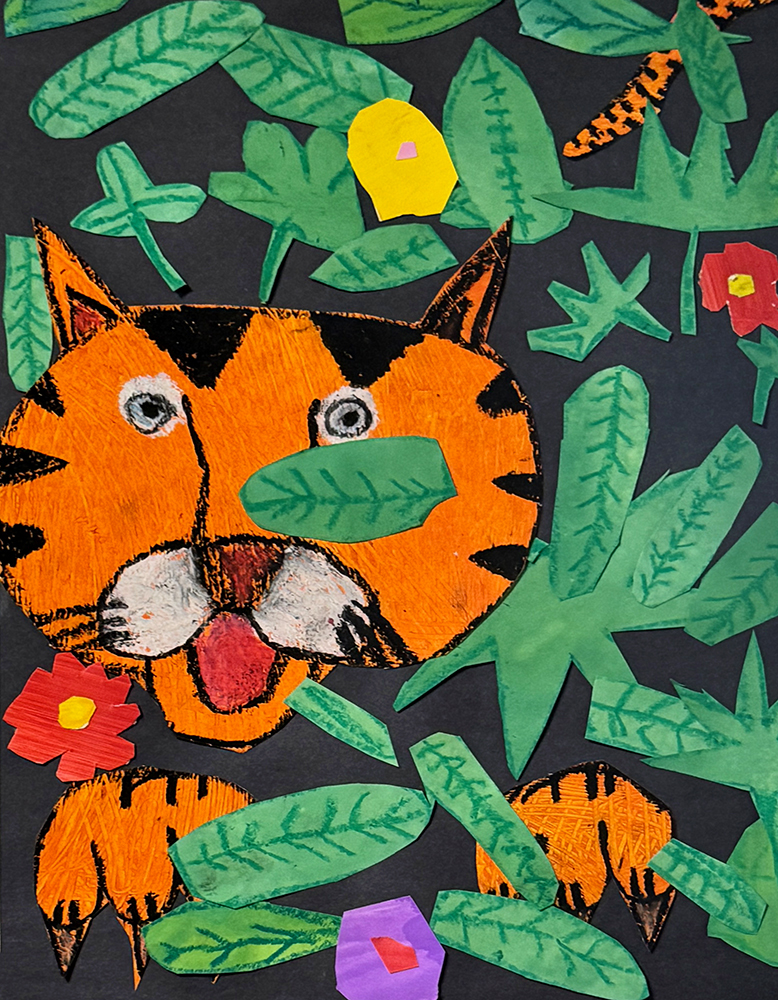
Activity statement – First, I have to give credit where credit is due: I got the idea for this unit directly from Elements of the Art Room at: https://elementsoftheartroom.blogspot.com/2018/09/3rd-grade-painted-paper-tiger-collage.html, so please do visit the site. I was looking for a fun unit to review foreground and background with my 3rd grade students, as well as presenting them the work of an artist they had yet to meet, so when I found this lesson online I thought it would be perfect to adapt into a unit. Henri Rousseau is well known for his fantastical, lush paintings, especially of animals in the jungle. His artwork is accessible to younger students due to his use of vibrant colors, flat perspectives and imaginative scenes. I’ve always loved the way Rousseau makes his compositions so dreamlike and surreal. His paintings of tigers crouching behind foliage in the jungle is an excellent way to review foreground and background with students, focusing on overlapping elements. Students will create a multimedia collage of a tiger in the jungle, using leaves and flowers as foreground images and the tiger among these in the background.
Goals – Students should…
Understand:
- The terms background and foreground
- Overlapping
Know:
- How to overlap elements in a collage
Be able to:
- Recognize objects that are in the foreground, and those in the background
- Recognize Rousseau’s work, and describe the obvious characteristics of his work
Resources and materials –
- Examples of Rousseau’s paintings of tigers in the jungle
- 12 x 18 white Bristol paper
- Acrylic paint in oranges, green, yellows, reds, pinks and purples
- Paint brushes
- Texture tools
- Oil pastels
- Scissors
- Glue
Questions –
While observing Rousseau’s paintings
- What do you see?
- Is the tiger behind or in front of the leaves?
- What’s behind the tiger? When something is behind something else in a work of art, what do we call it?
- When something is in front of something else, what is it called?
- When something is behind something else, what is it called?
- What other qualities do you notice in Rousseau’s paintings?
- Do his paintings look realistic? Why or why not?
- What do his paintings remind you of? Why?
Evaluation – Did students:
- Understand foreground and background elements, and how to overlap in order to express foreground and background?
Informal:
- Student questions
- Group discussions
- Oral responses to essential questions
- Elaboration and risk-taking
- One finished piece
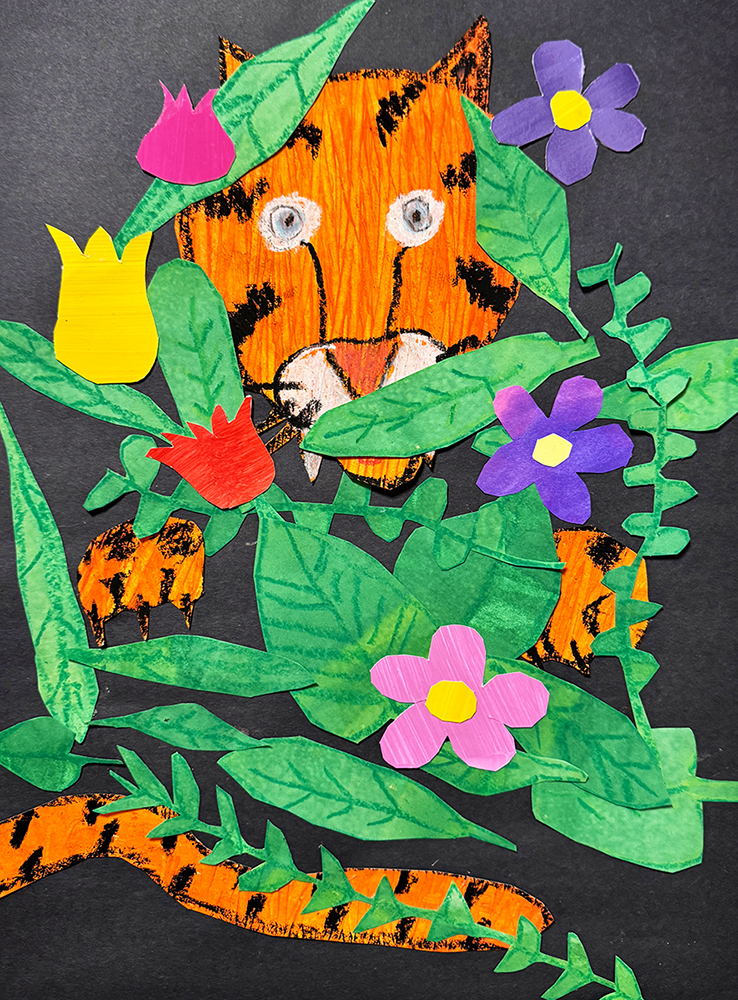
 In the K-8 Art Studio with Anita Sagastegui