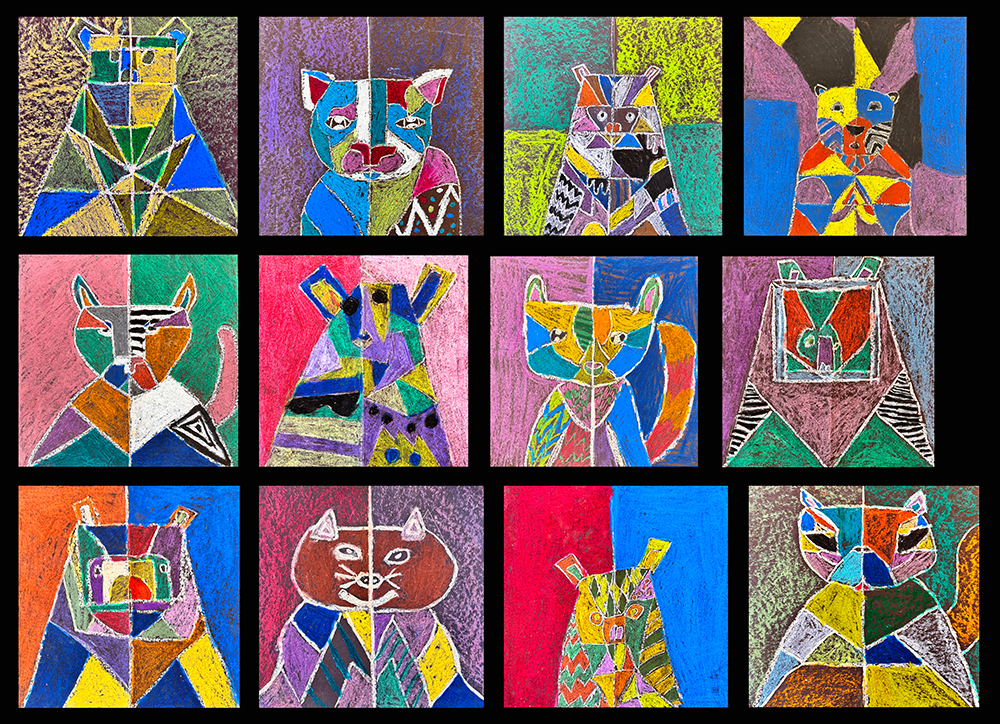
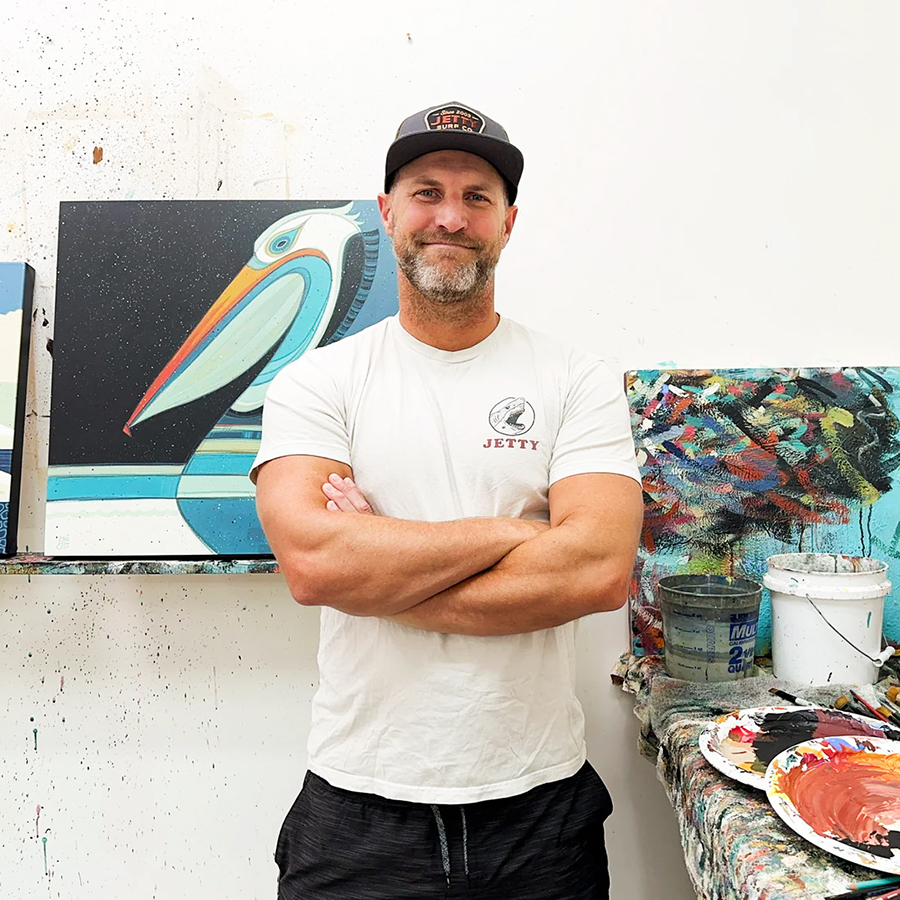
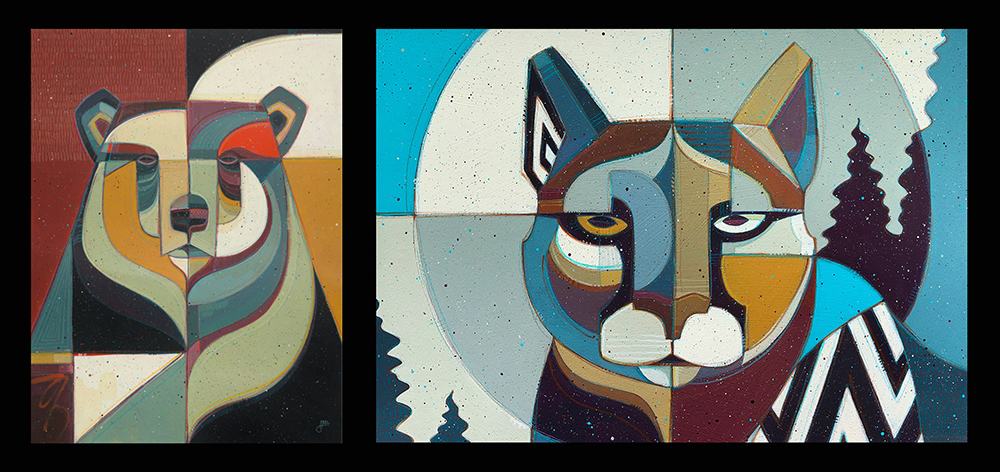
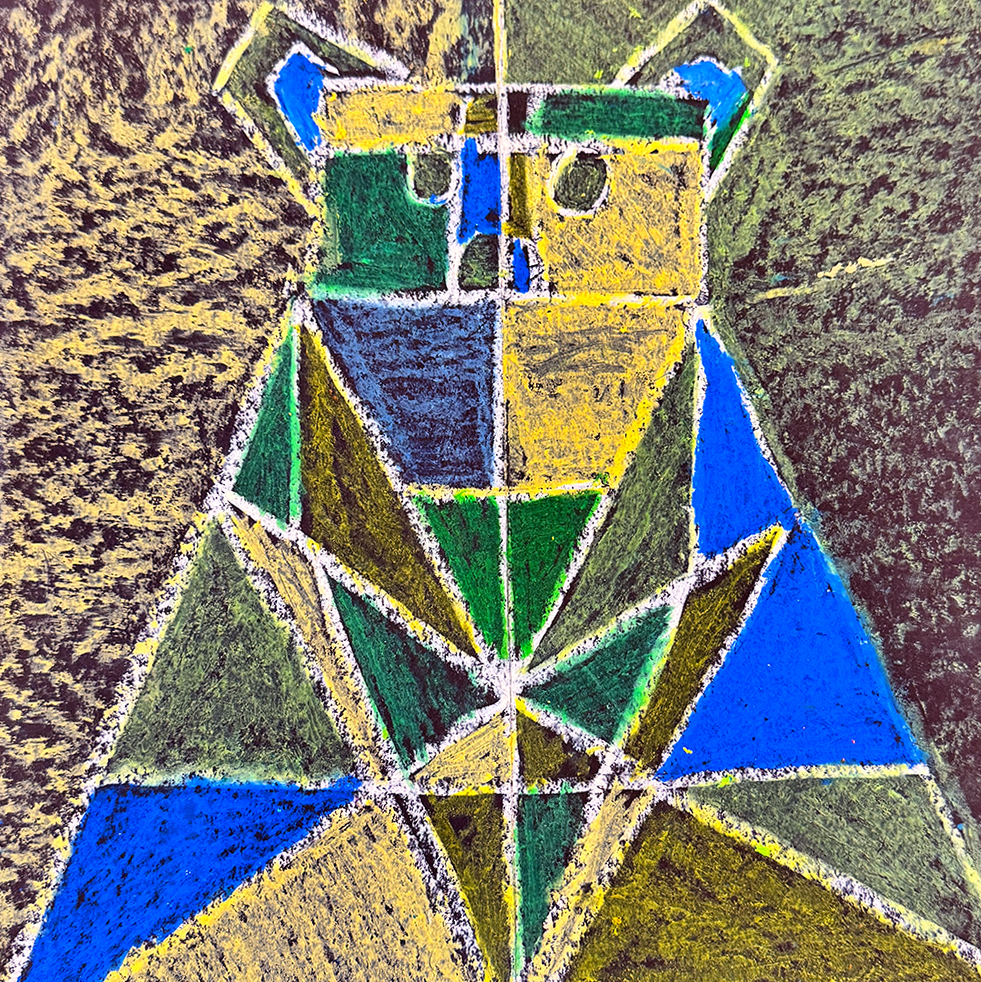
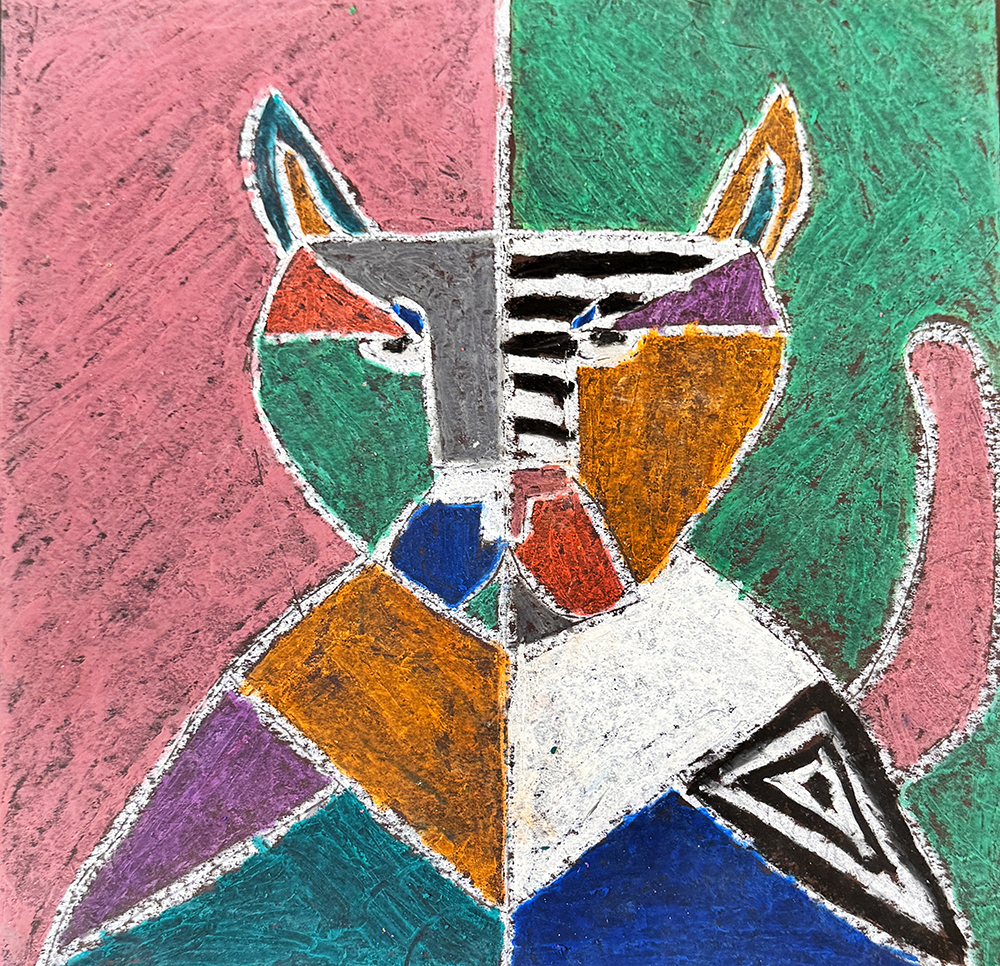
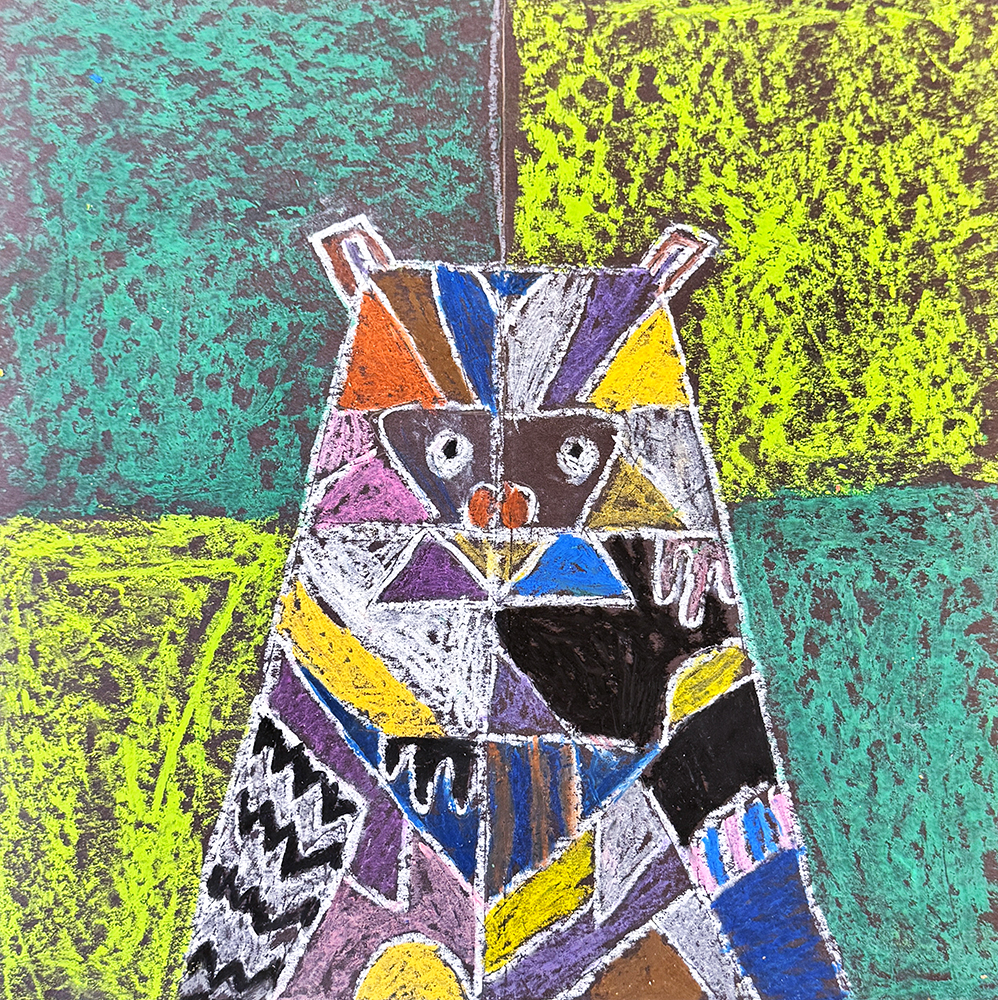
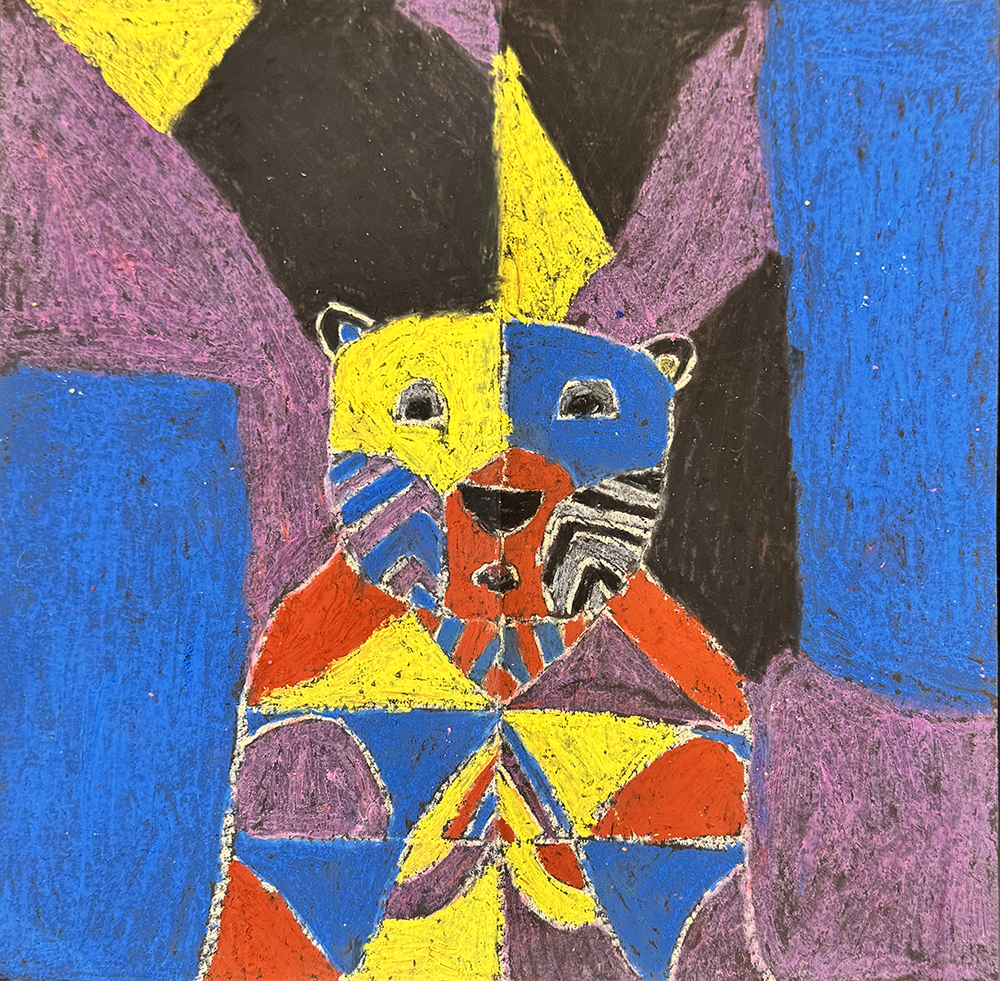
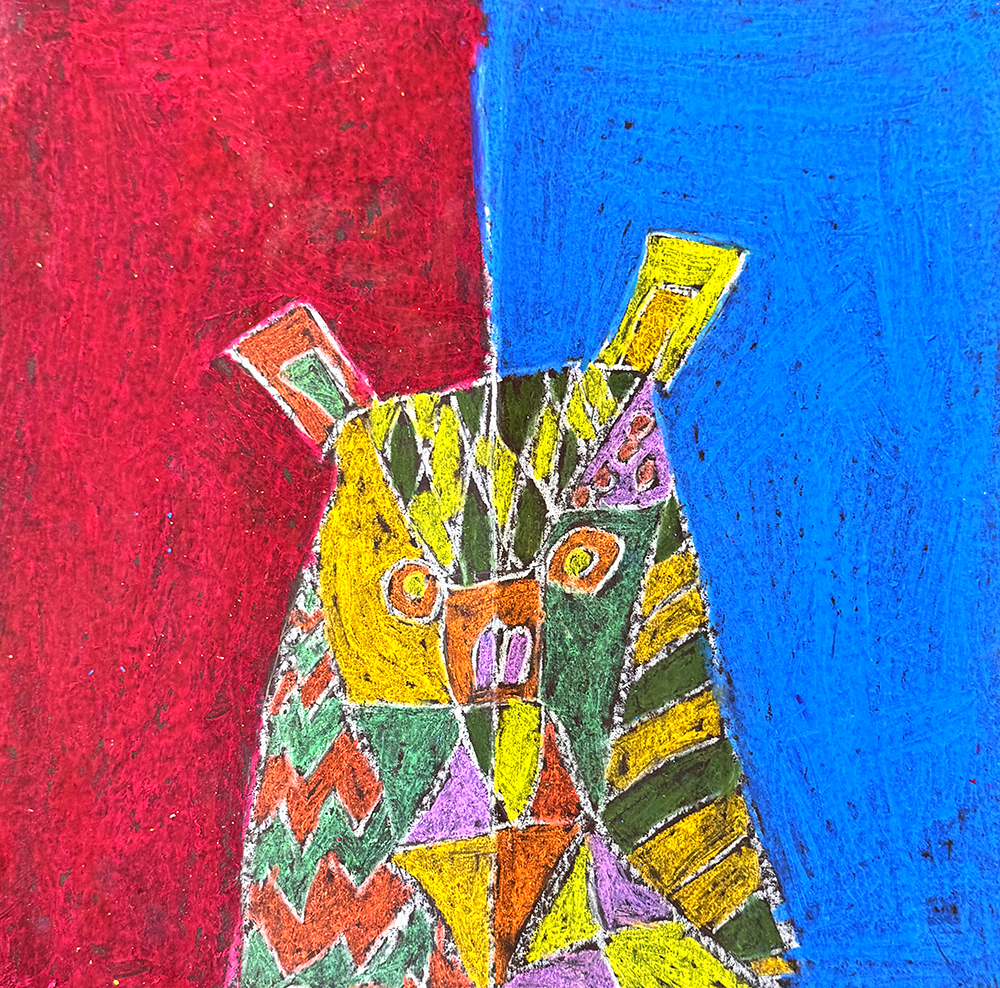
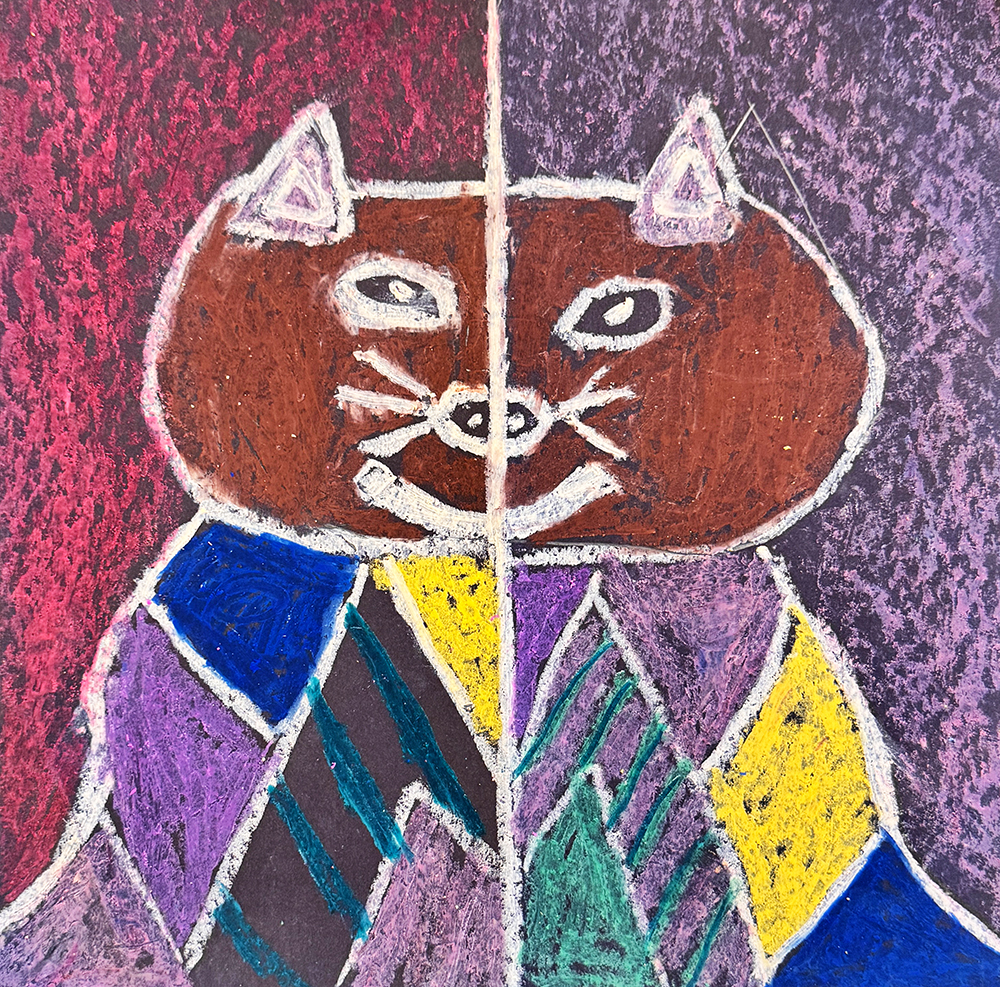
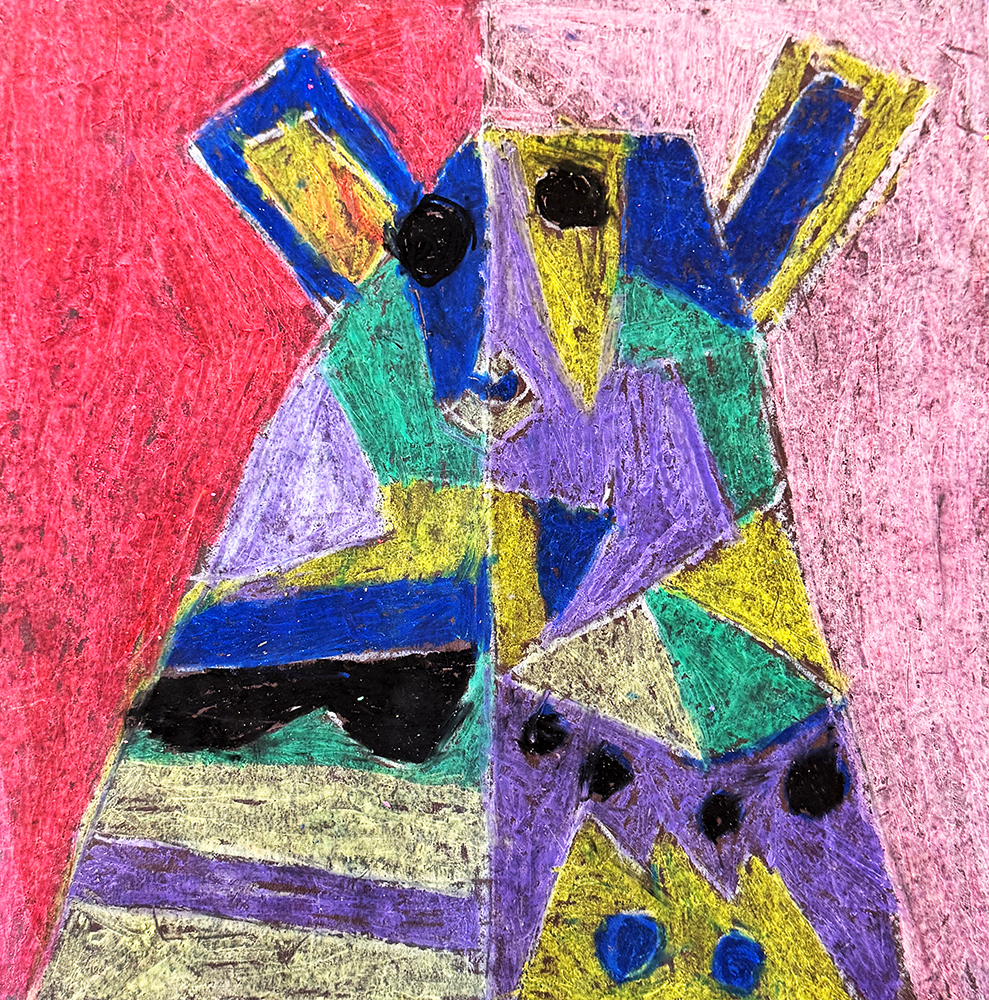
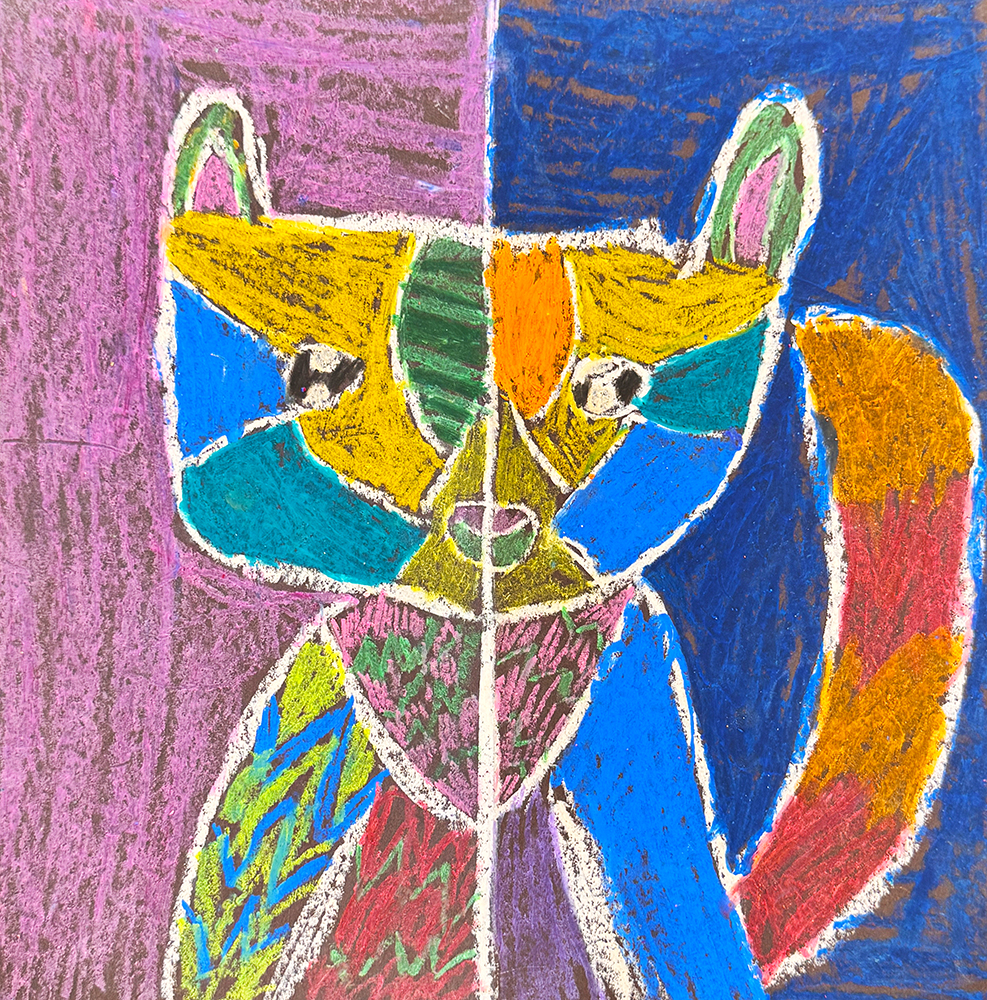
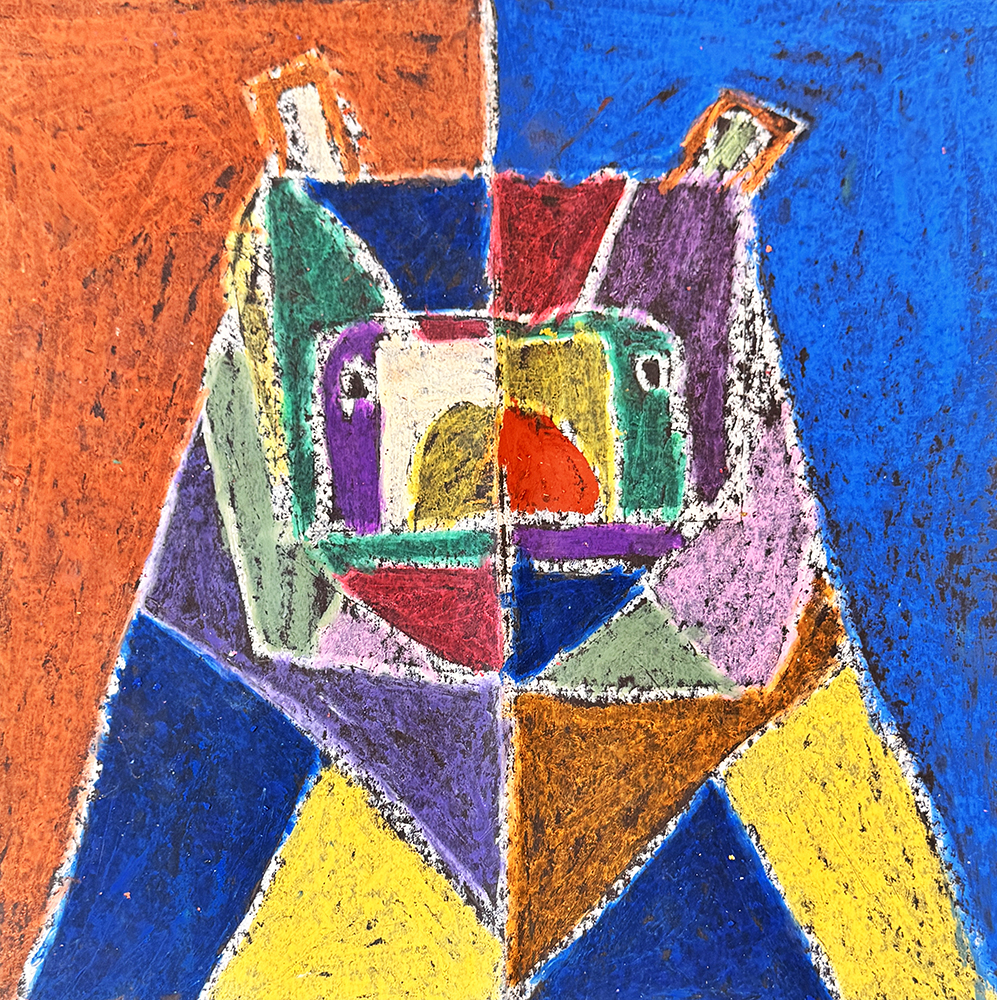
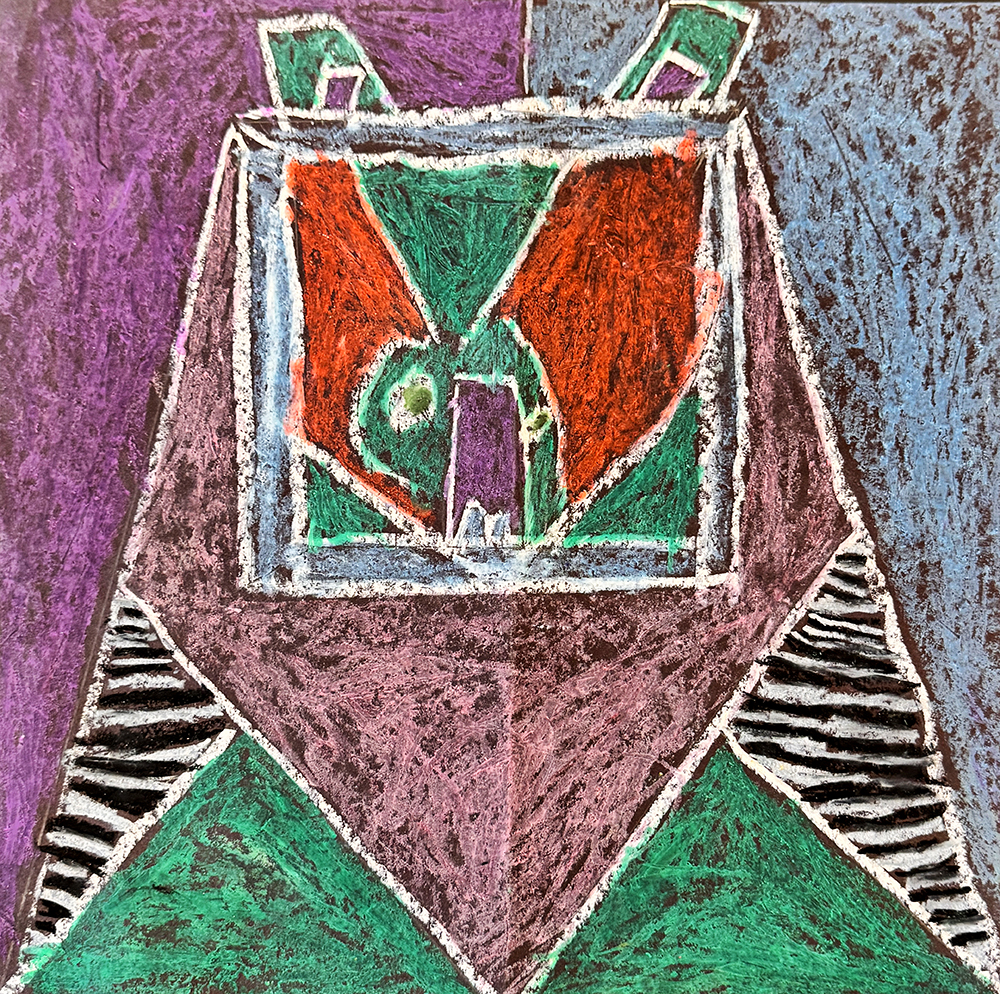
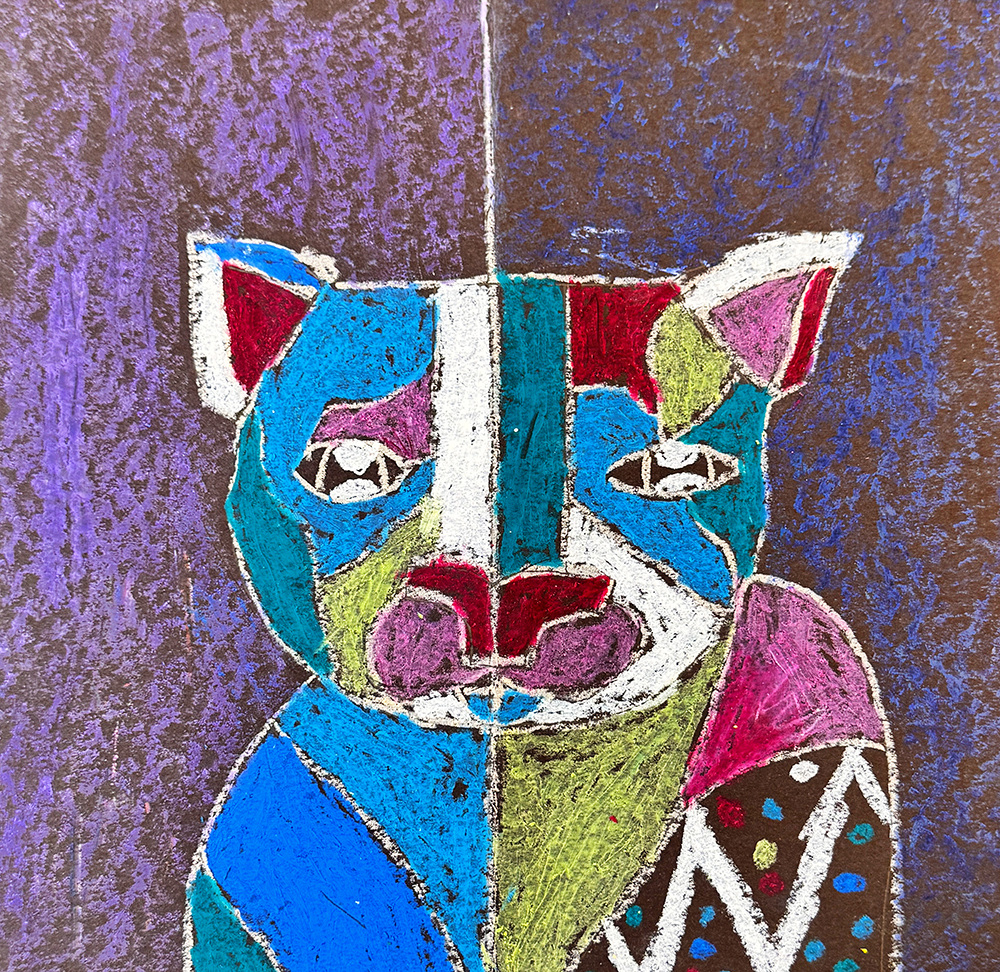
Description of the Unit – Erik Abel is an American artist whose paintings express an appealing use of geometry and color, and, particularly in his abstracted paintings of animals, clearly express symmetry, asymmetry and balance in ways that are accessible to students as young as 1st grade. Students will observe and discuss his work, as well as other works of art that express the above terms and will then create their own Eric Abel-inspired animal illustration in oil pastel that express symmetry, asymmetry and balance.
Activity statement – The artistic principle of balance may seem like a sophisticated principle for a first-grade student to understand, but it really isn’t, especially when approaching it via symmetry and asymmetry. Students will review symmetry and asymmetry through the observation of various works of art, eventually concluding with Erik Abel’s work. From there students will observe and discuss Balance: the distribution of visual weight. Observing the use of elements such as color, shape, pattern, and texture (and the size of these elements), we will try to find stability and harmony within both Abel’s and other works of art. Following this, students will represent symmetry, asymmetry and balance in their Abel-inspired oil pastel illustrations. I highly recommend visiting Abel’s website, he has phenomenal work (I’m longing to buy a print of one of his pieces myself): https://www.abelarts.com/
Goals – Students should…
Understand:
- What it means when a work of art expresses symmetry, asymmetry and/or balance
- What a limited color palette means
- The difference between organic and geometric shapes
- What we mean when a work of art expresses harmony
Know:
- The meanings of symmetry, asymmetry and balance
- At least in simple terms, be able to describe what realistic art is, vs. representational, vs. abstracted
Be able to:
- Identify symmetry, asymmetry and balance in art
- Apply a limited color palette to their work
- Be able to express some symmetry and balance in their work
Resources and materials –
- Examples of Erik Abel’s work
- Supporting materials that help young students understand symmetry, asymmetry & balance (such as videos)
- 12×12 black construction paper
- Rulers
- Oil pastels
Questions – (While observing Abel’s paintings)
- What do you notice about the paintings? Describe
- What do you notice about the colors he uses? Does he use lots of different colors, or does he repeat some of the same colors?
- What do you notice about the shapes in this painting?
- Are there patterns here? Point them out.
- Can you point to things in (said painting) that are the same on both sides?
- Can you point to things that are different on both sides?
- Is this painting realistic? Why or why not?
(After getting immersed in definitions and examples of symmetry, asymmetry and balance in art, use further examples to ask questions)
- Is this art symmetrical or asymmetrical? Why or why not?
- Is this work of art balanced? Why or why not?
- Why is it important for a work of art to be balanced
Did students:
- Understand the idea of creating texture through paint?
- Know how to describe their chosen ecosystem, and what elements it consists of?
Informal:
- Student questions
- Group discussions
- Oral responses to essential questions
- One finished ecosystem collage
Evaluation – Did students:
Informal:
- Student questions
- Group discussions
- Oral responses to essential questions
- Elaboration and risk-taking
 In the K-8 Art Studio with Anita Sagastegui