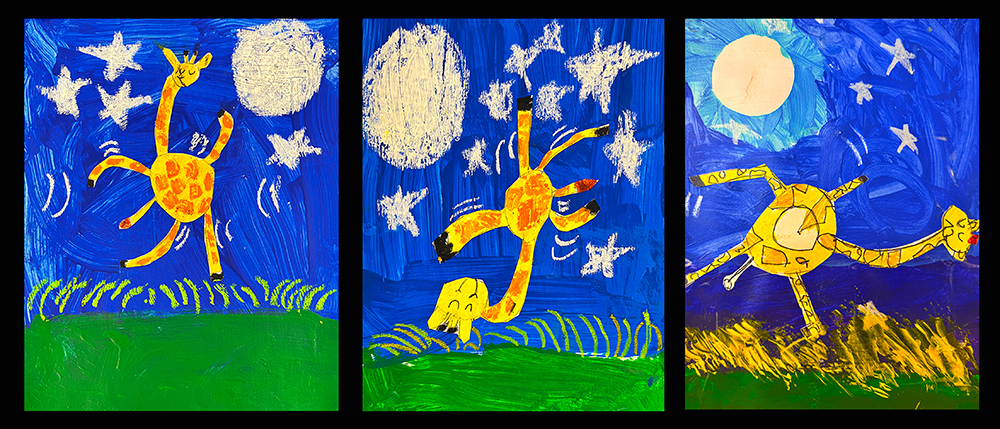
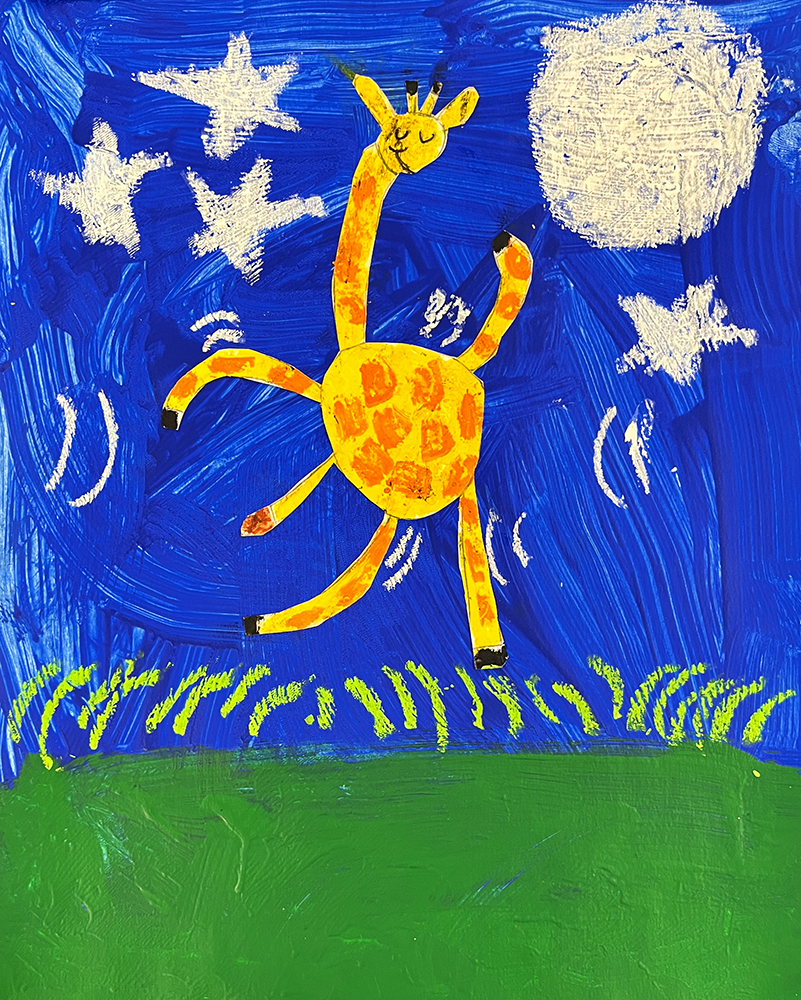
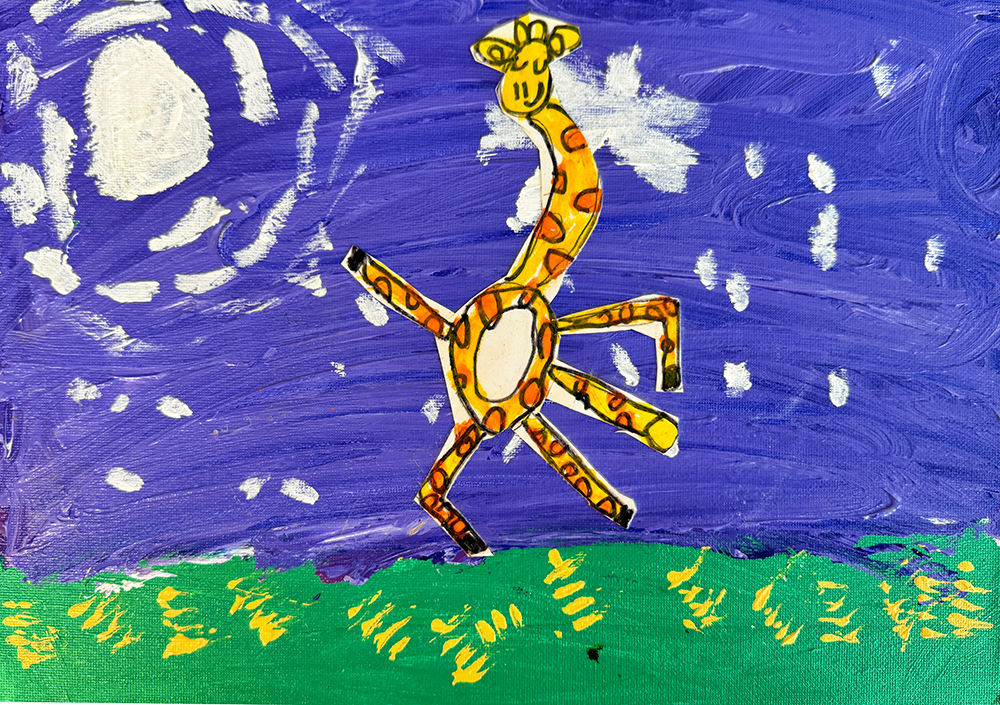
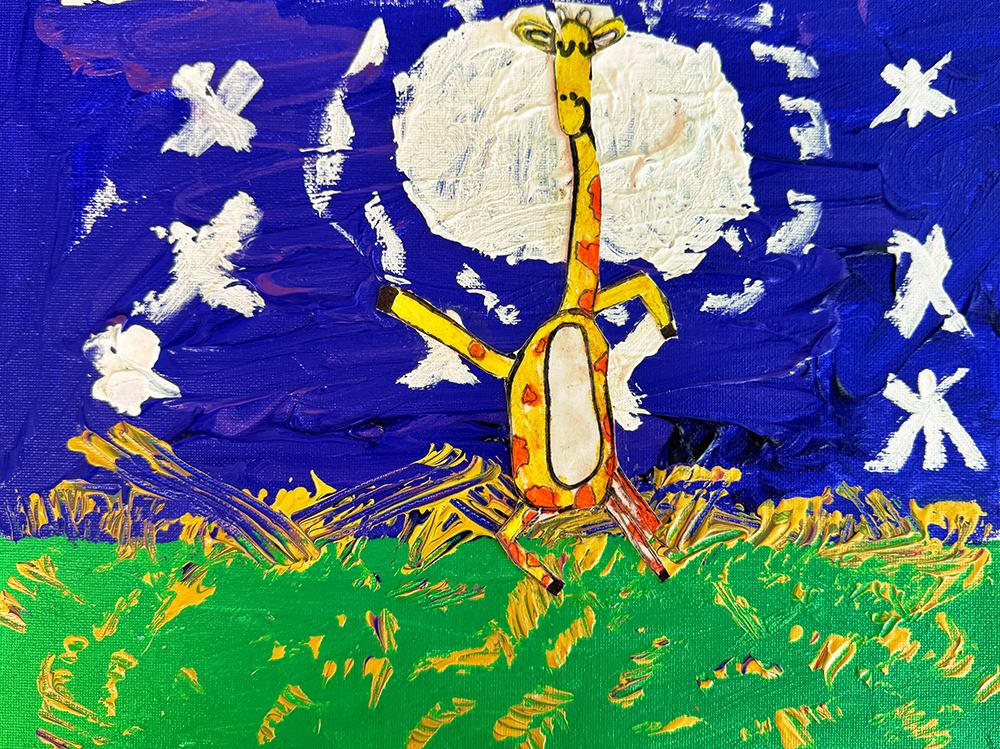
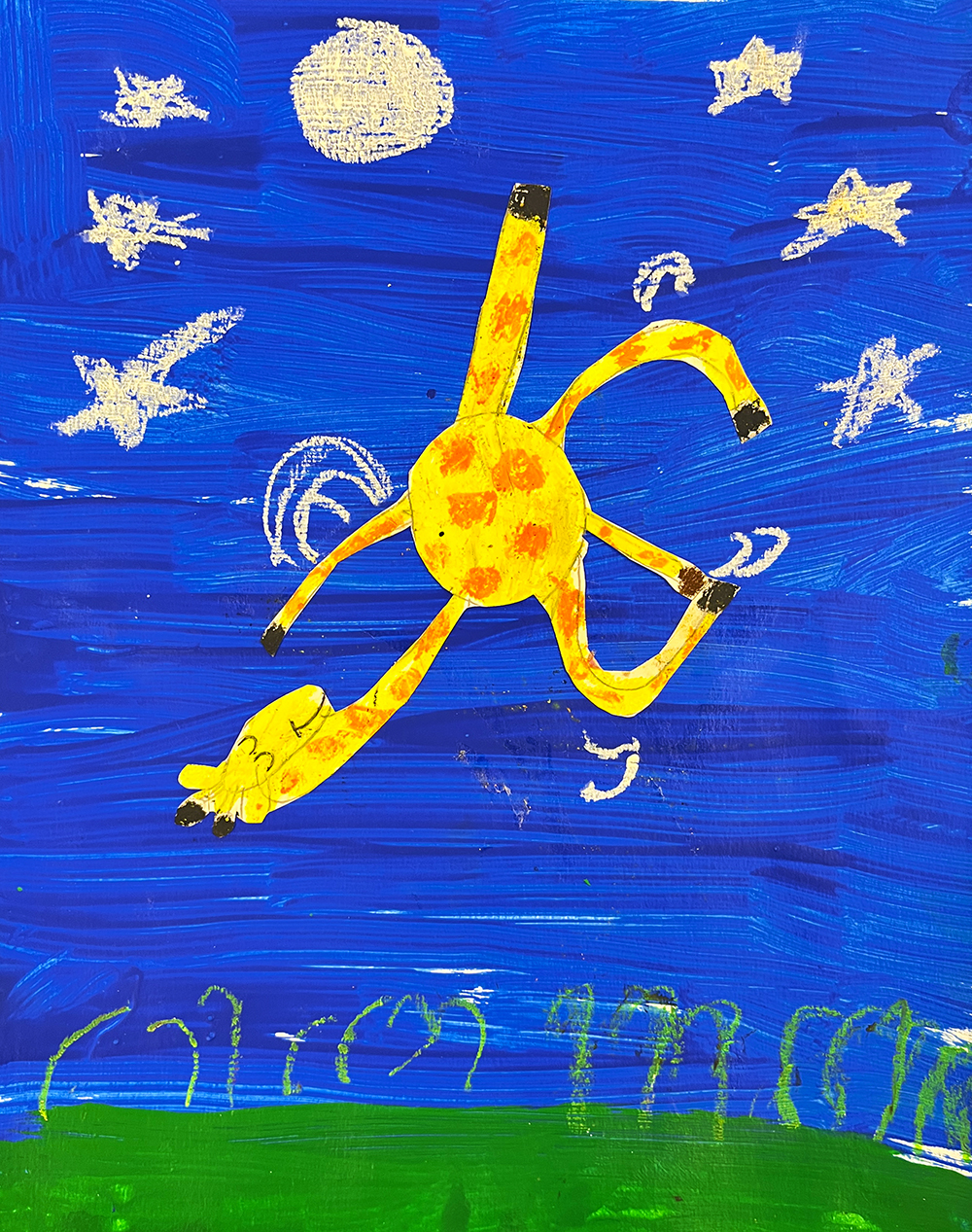
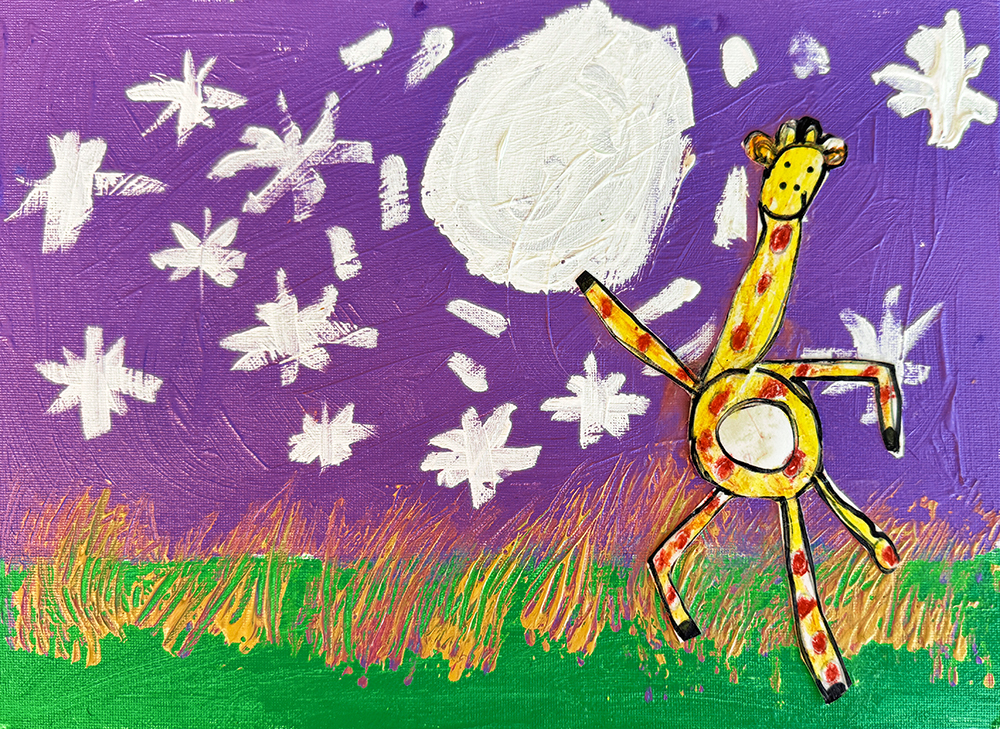
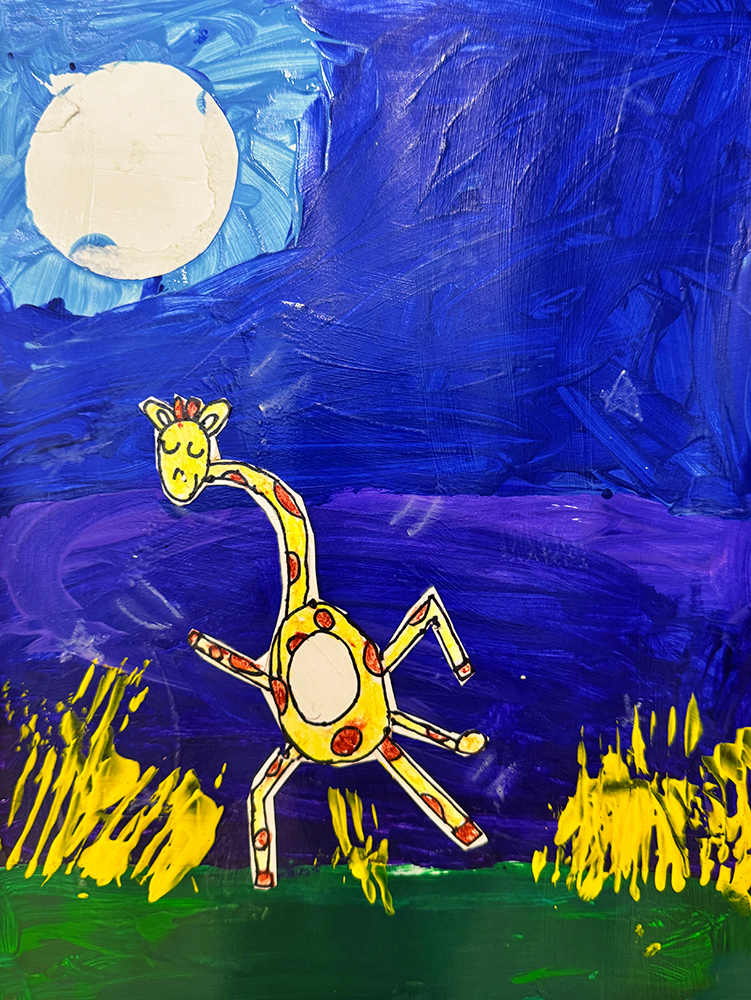
Description of the Unit – Inspired by the delightful children’s book Giraffes Can’t Dance by Giles Andreae and illustrated by Guy Parker-Rees, students learned about ways in which movement can be expressed in art, later recreating their own dancing giraffe.
Activity statement – Movement is a principle of art. While it may seem a sophisticated principle for kindergarten students, movement is quite easy to observe in works of art, and therefore the concept is made more accessible to children at this age.
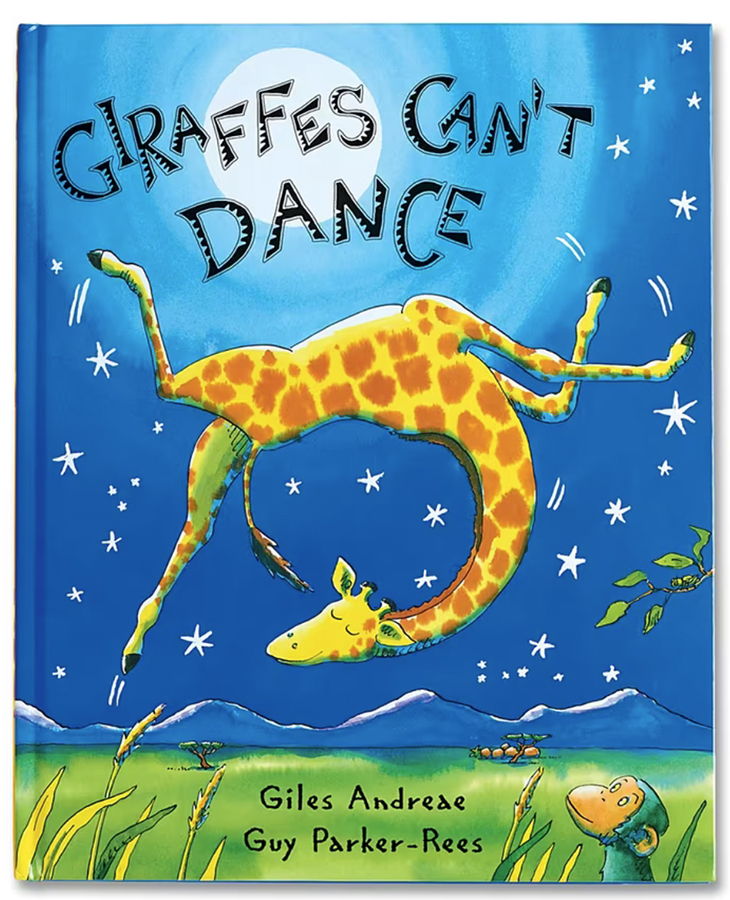
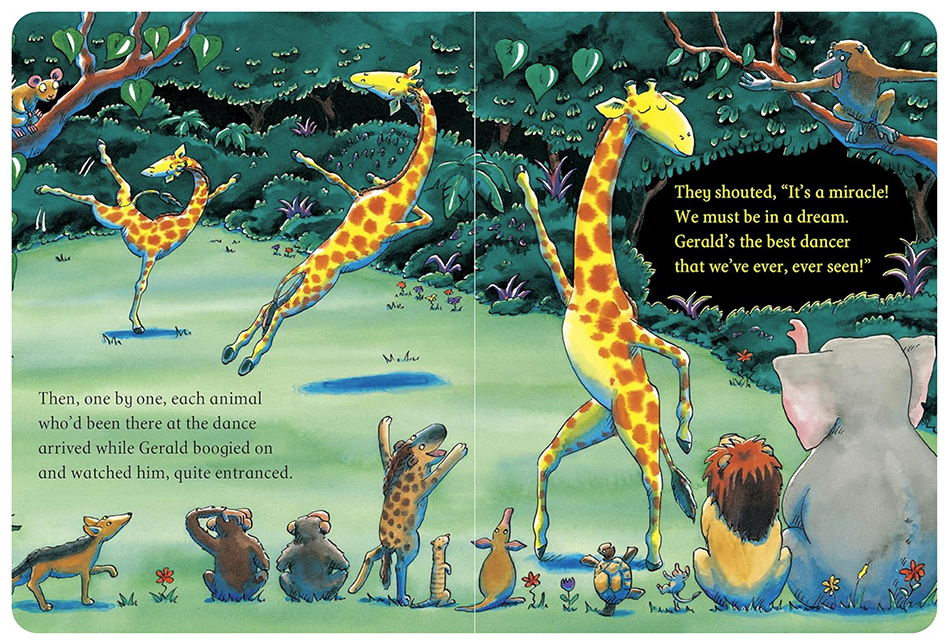
Using the book Giraffes Can’t Dance, students observed and discussed the way Parker-Rees’ dancing giraffe, Gerald, expressed movement. They noted the way Gerald’s body twists; his legs splay out and his neck curves. One student also pointed out “the little white lines” at the ends of his legs to indicate that they are moving. We discussed how these motion lines are commonly used in illustration and cartoon to imply movement.
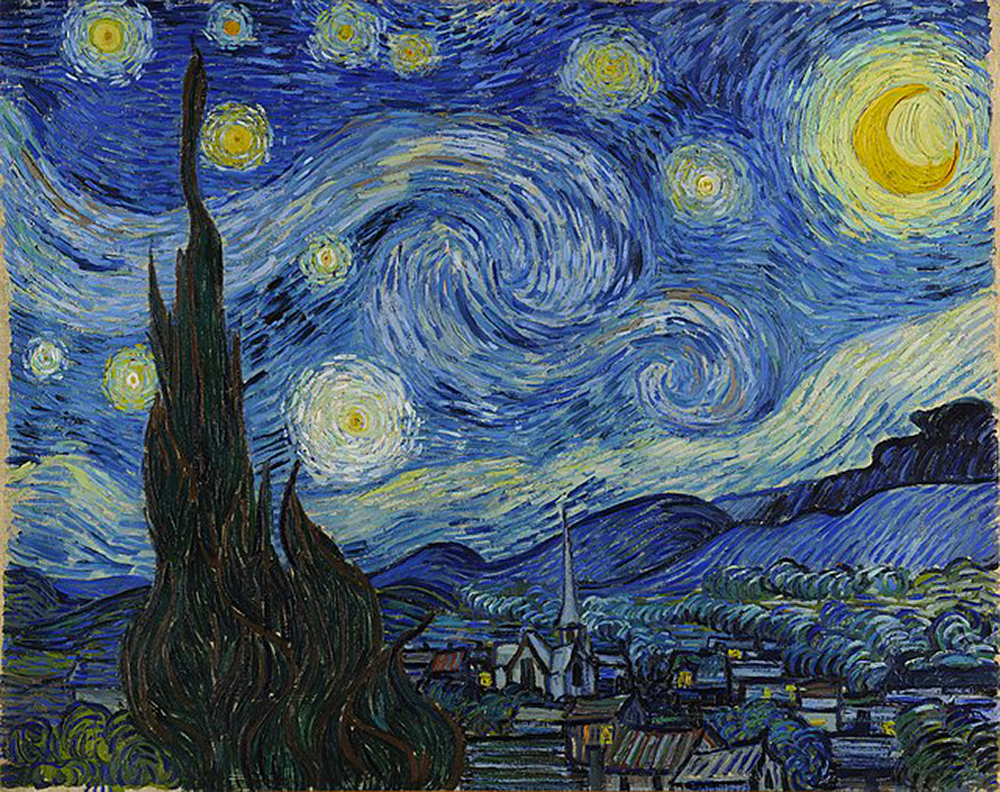
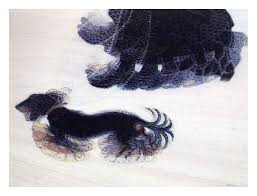
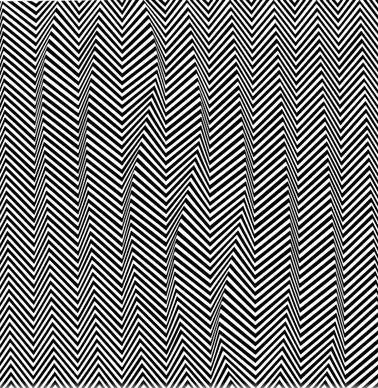
Now of course, movement in works of art is expressed via many more ways than just implied movement, so to further emphasize the expression of movement in art, we also observed such works as Vincent Van Gogh’s Starry Night, which uses visible brushstrokes and mark making to express the wind blowing and the stars twinkling—this is an example of gestural movement. Another example of gestural movement, as well as of repetitive movement, is one of my favorite works of art, Giacomo Balla’s, Dynamism of a Dog on a Leash. This whimsical painting shows a dachshund and its owner quickly walking, their legs and feet (as well as the dog’s tail) an echoing blur of movement. Students love this painting! Additionally, we observed an example of rhythmic movement via one of Bridget Riley’s optical illusion designs, Descending. Using the repetition of lines and geometric shapes, as well as pattern, this and other of Riley’s works give the illusion of continuous, physical movement. (We explore her work in more depth in 3rd grade.)
Note, we focused on two-dimensional works of art. There are wonderful examples of physical movement in 3-D art, such as Alexander Calder’s kinetic sculptures, which we explore at later grades. However, to keep things simple for kindergarten students I did not introduce these.
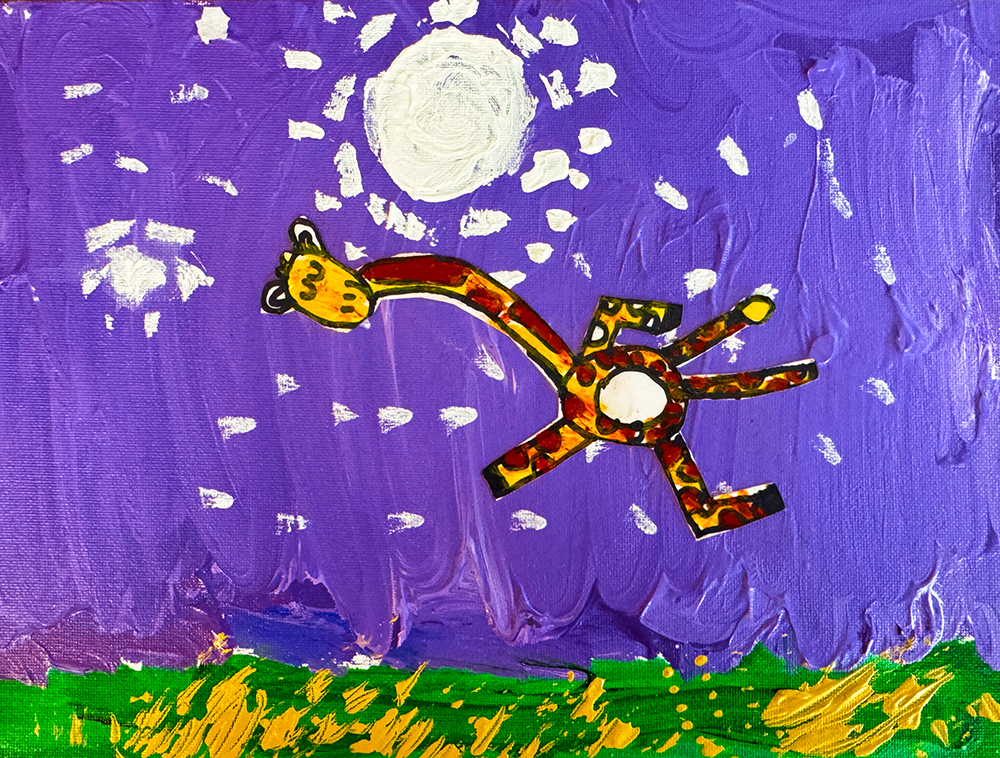
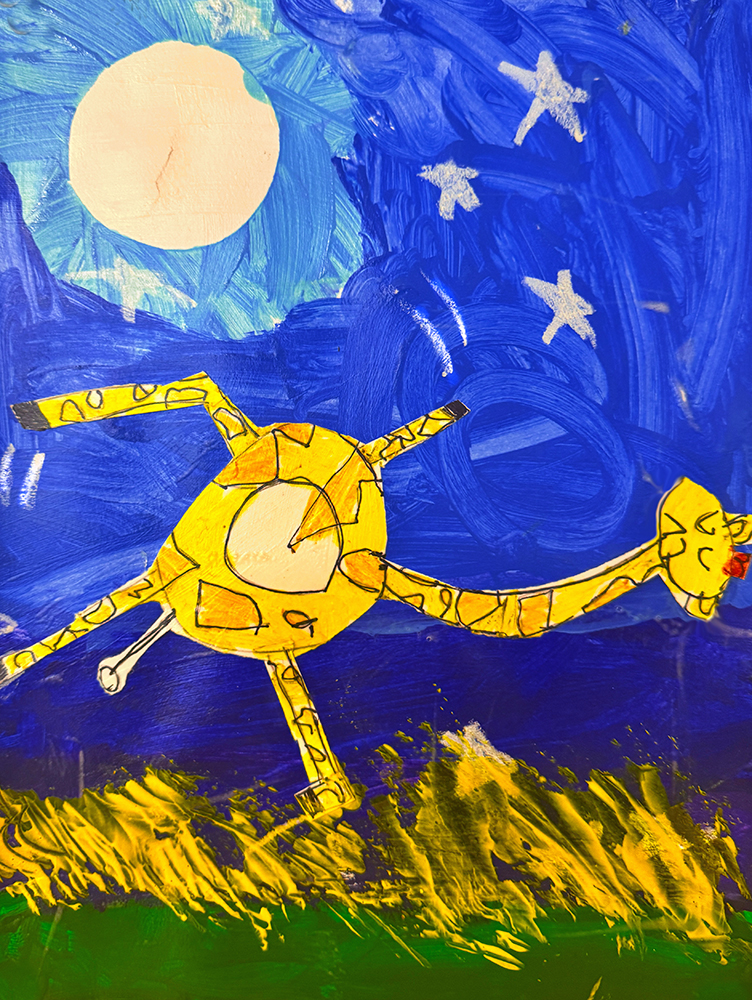
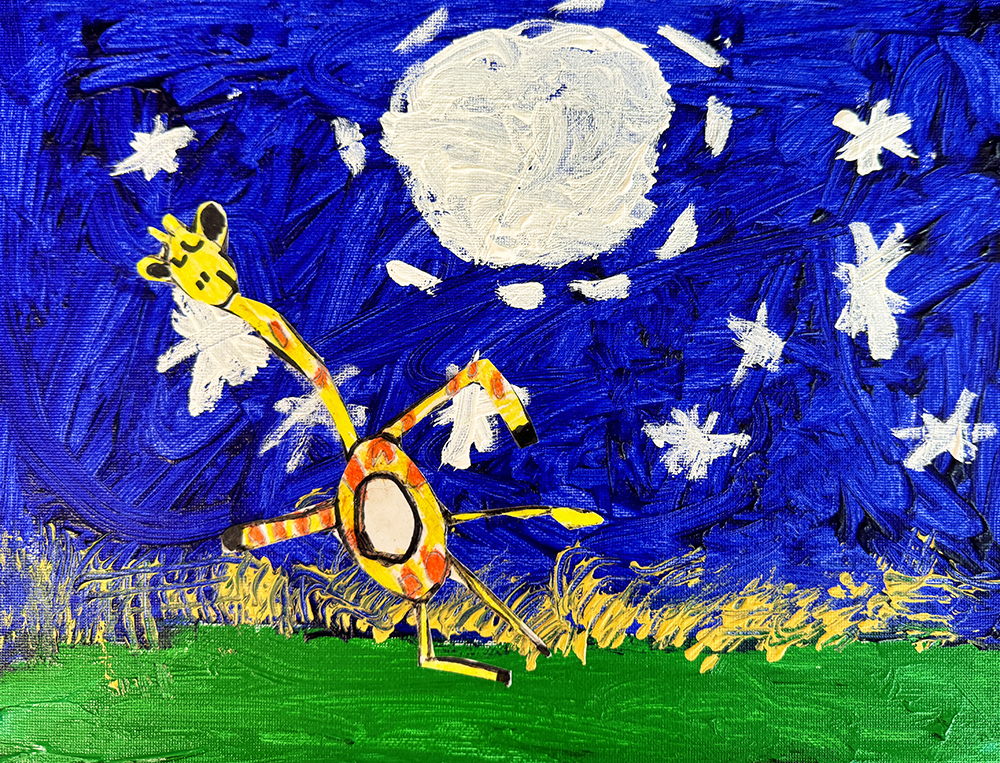
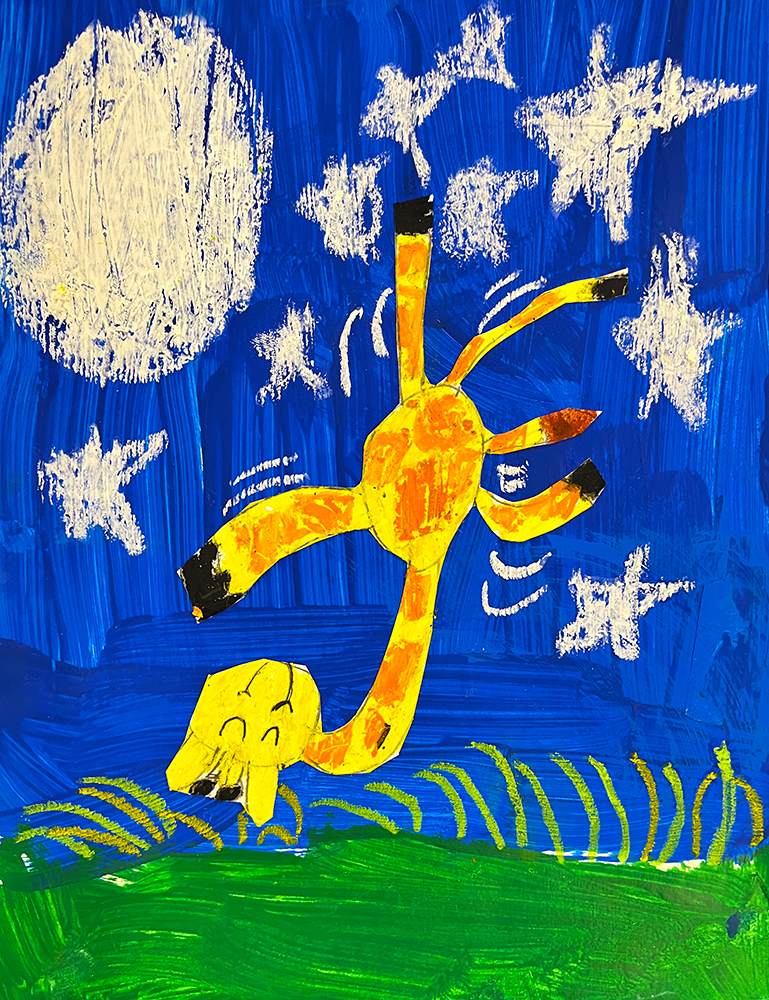
To play with implied movement, students made a mixed media piece on canvas with their own dancing giraffe.
Goals – Students should…
Understand:
- What it means when to express movement in two-dimensional works of art.
Know:
- The difference between implied, gestural and rhythmic movement in art. (This is quite complex, so rather than really knowing the difference, I simply want to expose them to these concepts, which we will continue to review throughout the next few years.)
Be able to:
- Point to examples of movement in art
- Express movement in two-dimensional art via one of the ways we explored above.
Objectives – Students will: Learn about the ways in which movement is expressed in two-dimensional art, and create their own dancing giraffe in mixed media.
Resources and materials –
- Andreae & Parker-Rees’ book Giraffes can’t Dance. These days I like to support Bookshop.org, so you can find the book here: https://bookshop.org/beta-search?keywords=giraffes+can%27t+dance
- Examples of the above artworks, or similar
- Canvas
- Paint
- Brushes
- Palettes
- Paper
- Markers
- Scissors
- Glue
Questions –
(While going through the book)
-What is the giraffe doing? How do you know? Describe
(While observing the works of art mentioned above)
-Do you see any movement here? Where?
-How do you know (subject) is moving? Explain
Evaluation – Did students:
-Understand how movement is expressed in two-dimensional art?
-Express movement in their own work of art?
Informal:
- Student questions
- Group discussions
- Oral responses to essential questions
- Elaboration and risk-taking
- One finished mixed-media piece
 In the K-8 Art Studio with Anita Sagastegui