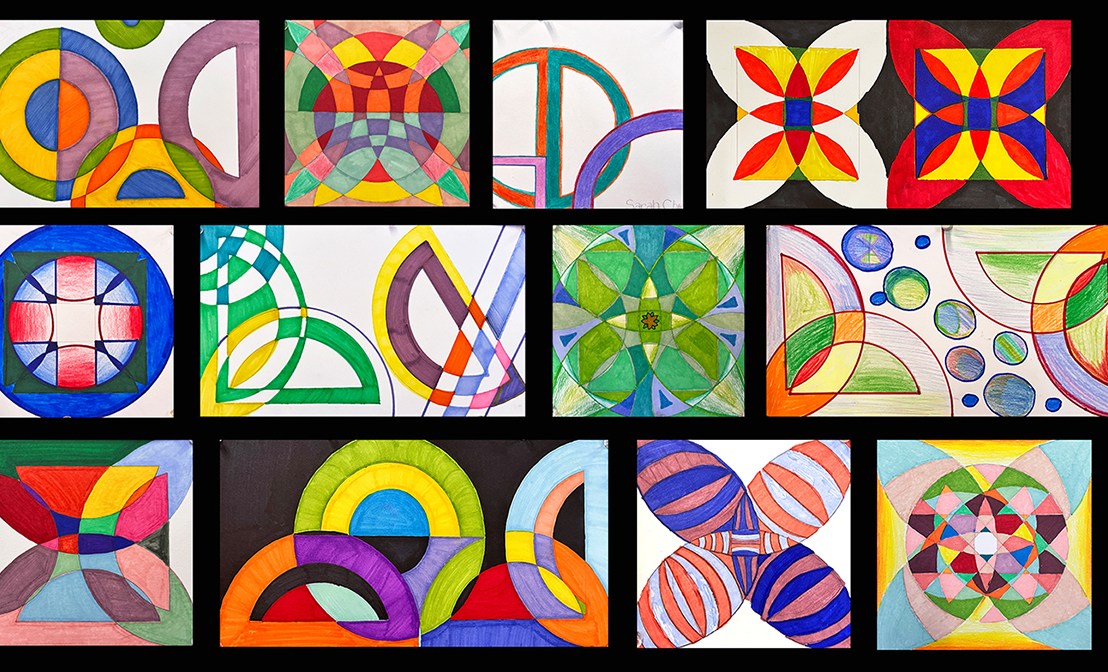
Description of the Unit – Students will observe and discuss the work of Frank Stella, focusing particularly on his Protractor series, and will themselves use a protractor to create designs inspired by this series.
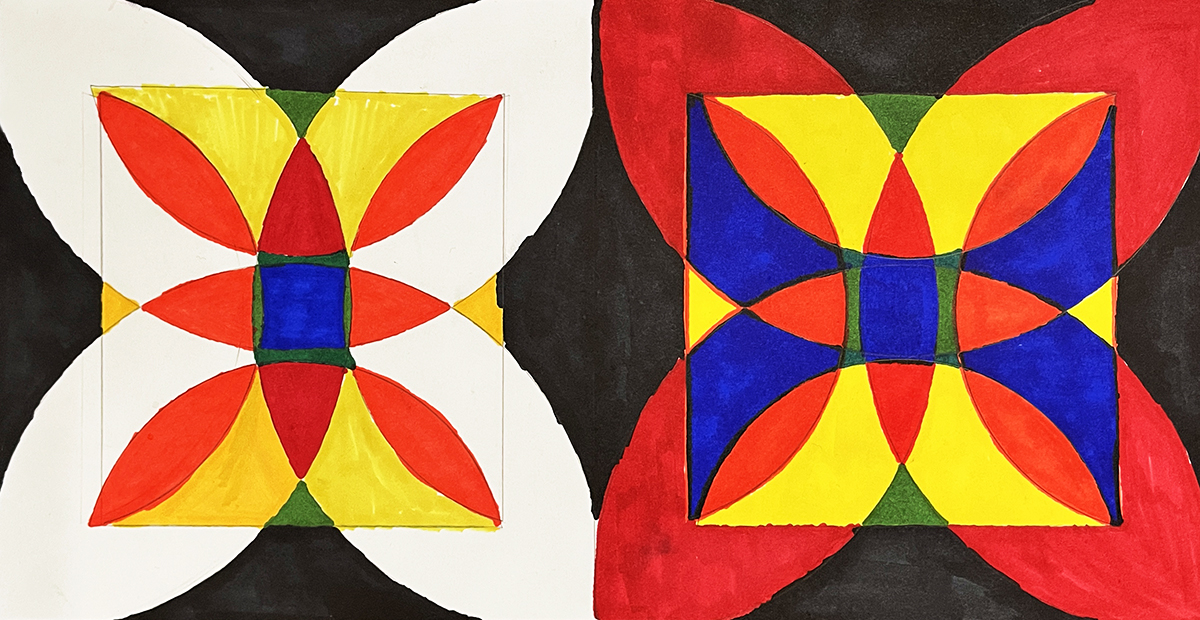
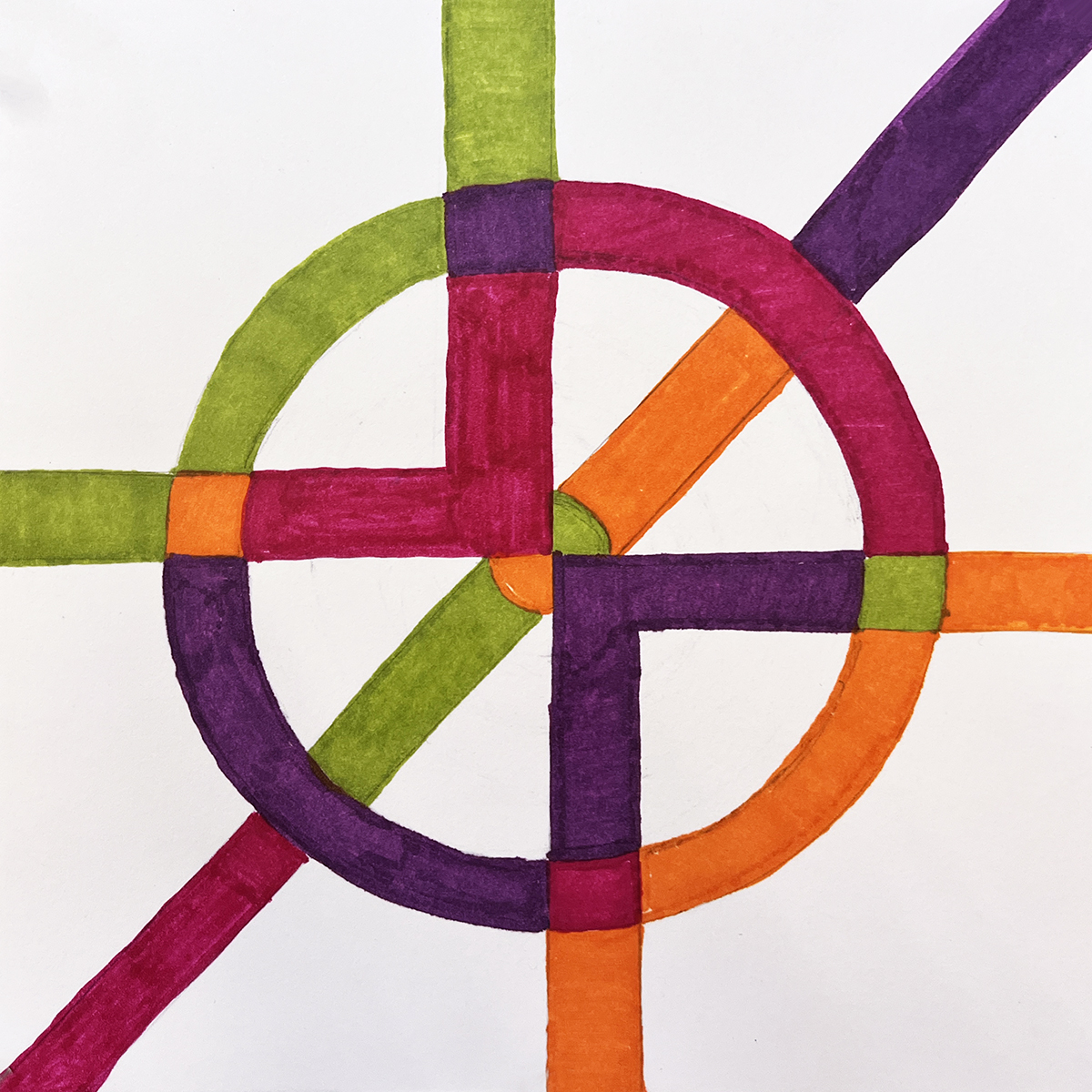
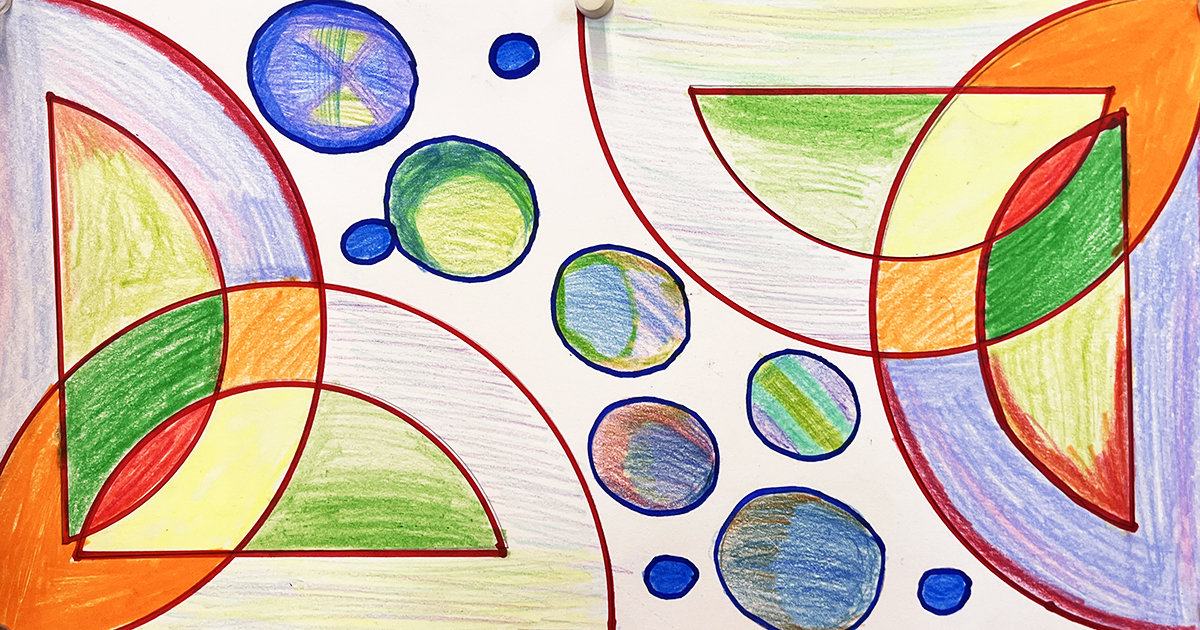
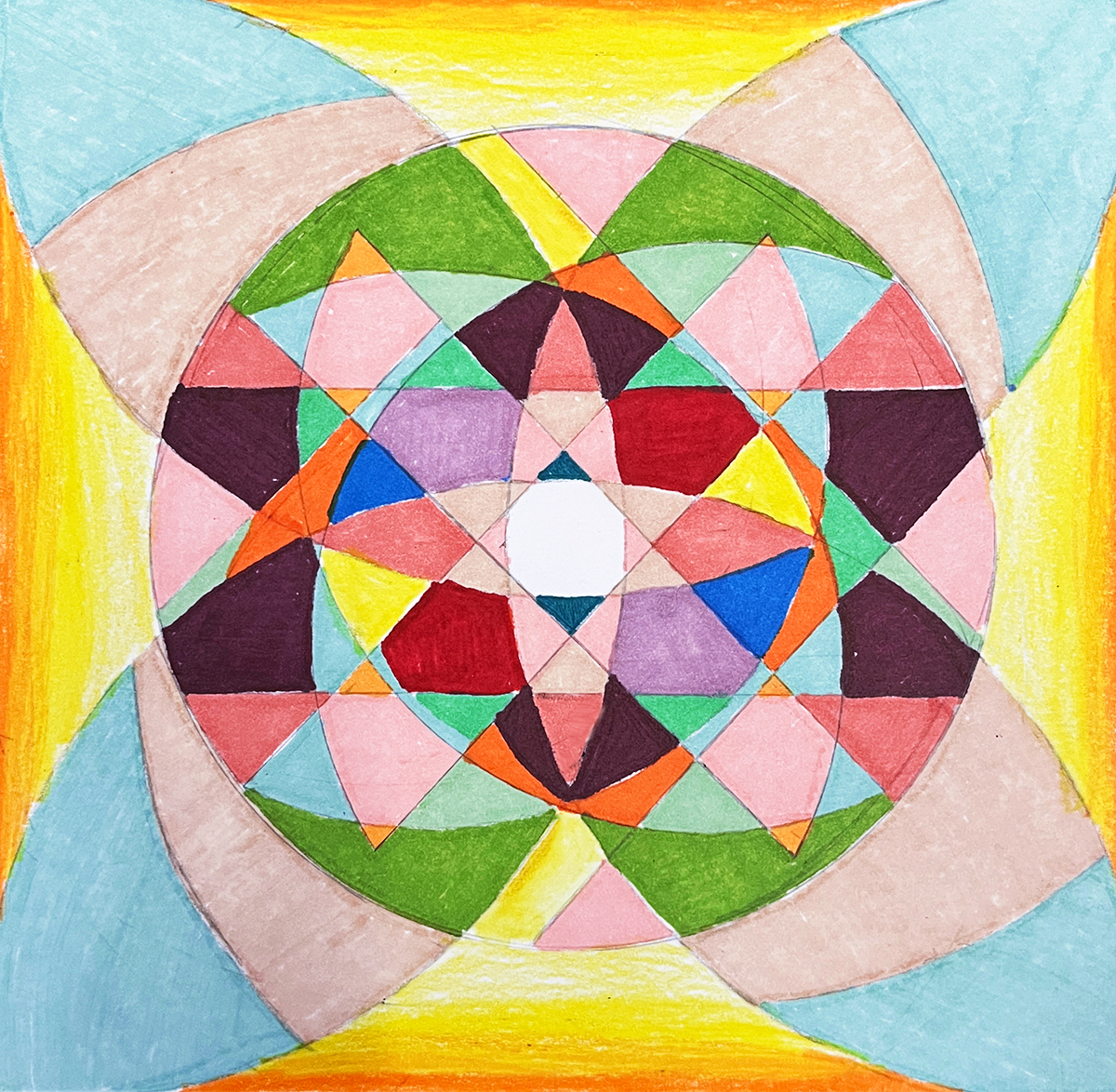
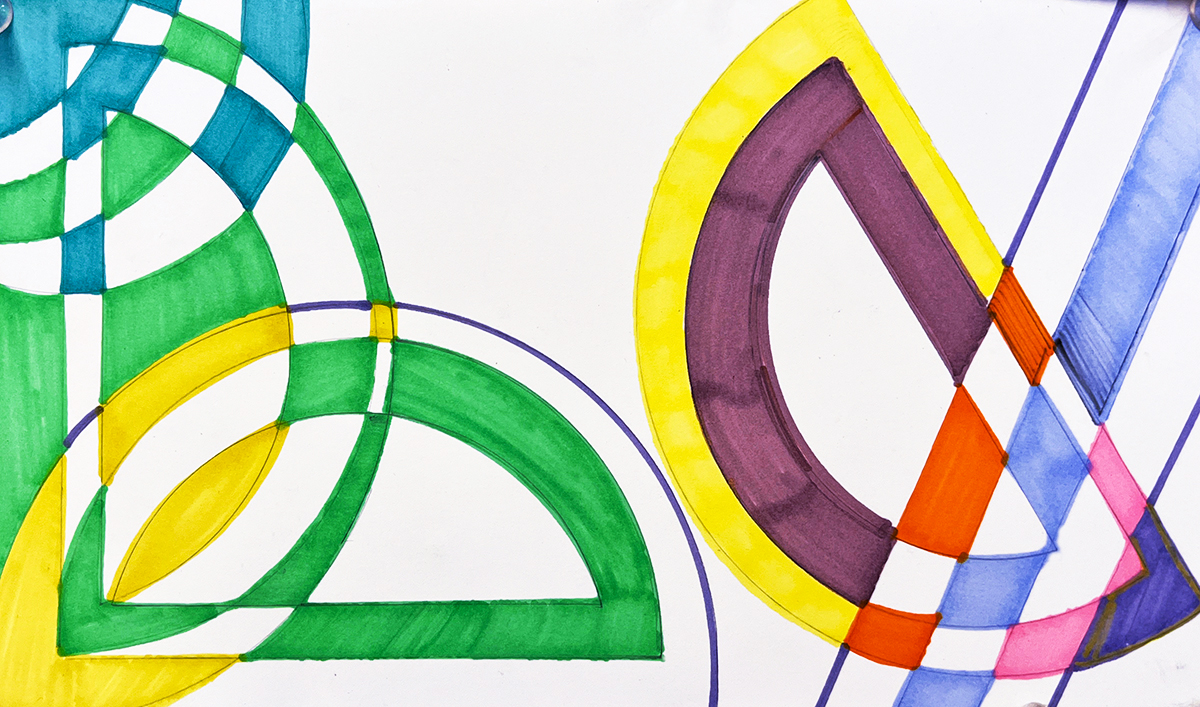
Activity statement – Stella is a modern artist who focuses on the formal elements of art: line, shape and color. He strives to minimize recognizable imagery as well as evidence of brushwork. One of his most famous series, the Protractor Series, was based entirely on creating designs from the shape of a protractor. Students will be asked to identify shape, repetition, symmetry and balance. Using the same objectives and characteristics, students create streamlined designs also based around the protractor.
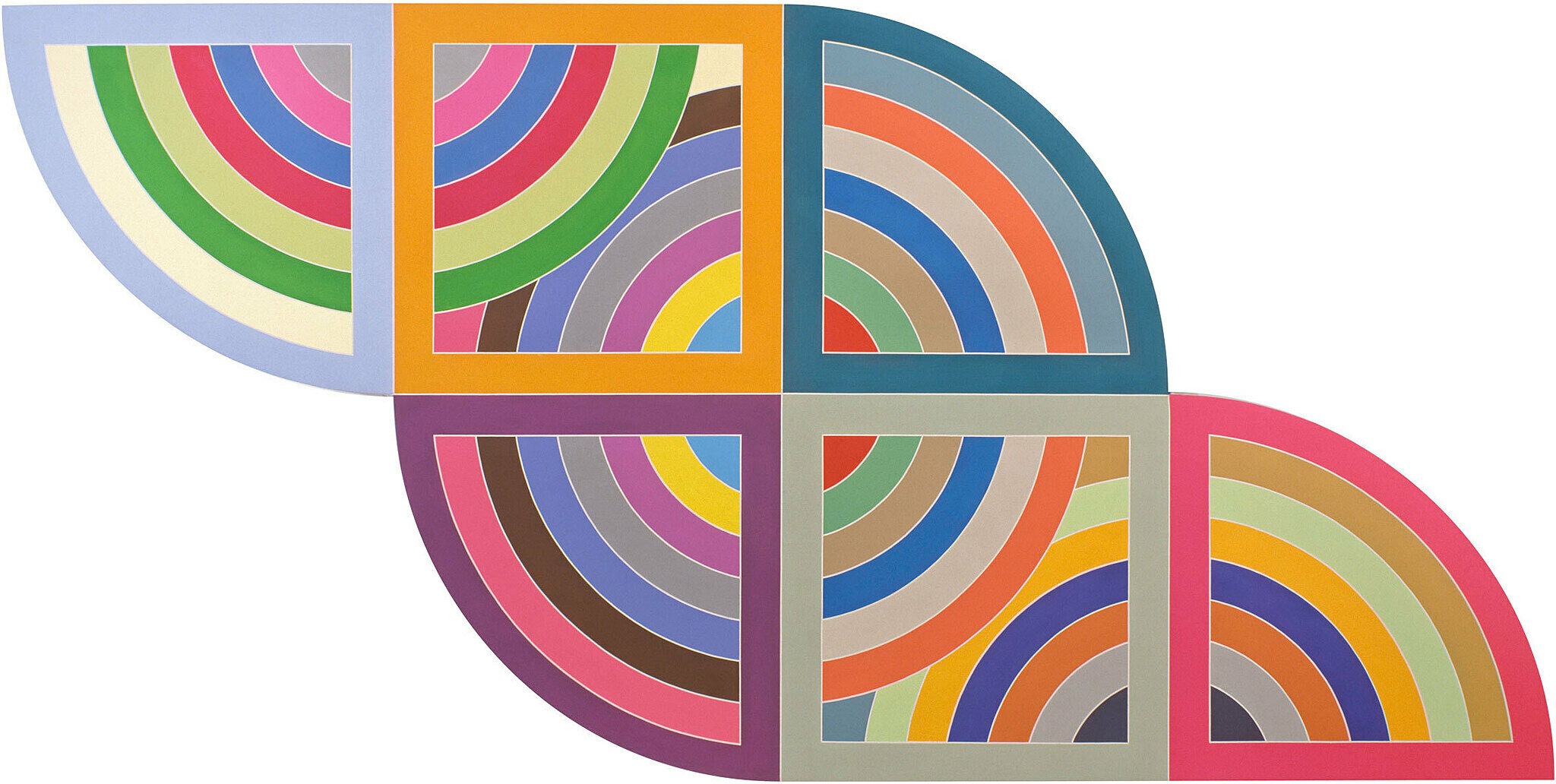
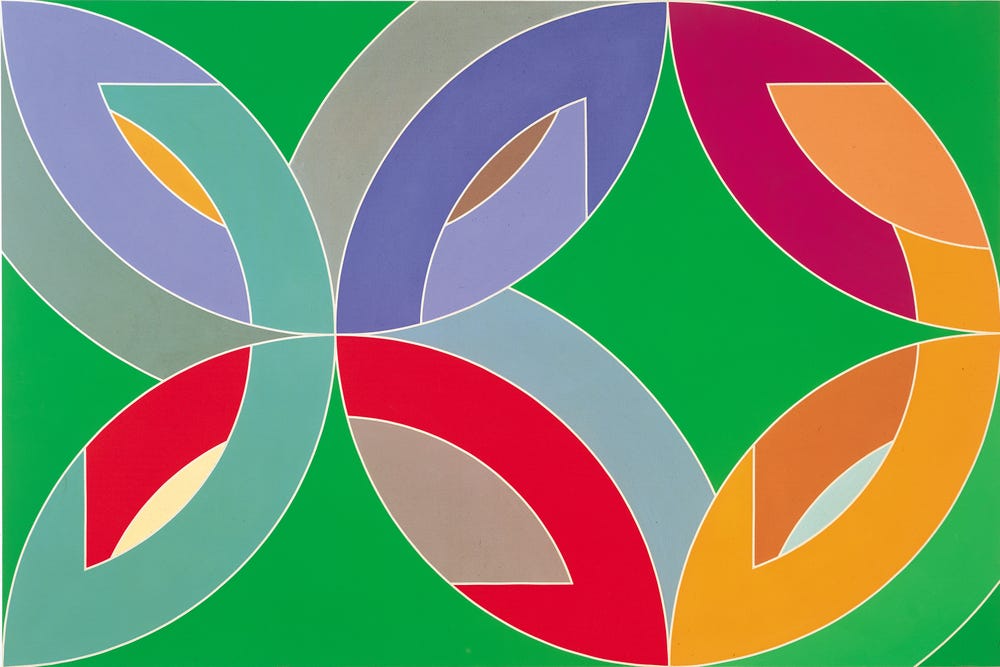
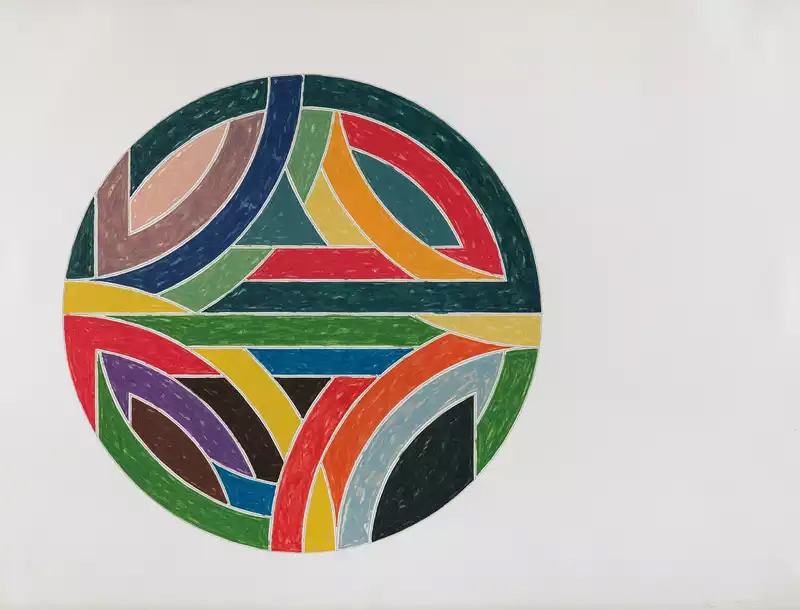
Goals – Students should…
Understand:
- Shape, repetition, symmetry/asymmetry and balance
Know:
- How to apply color in a flat, untextured way with either marker or colored pencil
- How to create a compelling, yet repetitive color scheme
Be able to:
- Identify the elements and principles listed above within Stella’s work
- Creatively apply protractors in a design that uses symmetry/asymmetry and balance
Objectives – Students will:
- Explore the work of Frank Stella, focusing on the protractor series
- Create their own design based on the protractor and using a flat application of color
Resources and materials –
- Exemplars of work by Frank Stella
- White cardstock or Bristol paper (8.5×11)
- Pencils
- Protractors
- Rulers
- Colored Sharpies or markers
- Colored Pencils
Questions –
- What do you notice about Stella’s paintings?
- What shapes do you notice? What colors do you observe? What would you call these colors?
- Are these paintings abstract or representative?
- Do these seem like paintings to you? Why or why not?
- How do these paintings make you feel?
- Do you consider this art? Why or why not?
Evaluation – Did students:
- Identify shapes, repetition, symmetry and balance in Stella’s work?
- Attempt to create similar color schemes, patterns, symmetry and balance in their own work?
Informal:
- Student questions
- Group discussions
- Oral responses to essential questions
- Elaboration and risk-taking
- At least one finished piece

 In the K-8 Art Studio with Anita Sagastegui