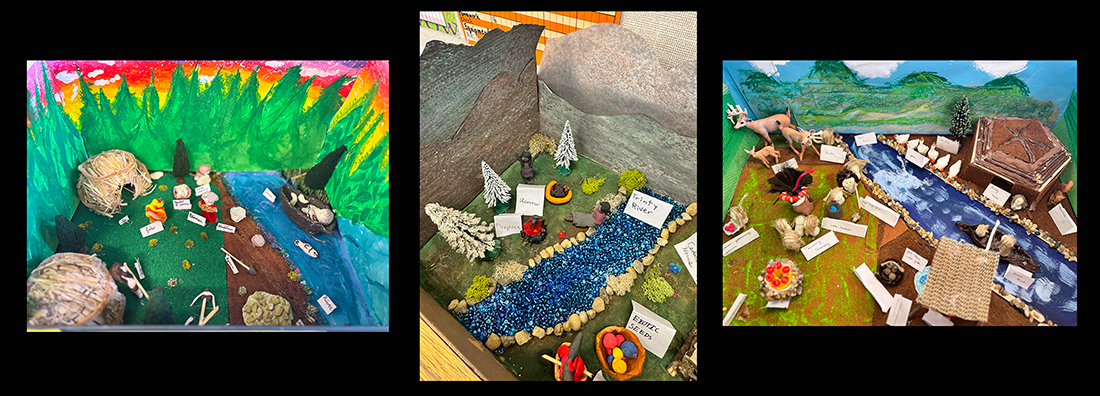
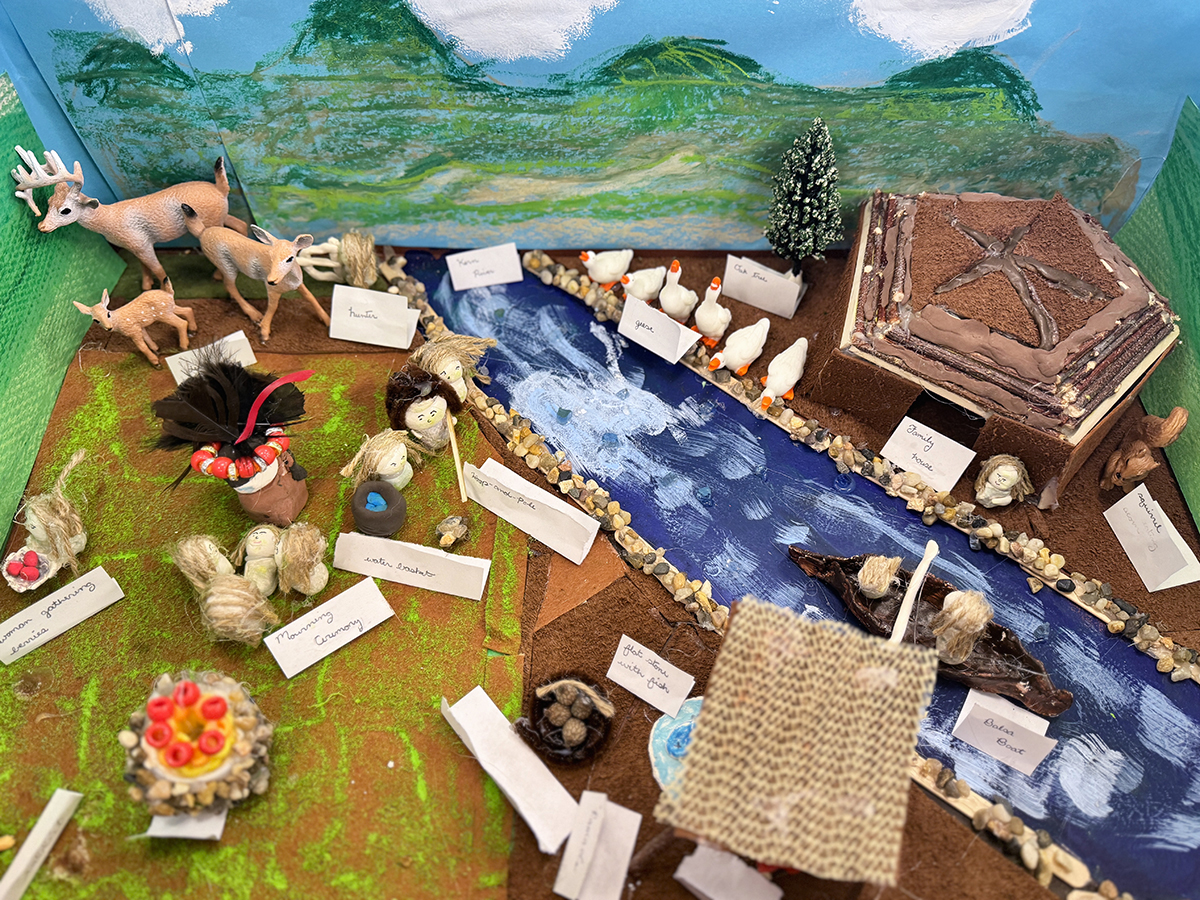
Description of the Unit – To support their research of California’s first Americans, students worked in groups to create dioramas representing the lives of a particular tribe (assigned to their group).
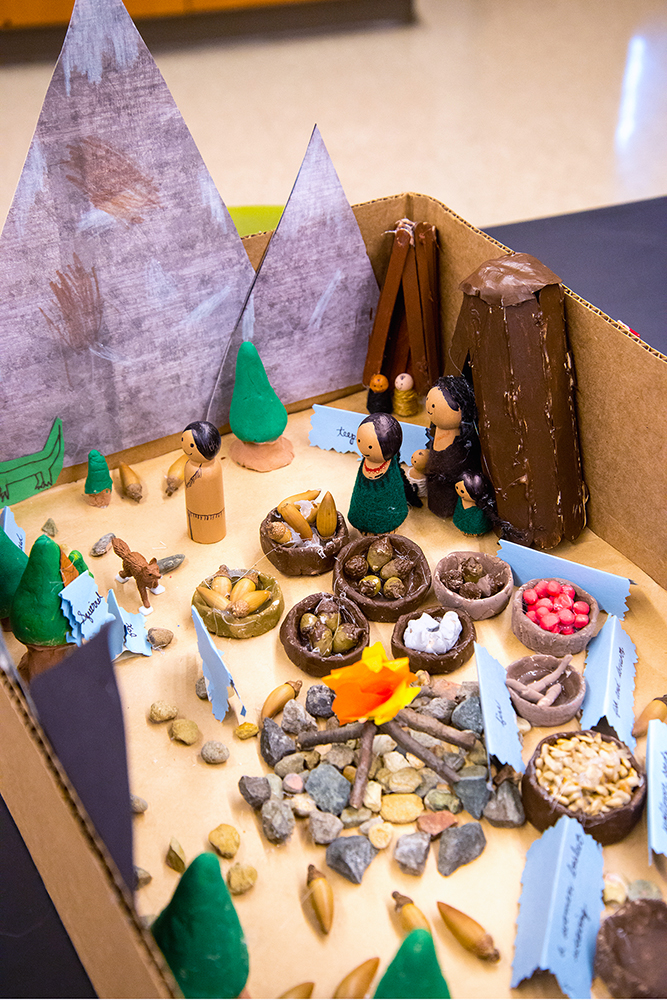
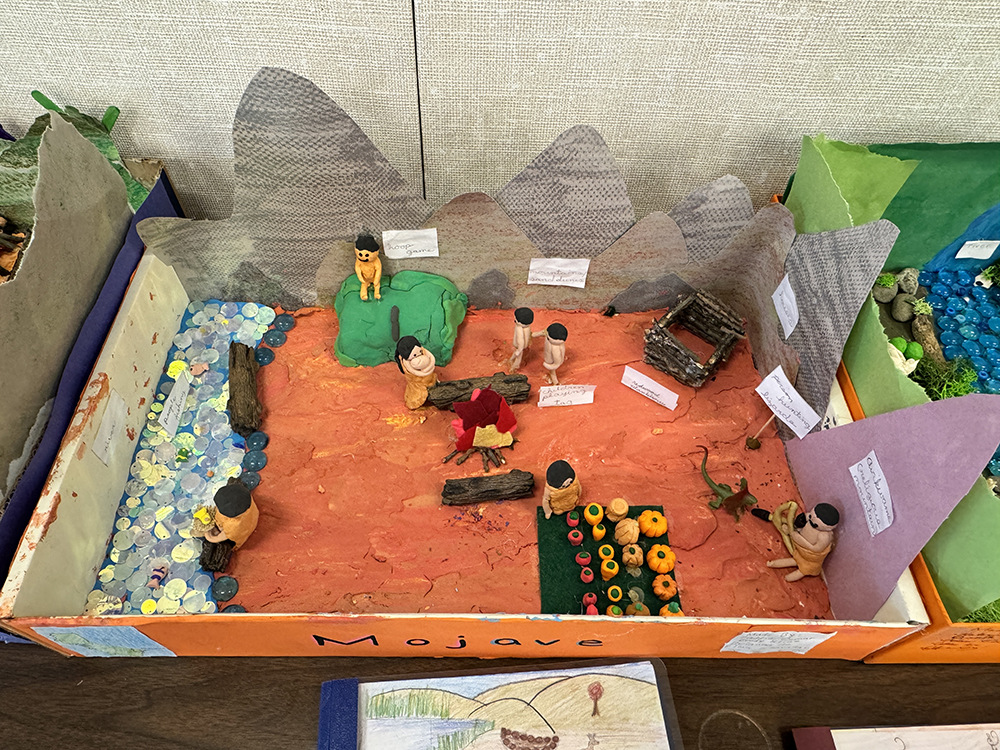
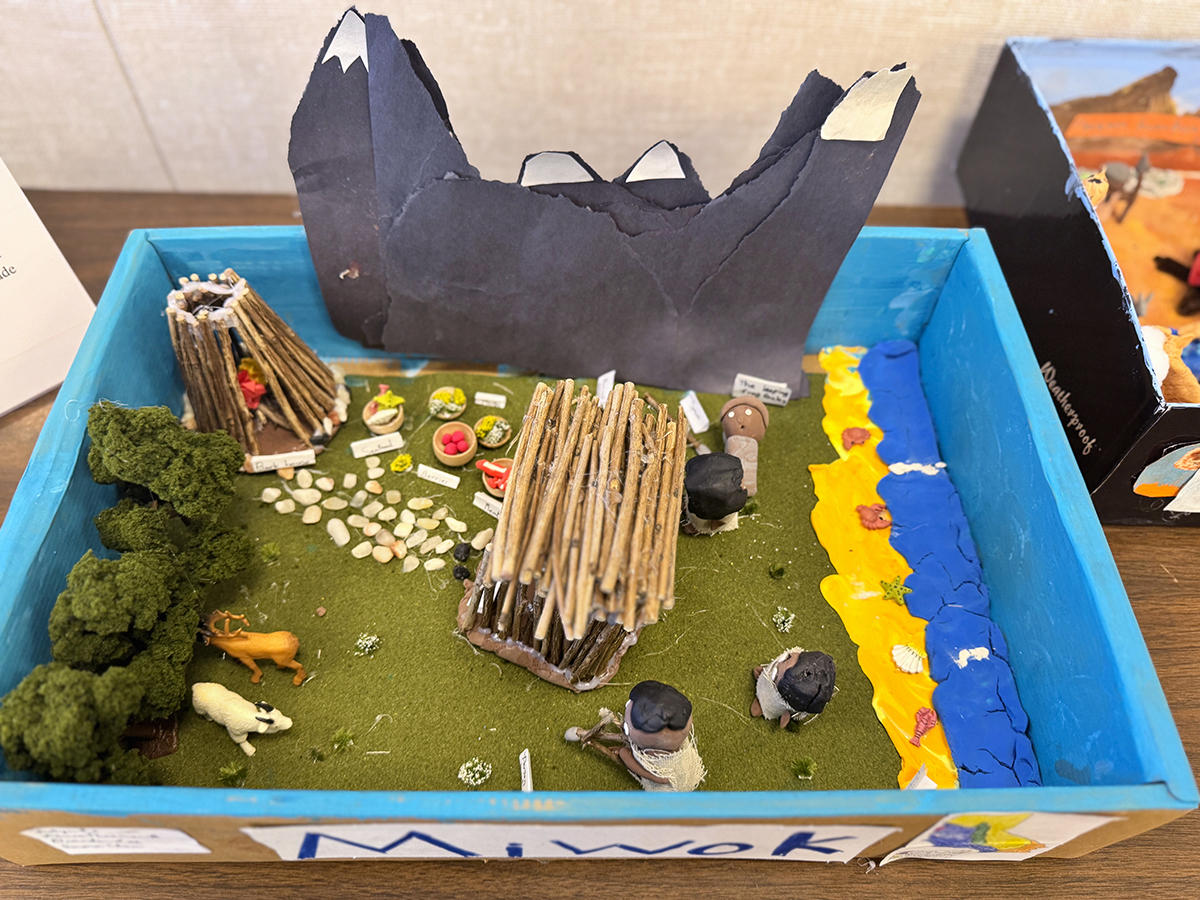
Activity statement – In 4th grade history class students spend the year delving into the rich history of our home state, California. This includes learning all about the state’s first inhabitants, which include such groups as the Miwok, Ohlone, Mohave, Yokuts and others. In groups they are assigned to depict, via a diorama, the setting and lifestyle of their assigned tribe. Students are required to include the landforms that represent where the tribe lived; the types of houses they lived in; the plants and animals living there; specific foods eaten; activities that reflect the tribe’s culture (ie., basket weaving, canoe making, bows and arrows, ceremonial dances, etc.) and finally representations of the people themselves, specifically what they wore. Everything is labeled.
While I allow students to bring in animal and plant figurines, I try to encourage them to be as imaginative as possible and see if they can represent as much as possible from scratch. The people included in their dioramas are not allowed to be figurines but must be made completely from scratch.
Goals – Students should…
Understand:
- How their assigned tribe lived and what that looked like
Know:
- Specific aspects pertaining to the lifestyle of their group as detailed in the description above
Be able to:
- As creatively and realistically as possible demonstrate all aspects of chosen’s group’s lifestyle
- Label all objects represented in the diorama
Objectives – Students will: Create a diorama showcasing the life setting of an indigenous California tribe
Resources and materials –
While for most of my blog entries you have seen me provide a bucketed list of materials, the materials needed here are so vast I have decided not to. Suffice it to say you will need everything at your disposal, from clay, to paint, to hot glue, beads, rubbing templates, cotton balls, coir, raffia and so much more. As an instructor, you must be creative too, offering as much as you can and letting the students’ imaginations take it from there.
Questions –
- Where did this tribe live?
- What type of clothing did the tribe members wear? Describe it.
- What work did the men do? What did the women do? What did the children do?
- What materials from their environment did they use to make what they needed?
- What are some of the things they made?
- What kind of food did they eat?
- What kind of house did they live in? How did they build them?
- What was their music like?
- What religion did this tribe follow?
- What kind of games did they play?
- Did they use any form of money? What kind?
- Were there any special ceremonies this tribe conducted? Describe them.
Evaluation – Did students’ dioramas include the following:
- Name of village
- Location of village
- Houses/shelter
- Food
- Myths/legends
- Jobs/activities
- Natural features (mountains, rivers, etc.)
- Plants/animals
- People
- Labels for everything
Informal:
- Student questions
- Cooperative group work
- Group discussions
- Oral responses to essential questions
- Elaboration and creativity



 In the K-8 Art Studio with Anita Sagastegui