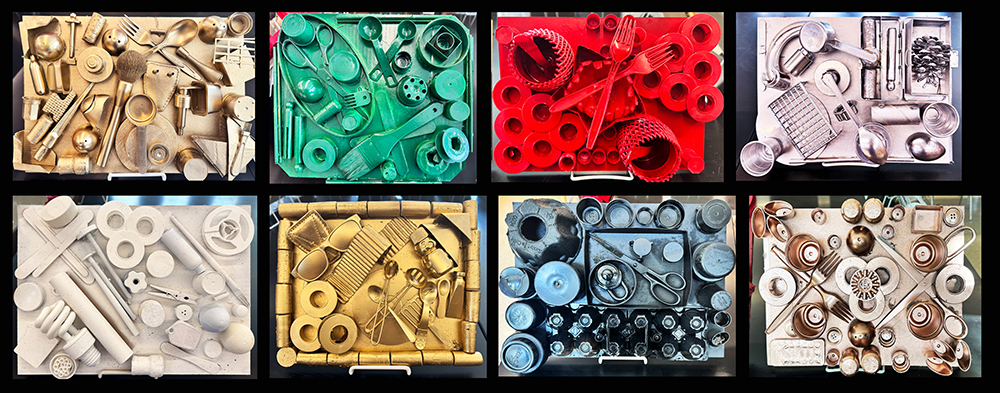
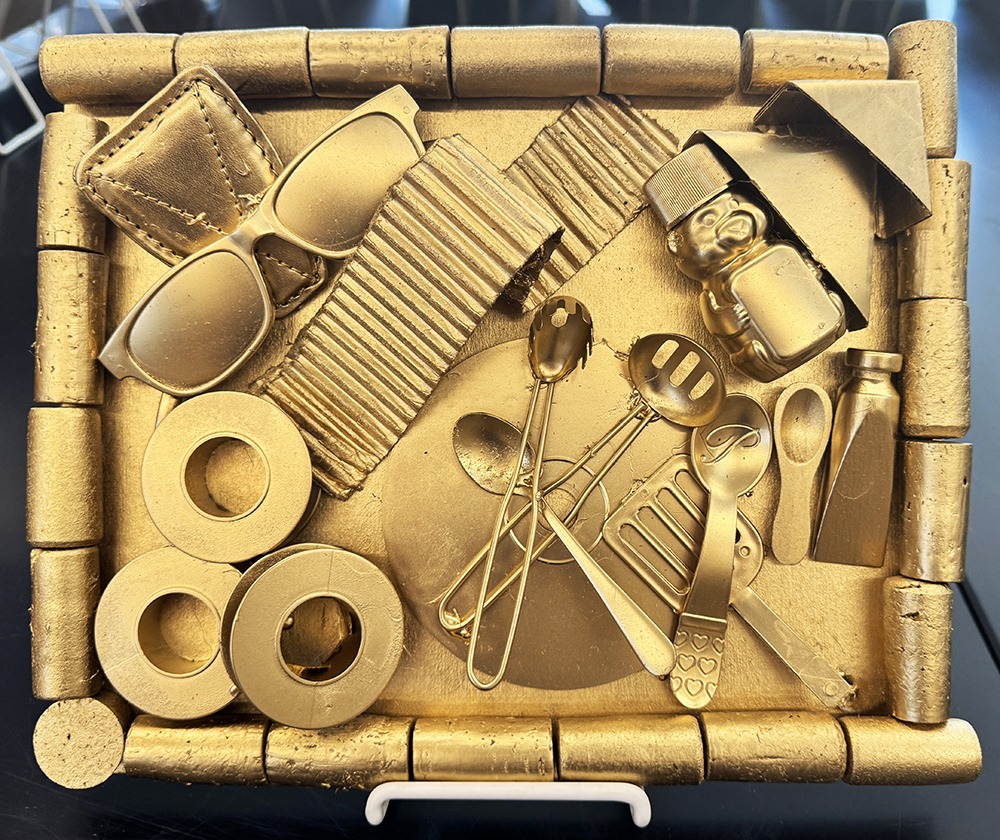
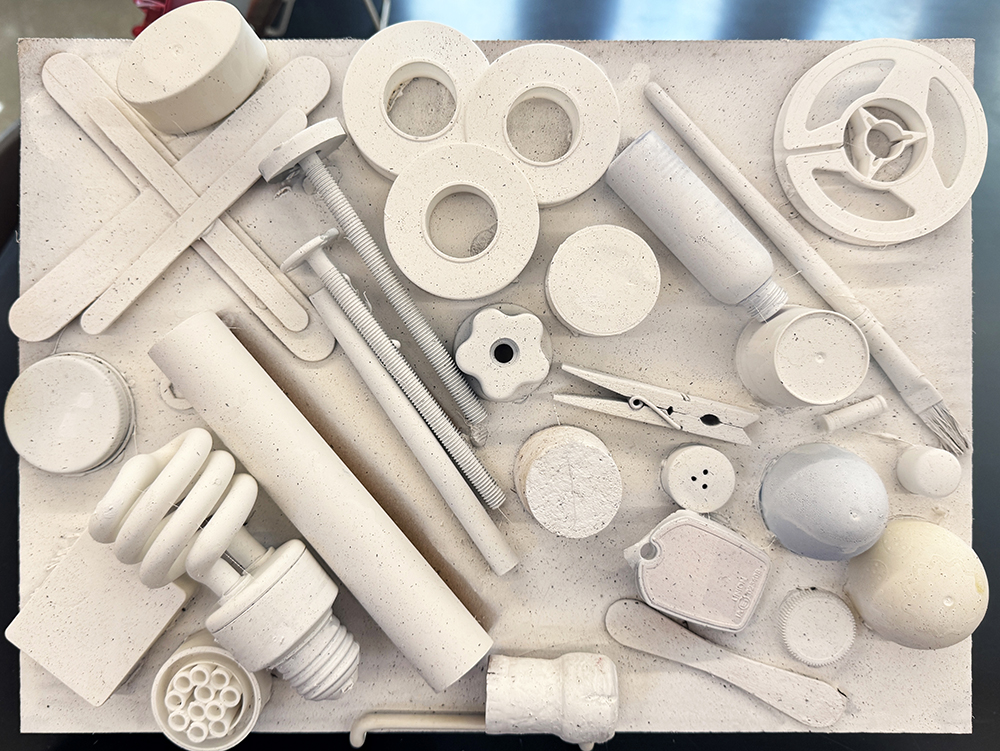
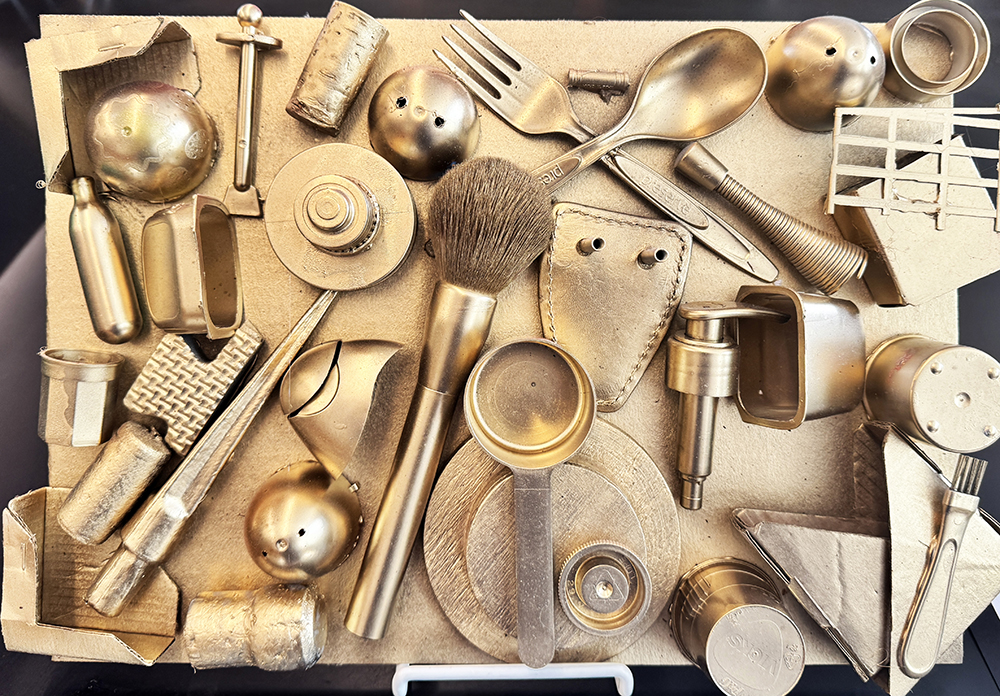
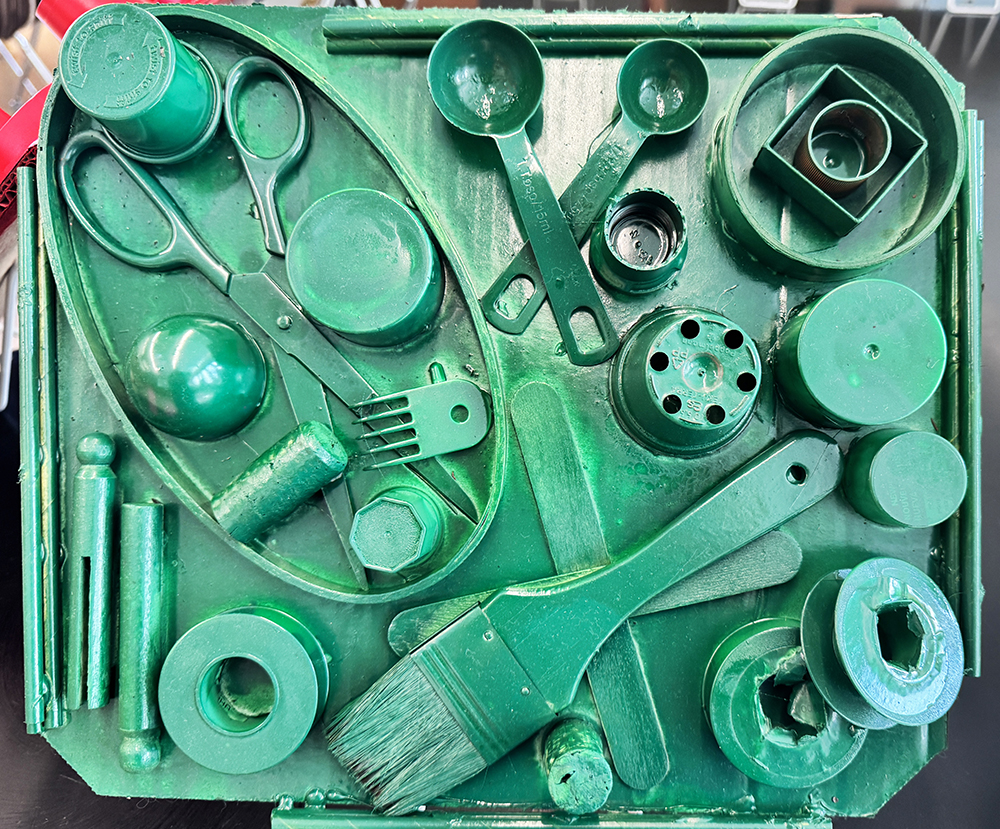
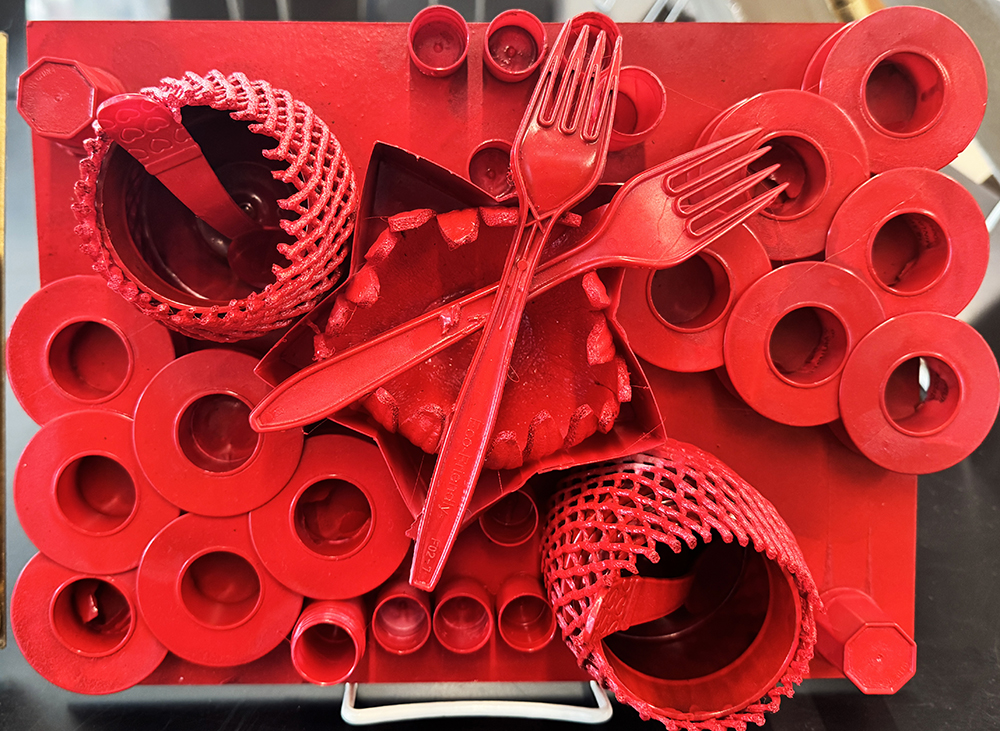
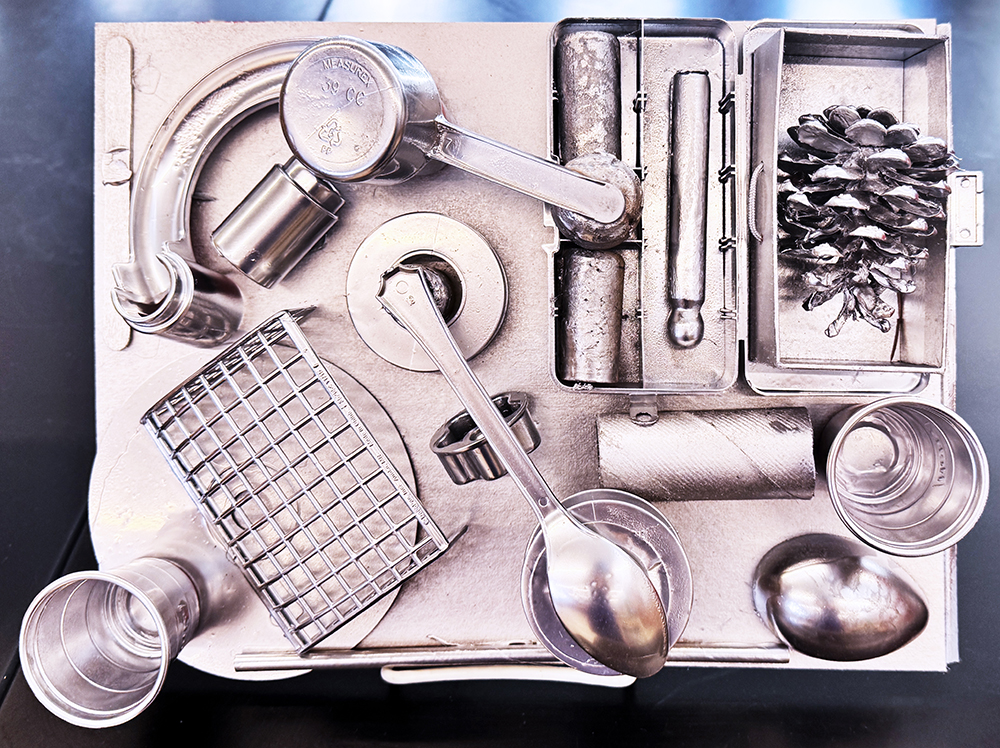
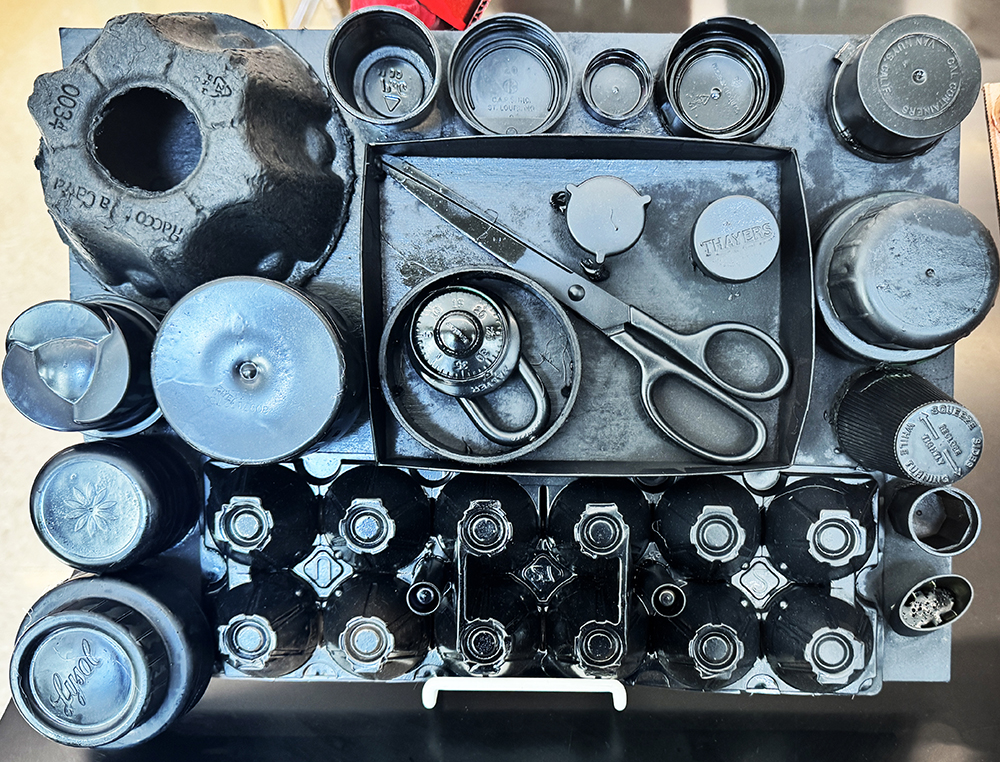
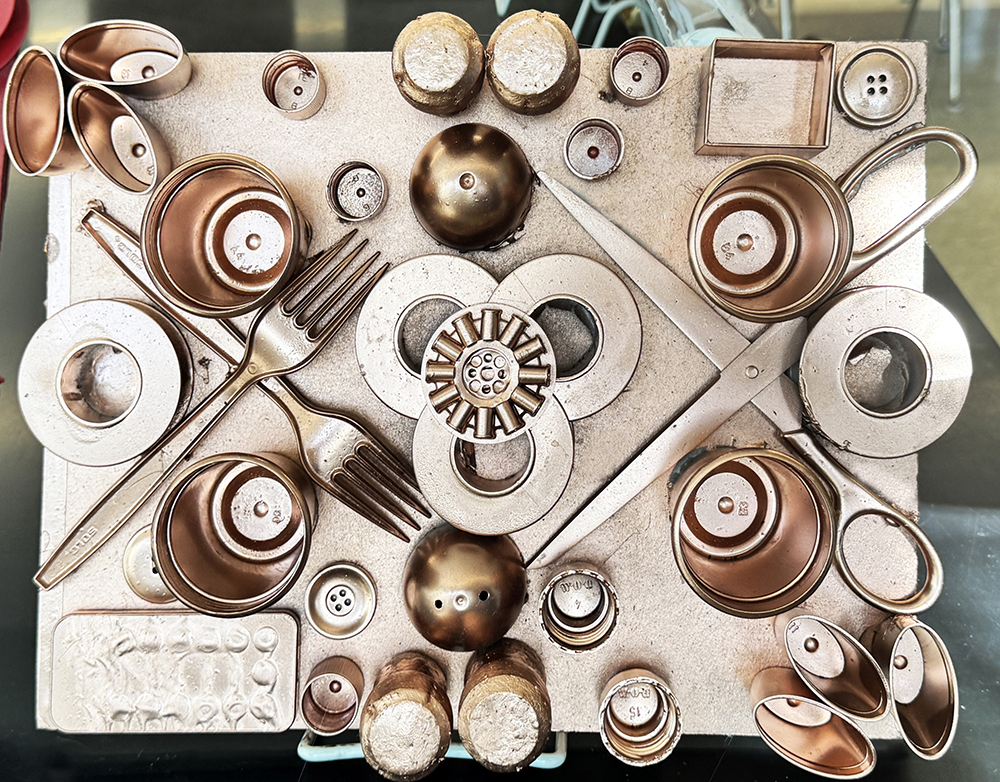
Description of the Unit – Students will explore the monochromatic, found-art assemblages of Louise Nevelson, and create their own in small groups.
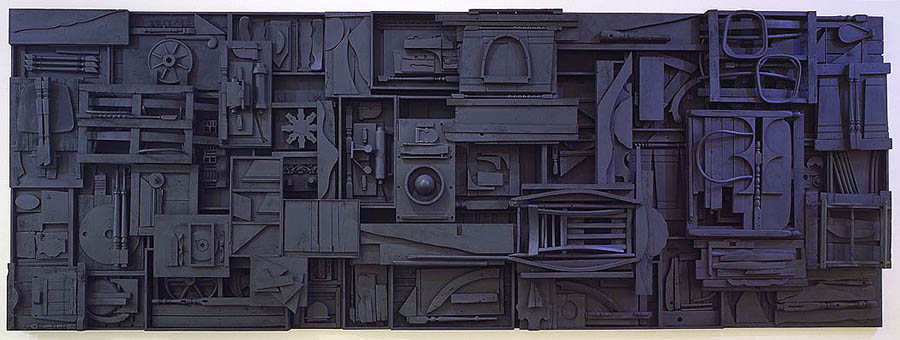
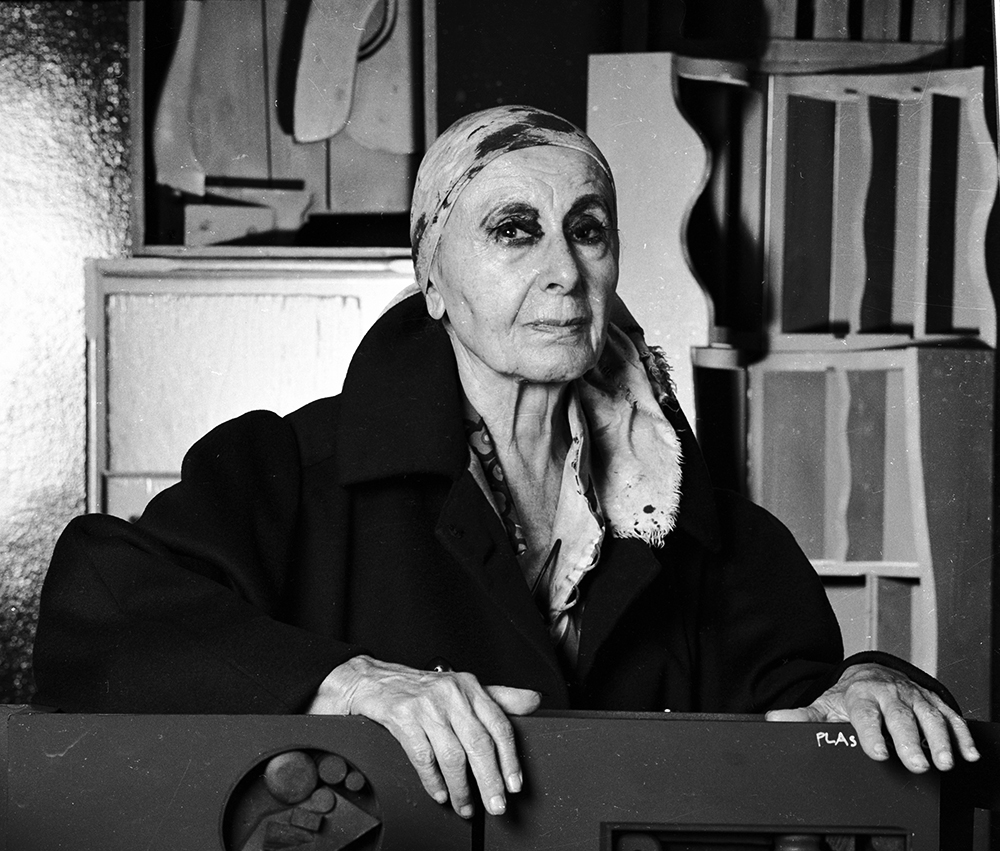
Activity statement – According to the Frederick Holmes and Company website, “Louise Nevelson is one of America’s foremost artists. Nevelson’s sculpted wood assemblages transcended space and transformed the viewer’s perception of art… In her most iconic works, she utilized wooden objects that she gathered from urban debris piles to create her monumental installations,” (https://frederickholmesandcompany.com/exhibition/louise-nevelson/)
Nevelson meticulously arranged the objects in her assemblages with an eye for line, form, pattern, composition, balance and asymmetry. Students are often thrilled to create a sculpture, but become anxious to produce a representational image, and don’t often make choices based solely on the relationships between the above-mentioned elements and principles. Introducing students to Nevelson’s work gives them an accessible approach to sculpture.
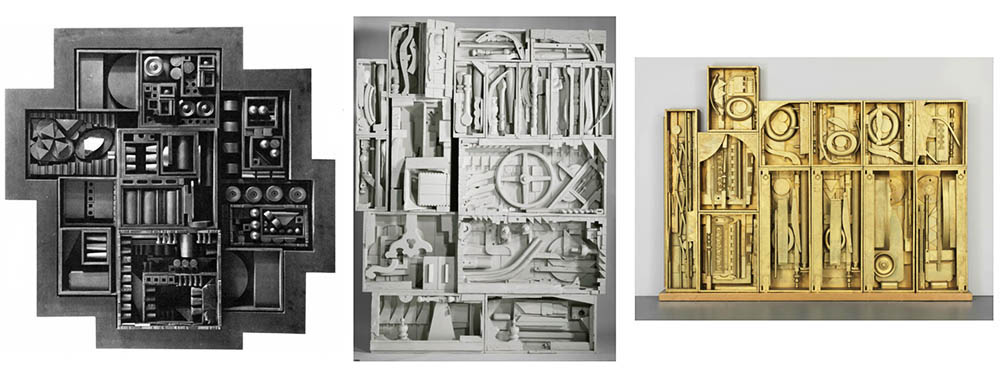
So, students observed and discussed Nevelson’s use of these concepts in her own work. I also modeled the same concepts as I demonstrated using found objects in an arrangement that considered each of the above elements and principles. We also discussed, and I modeled, how the basic elements of line and form could contribute to the principles of pattern, balance and symmetry. Through their observations and understanding, students will work in small groups to create a found-art assemblage that involves pattern, composition, symmetry/asymmetry and balance, as well as possibly including a focal point.
Just as an FYI, I also did this project with middle school students and is also in this blog, but the approach is the same.
Goals – Students should…
Understand:
- Line, form and pattern
- Composition, balance, symmetry/asymmetry
- That everyday objects can serve as improvised sculpting material “found art”
- The term “assemblage” in art
- The term “monochromatic”
Know:
- What a focal point is
- How to organize found objects so as to emphasize line, form and pattern
- How to recognize symmetry and asymmetry in a composition
- How to recognize balance in a composition
Be able to:
- Recognize the characteristics inherent in Louise Nevelson’s work
- Define the terms “assemblage” and “monochromatic”
Objectives – Students will:
- Demonstrate an understanding of ways to work with line, form and pattern in assemeblage
- Use found objects to create an assemblage that has a focal point, and demonstrates either symmetry or asymmetry in its composition
- Demonstrate an understanding of the term ‘assemblage’
- Recognize Louise Nevelson and her work
- Express their thinking and choice-making as they work with found objects
Resources and materials –
- Exemplars of Louise Nevelson’s work
- As many, and varied, recycled objects as possible (I’ve been collecting stuff over years, but if you don’t have enough, ask your students’ parents to contribute things, as well as looking if there are centers for re-use on your area)
- Cardboard formats (12×8” is ideal)
- Masking tape
- Hot glue
- Hot glue guns
- Spray paint in various colors (I like black, white, silver, gold and red)
Questions –
•Topic questions
- What’s going on in this sculpture?
- What about it makes you say that?
- What in your life does (this sculpture) remind you of?
- What do you notice first about the sculpture?
- Does this sculpture have soft edges or hard edges?
- Can you describe the shape and/or texture of the sculpture?
- Where does your eye go first? Why? Where does it move from there?
•Association questions:
- Why do you think Nevelson’s sculptures are monochromatic
- What shapes could you pair to create a focal point?
- How would you demonstrate asymmetry in your assemblage?
Evaluation – Did students:
- Understand how the elements of line and form contribute to other principles of art?
- Understand how to create a focal point?
- Did students use their understanding of composition, symmetry/asymmetry and balance to create a dynamic piece?
- Did students use their skills of perception to discuss with clarity what they observed of Nevelson’s and each other’s’ work?
- Did students practice clear communication and negotiation in their small groups?
Informal:
- Student questions
- Group discussions
- Oral responses to essential questions
- Elaboration and risk-taking
- Peer collaboration
 In the K-8 Art Studio with Anita Sagastegui