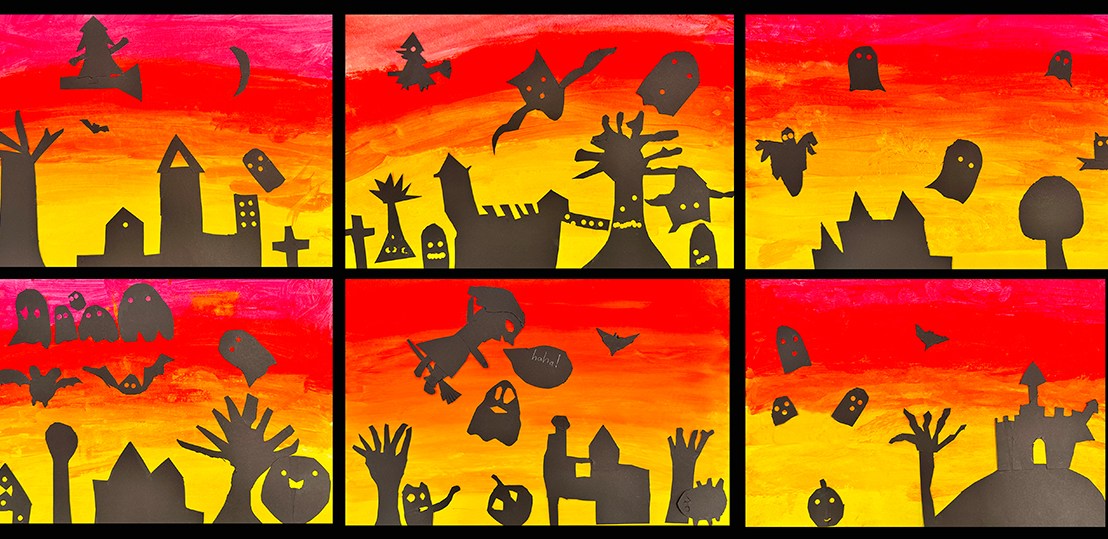
Description of the Unit – Following our previous unit on shape, this unit will emphasize what students learned while introducing them to positive and negative space, and the way they interact with one another. We will also reinforce the concepts of cool and warm colors via the expression of a warm-colored sky.
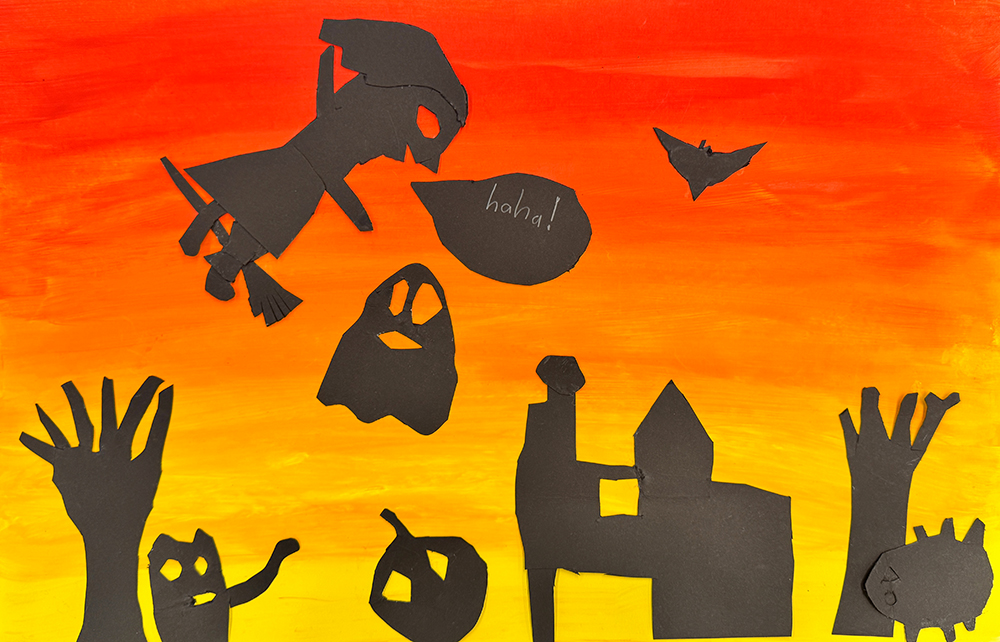
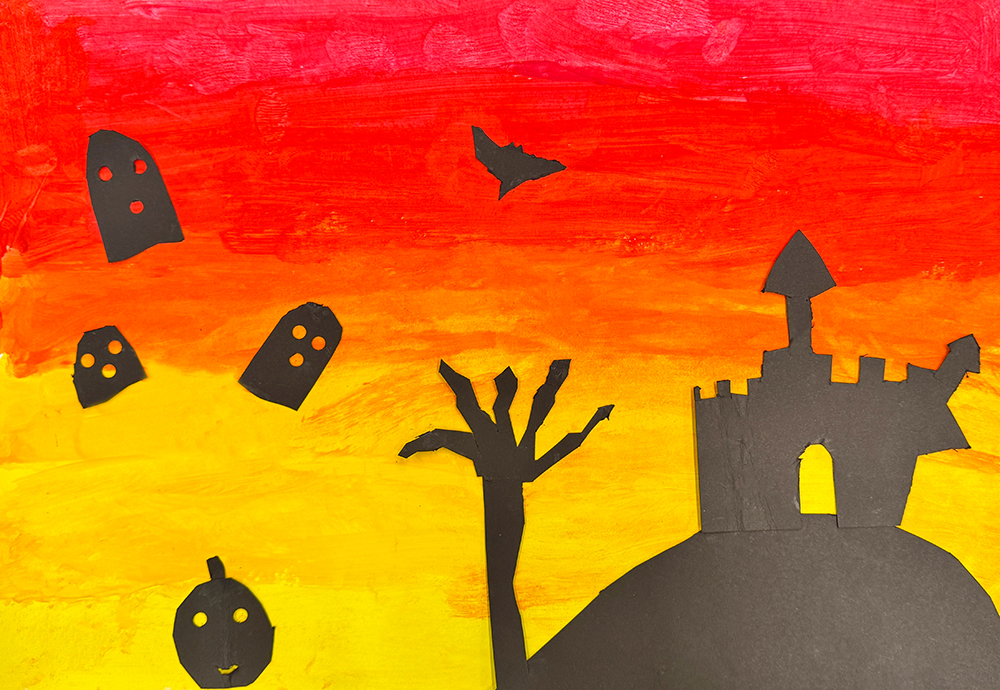
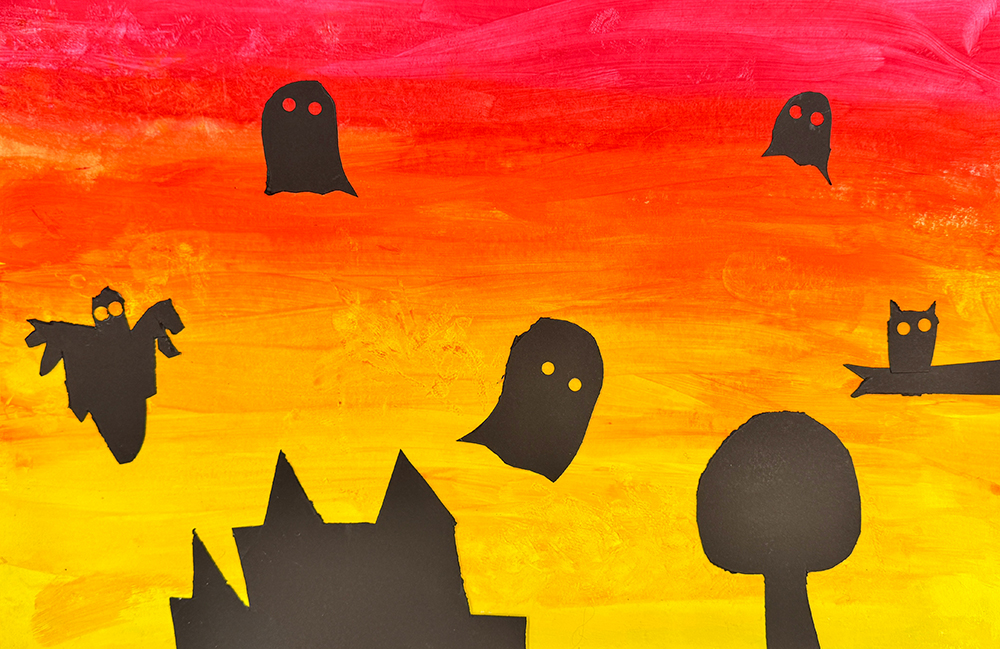
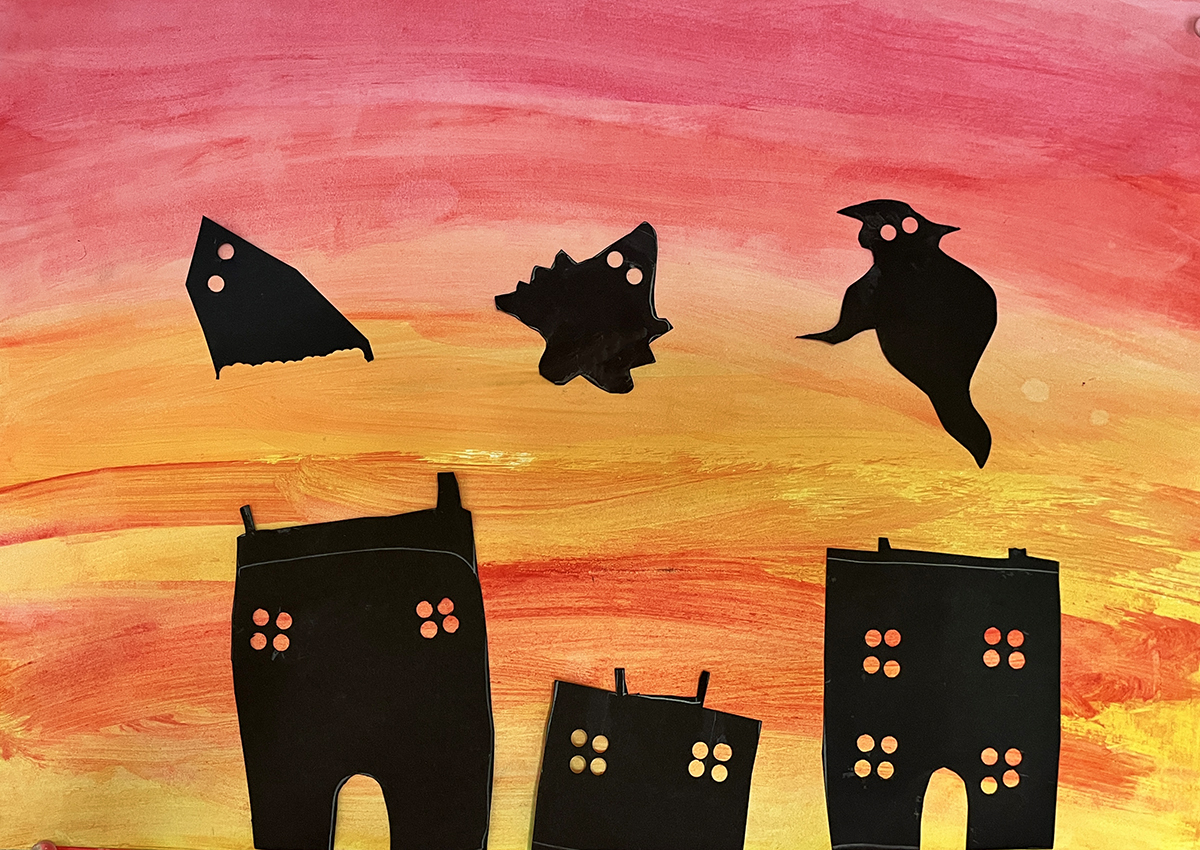
Activity statement – Ah, Halloween, my favorite annual celebration. My students also love Halloween, so to review shape and color, as well as to introduce them to positive and negative space, they will create a spooky scene in silhouette. Their “glowing” sunset background will help to reinforce their understanding of cool vs. warm colors, and how to create orange by combining red and yellow. This unit also supports the California Visual Arts Standards under Creative Expression: “Demonstrate beginning skill in the use of tools and processes, such as the use of scissors, glue, and paper” (2.2). Additionally, the unit supports deriving meaning via the discussion of works of art created in the classroom, focusing on selected elements of art, in this case shape and color (4.1) I adapted this unit from a previous one I had taught in kindergarten. You can see it here: https://anitasagastegui.com/2020/06/29/kindergarten-halloween-shadow-puppets-inspired-by-wayang-kulit-puppets/
I recommend looking at images of silhouettes, perhaps halloween themed images, to introduce students to the concepts of positive and negative space. See if they can identify what is positive and what is negative space, and to explain in their own words why something is positive or negative in visual imagery. Slowly (or maybe not), they will notice that when shapes fill a space, that is positive space, while the unoccupied area around those shapes are the negative space.
When students go to draw and cut their silhouettes, many often want to draw detail within the silhouette. This defeats the purpose of a silhouette, and will somewhat undermine their understanding of positive/negative space, so I would them from drawing details within their silhouettes. Instead, say, they want to show where a window or door is in a haunted house. Well, I might ask the student to cut it out instead. Same with the eyes of a black cat, or a ghost. They loved using hole punchers for these details!
Goals – Students should…
Understand:
- What a shape is
- The difference between warm and cool colors
- The way shapes take up space two-dimensionally, and what is leftover in negative space
Know:
- Which combination of primary colors make the secondary colors
Be able to:
- Manipulate scissors to cut basic shapes
- Use glue to affix silhouettes in intentional spaces on the background
- Create orange from yellow and red
- Identify positive and negative spaces on their art work
Resources and materials –
- Examples of silhouettes
- Black paper
- 12×18 white Bristol paper
- Red & yellow paint
- Paintbrushes
- Cups
- Scissors
- Hole punchers (for things like cat eyes)
- Glue sticks
Questions –
- (Review) What are the primary colors? What are the secondary colors?
- What two colors create orange? What two colors create green? What two colors create purple?
- What is a shape? (Have as many students as possible try to define a shape—it makes for interesting discussion)
- What makes a silhouette?
- Do we see any features, or details, in silhouettes?
- What are symbols that common for Halloween?
Evaluation – Did students:
- Understand what primary colors create secondary colors?
- Understand silhouettes?
- Understand positive and negative space, and be able to identify each in their own art work?
- Effectively express a variety of Halloween symbols onto a sunset background?
Informal:
- Student questions
- Group discussions
- Oral responses to essential questions
- One finished piece






 In the K-8 Art Studio with Anita Sagastegui