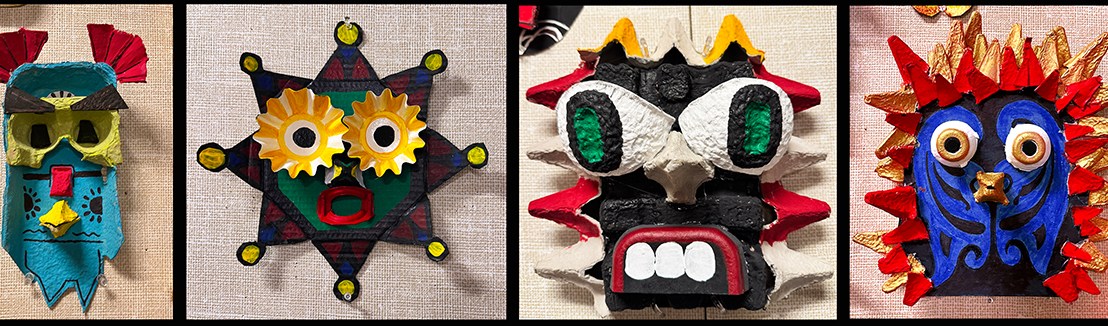
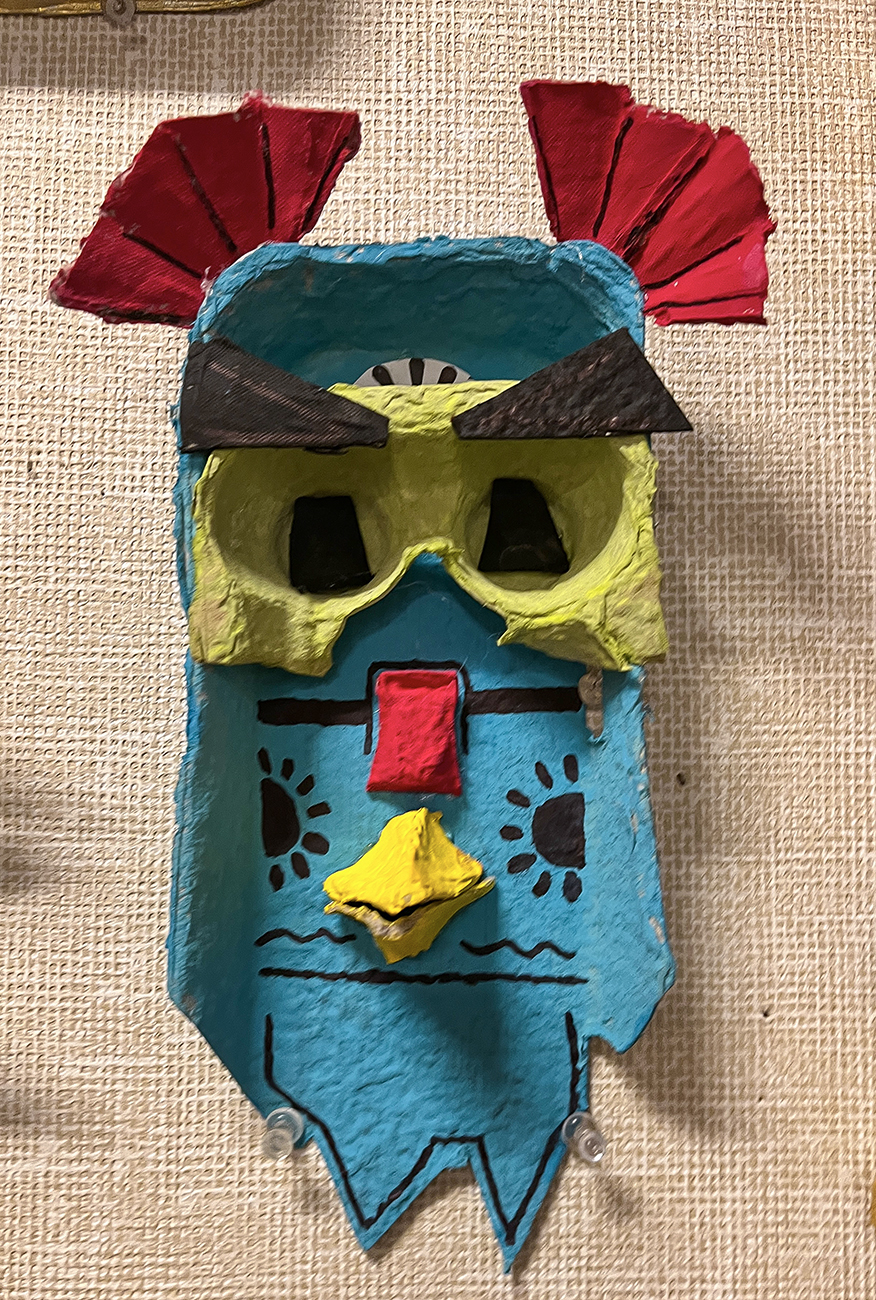
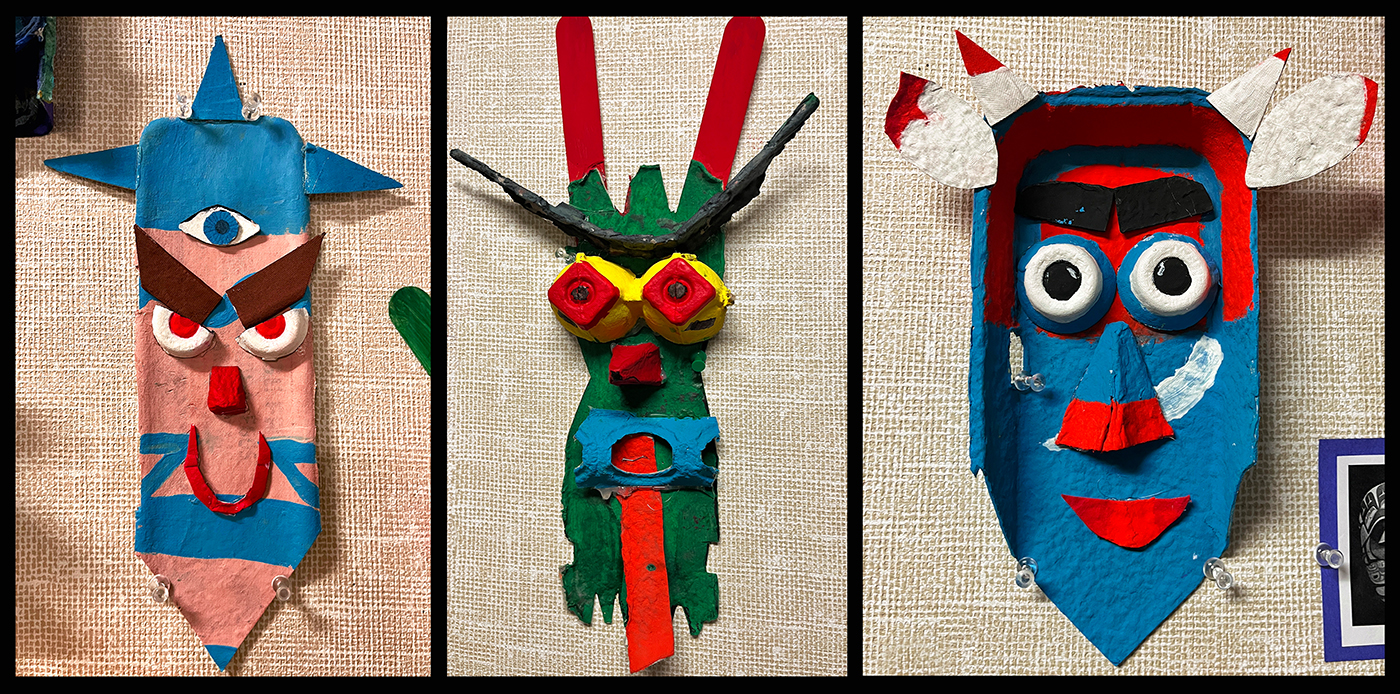
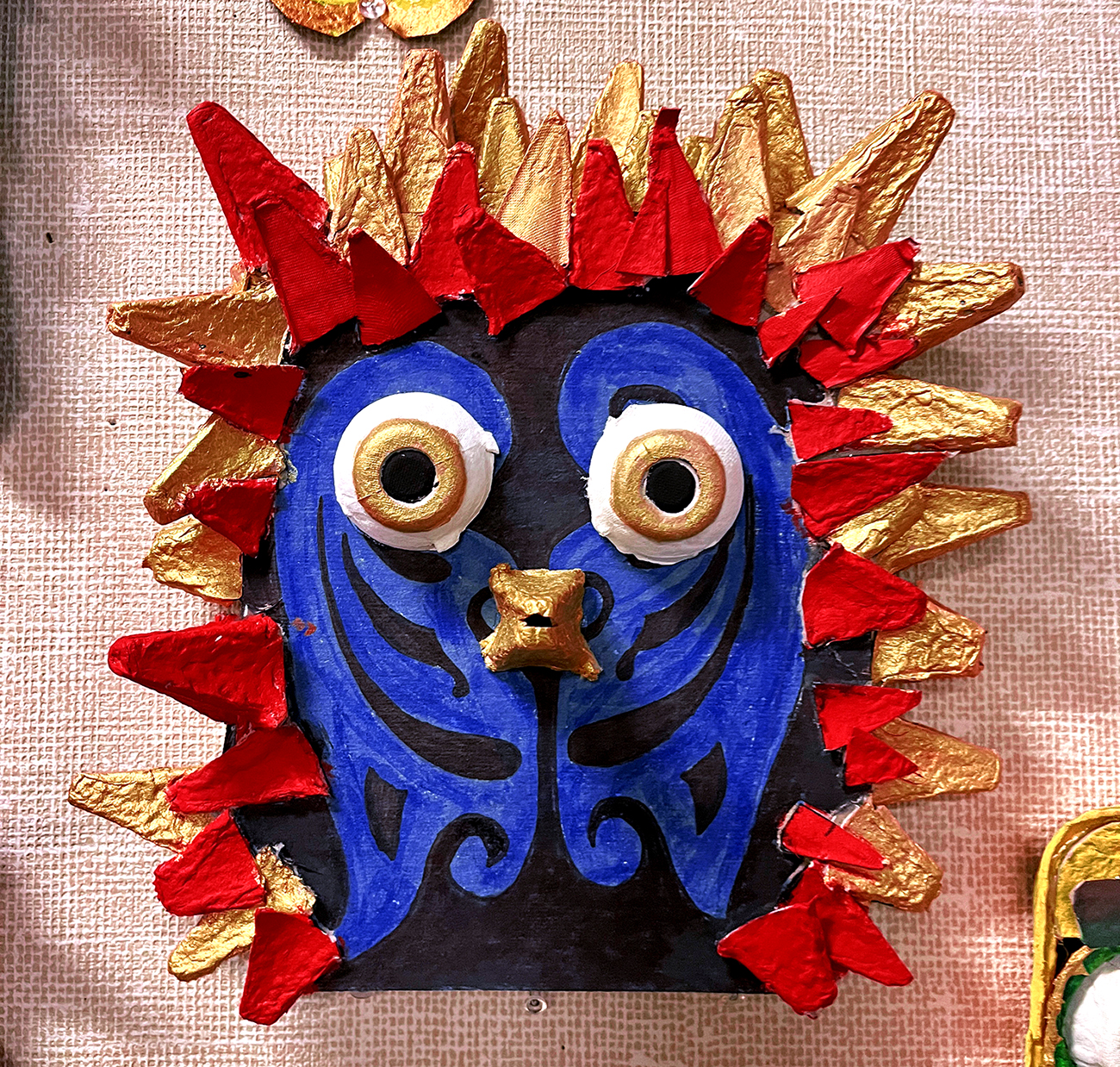
Description of the Unit – Students explored the interesting history and dramatic artistry of masks of First Nations people of the Pacific Northwest. Taking inspiration from the colors and patterns observed in these masks, students made their own masks primarily using…egg cartons!

Activity statement – We observed and discussed the striking, stylized masks carved by first nations tribes of the Pacific Northwest, (tribes such as the Kwakwaka’wakw, Makah, and Nuu-chah-nulth). Cedar wood was used ubiquitously among Coastal Northwest groups for all sorts of purposes, from the mundane to the sacred, which included these masks. Skilled, revered artisans were the only ones permitted to carve the masks originally, as the masks were considered spiritual portals and used in divine rituals and ceremonial dances, mostly representing spirits in human form. They’re painted in bold, but limited colors with the very oldest ones in mostly black, white, and red, later ones including some green and yellow and more recently, blue. The masks are also adorned with symbolic designs that are arresting to look at. For even more dramatic effect, the eyes are always painted in such a way as to strike one with awe, at the very least. When artisan members of the various northwest tribes began carving the masks for sale to westerners, starting in the early 20th century, they then began to include animal representations and supernatural creatures. This website was one of the resources I used to explore the lives of Northwest Coast tribes, and if you’re interested, is worth checking out: https://native-american-indian-facts.com/Northwest-Coast-American-Indian-Facts/Northwest-Coast-American-Indian-Facts.shtml


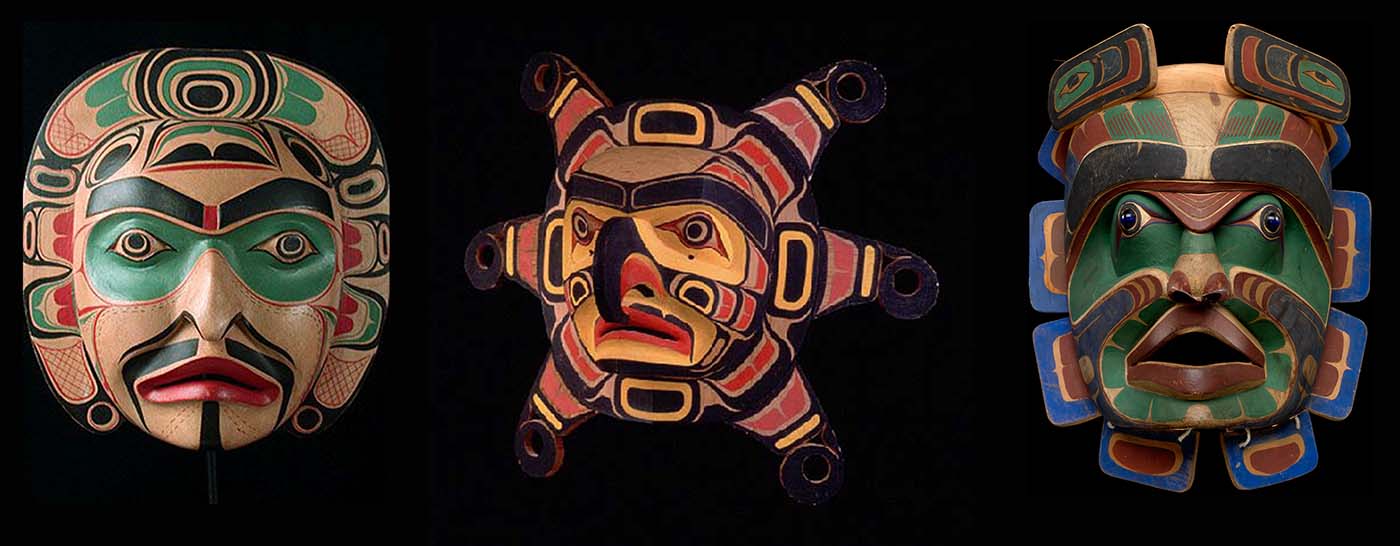
Together we also discussed some of the known meanings to the symbols used in some of these masks, as well as the function of color, particularly to underscore the eyes.
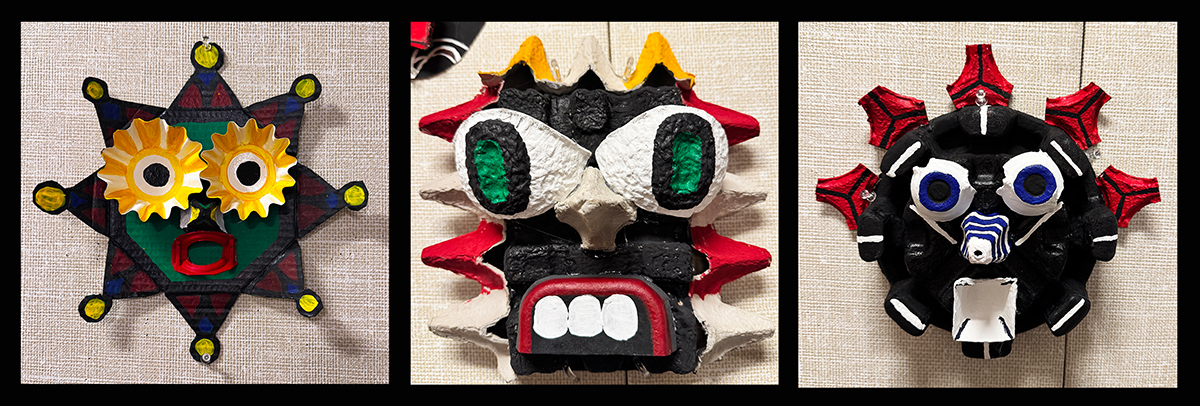
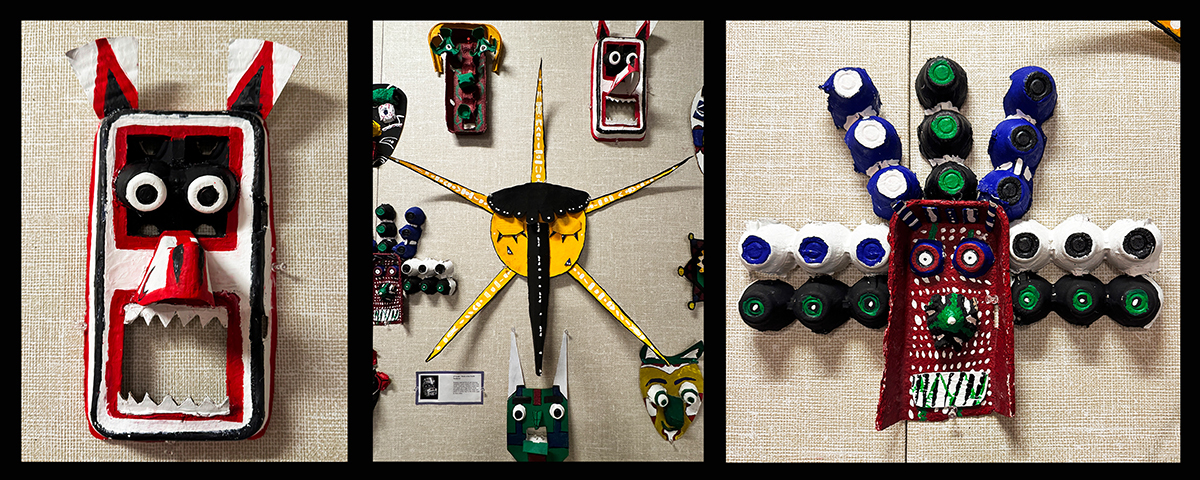
Using what students observed, they were invited to create equally bold masks that also included imaginary symbols. The only materials they had access to for the construction of the masks were egg cartons and craft sticks, so they had to use their imaginations to figure out how to make engineer the masks to be both eye-catching and artful. I think that this project was one of the students’ favorites for the year.
Goals – Students should…
Understand:
- How color is used to emphasize or bring out certain features or aspects of the mask
- How designs might symbolize an element, idea, or object, and can also be used for dramatic effect
Know:
- Some basic background information regarding Coastal Northwest tribes
- Basic uses of these particular masks by the First Nations people
Be able to:
- Think creatively in terms of making a compelling mask out of egg cartons
- Complete one mask using their ingenuity
Resources and materials –
- Examples of different masks of the Pacific Northwest tribes
- Egg cartons
- Craft sticks
- Paint
- Paintbrushes
- Cups
- Scissors
- X-acto knives
- Self-healing mats
- Hot glue guns
- Hot glue
- Staplers
Questions –
- How do you react to these masks? Why?
- What do you think these masks are made of?
- What do you notice about the colors used? Do the features stand out as a result of the colors used? Explain.
- How would you describe these designs? What do you think of them?
- Could these designs be symbols for something? What, in your opinion?
- What do you think these masks might have been used for?
Evaluation – Did students:
- Discuss the use of color and design in the original masks?
- Create masks in an innovative, interesting way?
- Thoughtfully use color and designs to enhance the features of their masks?
Informal:
- Student questions
- Group discussions
- Oral responses to essential questions
- Initial architectural sketch
- One finished mask
- Elaboration and risk-taking




 In the K-8 Art Studio with Anita Sagastegui